This is the 13th periodic report of the Gulf Centre for Human Rights (GCHR) on violations against human rights in Iraq. The report sheds light on killings, arrests, prosecutions and the continuous targeting of human rights activists and critics of the current unstable situation in Iraq. It also documents the acts of violence that affected peaceful demonstrators who protested against corruption and poor public services in the country, which has caused the suffering of Iraqis for a long time.
Assassinations and assaults targeting civil society activists

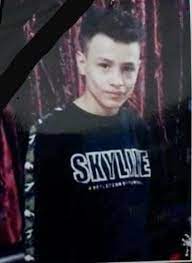
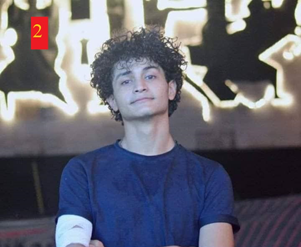
On 05 March 2021, the family of peaceful protester Rymon Ryan Salem (Photo 1) broadcast a video clip in which they appealed to the Pope of the Vatican, who visited Iraq that day, to help them pressure the Iraqi government to find the perpetrators who killed their son.
It is noteworthy that Salem was killed on 25 February 2020, during widespread demonstrations in Al-Khilani Square in Baghdad. His funeral is shown in this video clip with the participation of his family and other protesters.

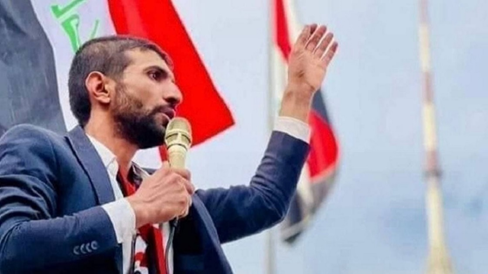
On 18 March 2012, civil society activist Ali Fayad Manan (Photo 2) was severely beaten by unknown masked men in the Al-Boubiyat area, west of Karbala Governorate. According to activists, “At exactly 11 o’clock at night, when he left his mother’s house in the Al-Boubiyat area, Manan was severely beaten by masked men, who were waiting for him.”
Manan, born in 2001, was on a visit to his mother’s house, where he lives in the Al-Mujtaba neighborhood, west of Karbala, and was transferred to the hospital after he lost consciousness, but he recovered after several hours.

On 10 March 2021, popular poet Jaseb Hattab Al-Hiliji (Photo 3) was assassinated. He is the father of human rights lawyer Ali Al-Hiliji (Photo 4), who was kidnapped on 07 October 2019 in the city of Al-Amara, in Maysan Governorate, southern Iraq.
The Maysan Governorate Police Directorate announced the arrest of the alleged murderer, stating on its Facebook page that, “We announce the arrest of the accused in the assassination of Jaseb, the father of the lawyer Ali, on the evening of 10 March 2021, and the accused’s statements were recorded in the preliminary and judicial confessions.” Likewise, the Director of Maysan Governorate Police, Brigadier Abdulkhader Al-Saadi, confirmed in a video that he recorded and published that the murderer of the lawyer’s father had been arrested an hour after the incident, and that the perpetrator was his cousin. It has been claimed that the motive is a disagreement between the two families.
His family quickly denied the allegations of the Maysan Governorate Police Director, describing them as “slander,” in a widely circulated video in which his brother spoke, stressing that the reason for his assassination was his demand for the authorities to reveal the fate of his son, who was kidnapped more than a year and a half ago, and to name the armed militia that kidnapped him which is known to the local authorities. He also denied there was any hostility towards them with any clan or people.
Jaseb Al-Hiliji had recorded a video before his assassination, in which he stated that his life was in danger and that he might be killed. He requested to meet the Prime Minister because he had private words that he would like to convey to him. He also mentioned in this video the name of the armed militia that kidnapped his son.
On 11 March 2021, GCHR monitored reports that more than 16 protesters were injured in the Al-Muthanna Governorate in southern Iraq, during the protests in which the security forces used violence against demonstrators and tear gas bombs, and tried to run over the demonstrators with their wheels, according to this video clip.
Hours after the demonstrations, Al-Muthanna protesters issued a press statement saying, “All the recent major demonstrations are calling for the dismissal of the governor and his two deputies, with [demonstrators using] a high degree of peaceful discipline despite the attempts to drag the demonstrations out of their peaceful framework by using riot police to protect the governor and his close associates, and sparking clashes between the security forces and the protesters, without any serious step by the police leadership to prevent them. We hold the provincial police leadership responsible for this security breach, noting that we will take all legal paths through filing lawsuits against them and we have evidence that will lead to their conviction.”

On 13 March 2021, civil society activist Hussain Fadel (Photo 5) was injured during the demonstrations in Najaf Governorate when security forces shot him. This video documenting his injury shows how protesters are helping to take him to the hospital.
On 21 March 2021, civil society activist Mohammed Al-Tamimi (Photo 6) was injured in his eye when riot police fired iron balls at protesters in Najaf Governorate. According to the medical report, the iris of the eye was damaged by 90%, internal bleeding occurred in the retina, in addition to external bleeding, and the cornea was damaged by 80%, leaving him partially blind.

On 27 March 2021, civil society activist Faqar Al-Hajji (Photo 7) survived an assassination attempt, while his companion was wounded, in Al-Rifai district in Dhi Qar Governorate, southern Iraq. Local reports confirmed that unidentified gunmen on a motorcycle opened fire, wounding his companion.
Threats against human rights defenders
On 28 February 2021, Abdulamir Taiban, a deputy from Dhi Qar Governorate, threatened academic and civil society activist Yasser Al-Barrak (Photo 8) in a television interview after Al-Barrak criticised members of the Iraqi Parliament for Dhi Qar Governorate and their failure to defend their city. Taiban responded and threatened to file a lawsuit against him because of these criticisms. This is not the first time that the deputy has stood against the protesters and their demands.

On 20 March 2021, civil society activist Hussain Mahmoud (Photo 9) wrote on his Facebook account, “The one who led the threat against my family’s home today threatened me yesterday with a direct threat in front of my friends, and I said this is the case with hundreds of threats. I would not have expected the people of the region to terrorise my family in this foolish way. I have photographs and eyewitnesses that I keep for a legal response in case the attack on our house is repeated.”
Mahmoud added, “What happened after the incident is that I tried to end the matter in a calm manner without bringing repercussions to my family and without exposing them to confrontations with the militias. They are isolated people and there is no government that can protect them …Things have not calmed down so far, and I honestly do not trust any commitment from the aggressors or a guarantee, so there is an ongoing discussion of the family about the necessity to leave the house after what happened to them because of me.”
Arrests and kidnappings of civil society activists
On 17 March 2021, civil society activist Hussain Al-Gharabi wrote on his Facebook account, “According to what we heard, 15 young men have been arrested in Diwaniyah city, cccapital of Al-Qadisiyah Governorate, after the recent demonstrations, despite the intervention of the Iraqi Union for Labour and Rights and a group of heroic youth of Diwaniyah to secure their release.”
He added, “These young men and their families are subjected to tremendous pressure and malicious charges, with the continuing illegal and moral torture, therefore, everyone must stand with the youth of Diwaniyah city, and continue to press for their release.”
Hours later, the judicial authorities in Al-Qadisiyah Governorate released the demonstrators who were arrested during the demonstrations calling for the dismissal of the local government, and during which they were confronted by security personnel.
According to a judicial official in the governorate, “Six protesters were released on bail, after their investigative papers were presented to the judiciary.” A member of the Diwaniyah demonstration’s coordination, Hassan Al-Majed, said, “The recent arrests of the demonstrators are politicised by the local government, which wants to suppress demonstrations by all means.”
Al-Majed emphasised that “jobs are misused in the governorate administration,” and that “constant pressure is exerted on the judiciary to suppress the demonstrations,” blaming the central government for “the chaos and job exploitation to suppress the voices of the people.”
On 12 March 2021, civil society activist Hussain Karim (Photo 10) was kidnapped by an unknown group. At five in the afternoon while he was in Tahrir Square in Baghdad, he was kidnapped, and hours later he was released in the Daseem area, east of the capital, with signs of torture showing on his body and his head partially shaven.

On 16 March 2021, civil society activist Dr. Emad Al-Rifai (Photo 11) wrote on his Facebook page that, “I was arrested due to a lawsuit Al-Mustaqbal University College has filed against me in the court for defamation or insult – not completely sure of the expression – then I was released on bail.” He added, “I learned from the college’s lawyer earlier that the college had filed a lawsuit regarding Facebook’s publications and another lawsuit regarding hosting the Al-Sharqiya channel.” Dr. Al-Rifai, a specialised dentist, used to work at Al-Mustaqbal University College and used his Facebook page to express the bad conditions in this college, the inefficiency of education and the loss of prospects for students’ futures. He has participated in the Save Education Campaign, which sheds light on the current reality, problems and ways of promoting higher education.
On 16 March 2021, the Federal Judicial Council issued an arrest warrant and an investigation about defamation against researcher and political analyst Dr. Yahya Al-Kubaisi (Photo 12) under Article 433/1 of the penal code. In a press statement published on his Facebook page, Dr. Al-Kubaisi stated that the memorandum relates to the articles he recently published on the judiciary in general and the Federal Court in Iraq and considered that the warrant represents “an explicit political targeting.”

On 19 March 2021, the mother of disappeared protester Sajjad Al-Iraqi (Photo 13) appeared in the media, pleading to know the fate of her son, who was kidnapped on 19 September 2020.
His colleague Basem Fleih was wounded after they were shot by unidentified gunmen in two cars at the northeastern entrance to the city of Nasiriyah. They stopped, and the gunmen kidnapped Al-Iraqi, leaving Fleih wounded, so he was later transferred to the hospital for treatment.

On 20 March 2021, security forces arrested a well-known journalist and political analyst Ibrahim Al-Sumaida’i (Photo 14). After the arrest, the Iraqi judiciary published a document clarifying the reasons for the arrest, namely that he was being charged for “insulting the public authorities.”
The people in charge of his Facebook page published the following: “More than six hours passed without any clarification being issued by any government agency, and no one knew the executing agency, nor the reason for the arrest, and his whereabouts are not known until this moment, so dictatorship is being practiced under a democratic cover.”
On 22 March 2021, the Iraqi authorities released Al-Sumaida’i on bail after three lawsuits were filed against him for insulting state institutions.
On 22 March 2020, civil society activist Mohammed Malik Al-Shiblawi (Photo 15) was kidnapped after he was pursued near Revolution Square by an unknown group in Najaf Governorate, southern Iraq. There is no information about his current location.
Demonstrations continue in different parts of Iraq; targeting participants

Peaceful demonstrations, protests and gatherings continued in various central and southern Iraqi cities, including the capital, Baghdad, and they were unanimous in their rejection of corruption and their demands for the competent authorities to hold corrupt persons accountable and reveal the killers of peaceful protesters.
On 02 April 2021, hundreds of citizens demonstrated in the Governorates of Dhi Qar and Al-Muthanna. In Dhi Qar (Photo 16), the protesters gathered in Al-Haboubi Square in the centre of Nasiriyah, the capital of Dhi Qar Governorate, and demanded that the position of the governor of Dhi Qar be filled by an independent, honest and competent personality.
In Al-Muthanna (Photo 17), hundreds of protesters organised a march that started from the celebration square in the city of Samawah, the capital of Al-Muthanna Governorate, and headed towards the governorate office building, where they demanded the dismissal of Governor Ahmed Manfi and the disclosure of the fate of the disappeared demonstrators. They also accused the local government of having kidnapped civil society activist Haider Khashan for several hours the previous day before releasing him, and they threatened to escalate the protests if their demands were not met.

On 03 April 2021, an explosive device exploded targeting the “October Martyr Sajjad Al-Marousi” festival (Photo 18), which was held in Farqad Al Hussaini Center in the centre of Suq Al-Shuyoukh district in Dhi Qar Governorate. The attack resulted in a number of attendees suffering various injuries as well as material damage to cars. The event was a remembrance of the victims of the events of the protest movement that demanded the dismissal of the former governor of Dhi Qar, Nazem Al-Waeli. Those protests in February were led by civil society activist Sajjad Mohammed Badan Al-Marousi, who was killed on 25 February 2021, after being shot by security forces.
Also, civil society activist Mohammed Al-Asadi (Photo 19) was subjected to a failed assassination attempt by gunmen who were traveling in an unknown car in the Al-Shuyoukh district after his return from participating in this festival. Al-Asadi was previously injured in the past year after participating in the Al-Haboubi Square protests after the security forces attacked protesters.

On 03 April 2021, prominent civil society activist Dr. Dergham Majid (Photo on the left) stated on his Facebook page that his house in the western city of Al-Hamza district in Babel Governorate had been shot at by unknown persons, but the attack did not result in any injuries. Hours earlier, the bodyguards of a member of the Iraqi parliament from Babil Governorate attacked a group of peaceful demonstrators, including Dr. Majed, according to a video recording circulating on social media networks.
On 13 March 2021, protests renewed in Najaf Governorate in southern Iraq to demand the dismissal of the governor, Louay Al-Yasiri, and the demonstrators tried to reach the governor’s house, but the security forces confronted them and clashes occurred that resulted in the injury of about 10 protesters (photo on the right).
On 17 March 2021, the Prime Minister and Commander-in-Chief of the Iraqi Armed Forces, Mustafa Al-Kadhimi, issued a directive that the heads of security forces in each area must be present in the field during the ongoing demonstrations taking place in the country since October 2019, to ensure that the security forces would not use live bullets.
Marking International Women’s Day
On 08 March 2021, human rights defender Helen Hussain delivered a speech on the occasion of International Women’s Day, in which she called for development programmes to provide a free and decent life for women and their families and protect their rights, unite the efforts of the feminist movement and women’s rights defenders to address the challenges and risks they face. She encouraged the international community to follow up with the Iraqi government to fulfill its obligations to provide women with care, including health and psychological services, enacting and activating national laws in order to protect women from sexual violence and other crimes, setting up mechanisms to implement strategies for the advancement of women, improving the situation of women in the countryside, and empowering women in general.
Recommendations:
GCHR makes the following recommendations to the Iraqi authorities to:
1- Provide immediate responses to the protesters’ demands:
2- Work to end the suffering of the families of those kidnapped during the demonstrations;
3- Hold accountable the perpetrators responsible for the attacks on demonstrators;
4- Provide security for protests and prevent attacks on them.

-
Latest News
-
Related Publications
Latest Urgent Action
 Bahrain
Human rights defender Naji Fateel re-arrested
Defenders Affected
-