In order to establish an independent mechanism to protect freedom of opinion and expression and the media in the Arab region
14/06/2016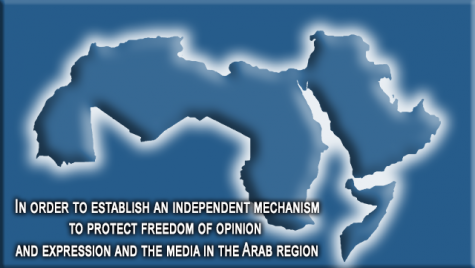
The Arab Group of IFEX, the international network for the defense of freedom of expression, established a working group in Tunis on the 1st and 2nd of June, 2016 to discuss the best ways to protect the freedom of opinion and expression and the media in the Arab region.
Several Tunisian, regional, international organizations and human rights bodies answered the group’s call for a meeting, including a group of Arab experts in the fields of law, media and communication, leading figures in the High Commission for Human Rights and Fundamental Freedoms in Tunisia, the Tunisian League for the Defense of Human Rights, the Centre for Tunisia to freedom of the press, the My House organization, and the Tunisian Forum for Economic and Social Rights. In addition, a member of the Committee of Rights and Freedoms in the Tunisian parliament attended the meeting as well.
Those who participated from the the Arab Group of IFEX included The Arabic Network for Human Rights Information, Maharat Foundation, the Gulf Center for Human Rights, and Vigilance Association for Democracy and Civil State.
The Arab Group of IFEX meeting followed its immediate response in the middle of April 2016, warning of the danger of the initiative launched by the International Federation of Journalists, in collaboration with the Federation of Arab Journalists, for the “establishment of a regional mechanism with the support of media freedom in the Arab world” under the umbrella of the Arab League.
The goal of the organization of this working group in Tunisia was
- first, to shed more light on the international standards of freedom of expression provided for in Article 19 of the Universal Declaration of Human Rights and item 19 of the International Covenant on Civil and Political Rights, and international and regional mechanisms for protection;
- second, to review and discuss the draft mechanism for supporting freedom of the media in the Arab world, which was announced in mid-March 2016 by the International Federation of Journalists, without prior consultation with prominent Arab human rights bodies and defenders of freedom of expression and the media;
- and third, to discuss and express an opinion on the project and discuss the best ways to protect the freedom of opinion and expression and the media in the Arab region, which is witnessing unprecedented attacks on freedom of expression and the media.
Participants attended presentations by experts in international human rights law and freedom of expression, which shone a light on the circumstances of the founding of mechanisms for the protection of human rights in the United Nations and the conditions that must be met by its special rapporteurs, including “independence of opinion and integrity, impartiality, objectivity and expertise, in addition to adhering to high scientific standards, and their commitment to codes of conduct that regulate their work. ” Experts also explained instances in which special mechanisms can be used to follow up on human rights issues around the world, including the use of special rapporteurs, task force mechanisms, or mechanisms of sub-committees. The discussion also addressed proceedings in the event of violations in the field of human rights and their conditions, which include exhausting all means of litigation at national levels.
Participants in the field of law, media and communication, and representatives of the local, regional, and international civil society presented their opinions about the findings of the discussions on the regional mechanism proposed by the International Federation of Journalists in Casablanca, on the 2nd-4th of May, 2016.
The discussions included the two sides as follows:
First: the methodology adopted in the drafting of the initiative, the discussions around it, and who were included.
Participants in the meeting made the following observations on the methodology:
– It did not include discussions with prominent civil society organizations in the Arab region which have a long history of working for the defense and protection of the freedom of opinion, expression, and media;
– There was not enough or adequate explanation of the purpose of these successive meetings and debate that dealt with this proposed project;
– There was an attempt to rapidly impose the proposed mechanism on human rights organizations, despite its lack of minimum international standards and conditions for success.
Second: the content of the proposal was the focus of an extensive discussion by the participants, who indicated that allocating this mechanism within the umbrella of the Arab League would not guarantee its independence or its ability to work seriously and effectively to protect the freedom of opinion, expression, and the media, and would relegate it to the status of a hostage within the league, under the control of Arab states that daily violate human rights, at the forefront of which is Saudi Arabia.
In this area, one of the experts who participated in two meetings organized by the International Federation of Journalists, in collaboration with the Federation of Arab Journalists in Tunisia in January and in Casablanca in May, 2016, reported that he “unequivocally and clearly affirmed the rejection of the proposed mechanism to be under the umbrella of the Arab League in any way,” but things have taken another turn, as it is known.
A number of participants noted the difference between the proposed mechanism, in which to the minimum international standards for the protection of freedom of opinion and expression are not met, and the “declaration of freedom of information and the right of access to information in the Arab world” issued by the symposium organized by the union itself at the beginning of the month of May, 2016, in Casablanca, and which included some positive aspects.
The participants unanimously agreed that the freedom of expression includes freedom of the media as well as freedom of access to information, and that they cannot be separated. In addition, participants stressed the need to ensure the neutrality and independence of a proposed mechanism for the protection of freedom of opinion and expression and the media in the Arab region.
There was a consensus on working gradually, beginning with spreading awareness about supported international and regional mechanisms in the field of freedom of opinion and expression through activating the existing mechanisms, especially on an international scale.
A number of participants also stressed the need to expand the circle of thinking and move towards the establishment of an independent mechanism for the protection of opinion and expression, directed by components of civil society. Within this context, a number of participants discussed the possibility that this mechanism would include representatives of official bodies, provided that the requirements for independence are available.
Participants noted the positivity of the initiative taken by Reporters Without Borders to demand the appointment of a special representative of the Secretary-General of the United Nations to ensure the safety of journalists in the Arab region, based on the model of the Special Representative for Children and Disarmament. The appointment of a Special Representative would afford the opportunity to create a permanent centralized structure within the United Nations system, so that they have the ability to ensure control and monitor states’ compliance with its obligations under the resolutions of the UN Security Council and the General Assembly of the United Nations Human Rights Council, as well as respect for the recommendations of the Commission on Human Rights in this regard.
The participants stressed the importance of cooperation, consultation and coordination among civil society organizations in the Arab region and the importance of solidarity for a successful move towards a new mechanism for protecting freedom of opinion, expression, and the media in the Arab region that derives its legitimacy from its independence and support given to human rights movements in the Arab world.
Representatives of the Arab Group of IFEX presented their views and their quest for greater consultation and coordination to gain support for an alternative derivative detailed initiative for the protection of freedom of opinion, expression, and the media in the Arab region.