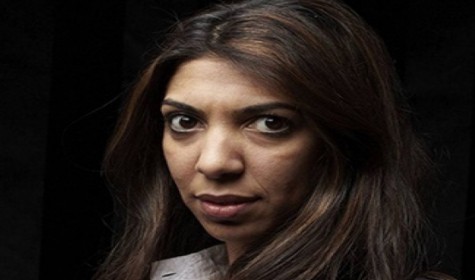
Bahraini authorities prevented journalist Nazeeha Saeed from traveling at Bahrain International airport as part of a trend adopted by the government which includes imposing travel bans on independent human rights defenders and journalists, among members of civil society.
On 29 June 2016, Saeed, a France 24 and Radio Monte Carlo correspondent in Bahrain, said on her twitter account the following:
“I’m banned from travelling from #Bahrain, with no reason presented” and she added the following day, “Public prosecutor, criminal investigations & immigration confirmed no ban from travel, but I was sent back again at King Fahd Causeway!!”
On 2 November 2015, the International Day to End Impunity for Crimes against Journalists, Reporter Without Borders renamed the Parisian street where the Bahraini embassy is located as “Rue Nazeeha Saeed.”
On 23 June 2013, a Court of Appeal in Manama upheld the acquittal of policewoman Sarah Al-Moosa on charges of torturing and mistreating Saeed. On 22 October 2012 a Manama Court had acquitted the police officer of the charges on the basis that the evidence presented by Saeed was “contradictory” and “not consistent” with the forensic report. This is despite the fact that she presented three medical reports, with two of them being from the Ministry of the Interior, corroborating her accounts of torture she suffered while in police custody. The Court of Appeal has now upheld this verdict, causing serious concern regarding impunity of police officials.
Saeed was first summoned to the police station in Riffa on 22 May 2011 for questioning. On her arrival she was asked to wait in a room along with other women, before she was brought for interrogation. She was accused by police officials of “lying” in her reports, of “harming Bahrain’s image” and told to admit her alleged links with the Hezbollah TV station Al-Manar and the Iranian Arabic-language TV station Al-Alam. During the interrogation, which lasted approximately 13 hours, she was blindfolded, kicked, punched, and slapped. She was also subjected to verbal abuse, her hair was pulled and she had a shoe forced into her mouth. Following the ordeal she was able to identify five of the police officials who attacked her, however only one female police officer, Sara Al-Moosa, was prosecuted.
The Gulf Centre for Human (GCHR) expresses serious concern at the travel ban imposed on Nazeeha Saeed without any prior knowledge or justification. The authorities have recently imposed travel bans on human rights defenders traveling to the United Nations Human Rights Council in Geneva in June, and a longstanding travel ban has been imposed on GCHR Founding Director Nabeel Rajab, who is currently imprisoned on free expression-related charges. The GCHR expresses further concern at the targeting of human rights defenders and journalists who peacefully and legitimately undertake their work.
The GCHR urges the authorities in Bahrain to:
1. Revoke the ravel ban imposed on Nazeeha Saeed and other human rights defenders and journalists;
2. Guarantee in all circumstances that all human rights defenders in Bahrain are able to carry out their legitimate human rights activities without fear of reprisals and free of all restrictions including judicial harassment.
The GCHR respectfully reminds you that the United Nations Declaration on the Right and Responsibility of Individuals, Groups and Organs of Society to Promote and Protect Universally Recognized Human Rights and Fundamental Freedoms, adopted by consensus by the UN General Assembly on 9 December 1998, recognises the legitimacy of the activities of human rights defenders, their right to freedom of association and to carry out their activities without fear of reprisals. We would particularly draw your attention to Article 6 (c): “Everyone has the right, individually and in association with others: (c) To study, discuss, form and hold opinions on the observance, both in law and in practice, of all human rights and fundamental freedoms and, through these and other appropriate means, to draw public attention to those matters“, and to Article 12 (2): “The State shall take all necessary measures to ensure the protection by the competent authorities of everyone, individually and in association with others, against any violence, threats, retaliation, de facto or de jure adverse discrimination, pressure or any other arbitrary action as a consequence of his or her legitimate exercise of the rights referred to in the present declaration.”

-
Latest News
Defenders Affected