This is the 12th periodic report by the Gulf Centre for Human Rights (GCHR) on human rights violations during popular demonstrations in Iraq. The report sheds light on the killings, arrests and prosecutions as part of an ongoing pattern of targeting human rights activists and protesters in the country; and documents the acts of violence that affected peaceful demonstrators who protested against corruption and poor public services.
The protests focused in recent weeks in Dhi Qar Governorate, which remained the only governorate with continuous protests in the last period, as protests had stopped in the rest of the country’s governorates. This was followed by the launch of protests in many governorates, including the capital, Baghdad, in solidarity with protesters in Dhi Qar Governorate. In the past days, the Governorates of Babel, Wasit, Qadisiyah and Al-Muthanna witnessed continuous demonstrations calling for the removal of corrupt officials, holding the killers of protesters accountable, and improving the people’s living conditions.
Murders of peaceful protesters and civil society activists

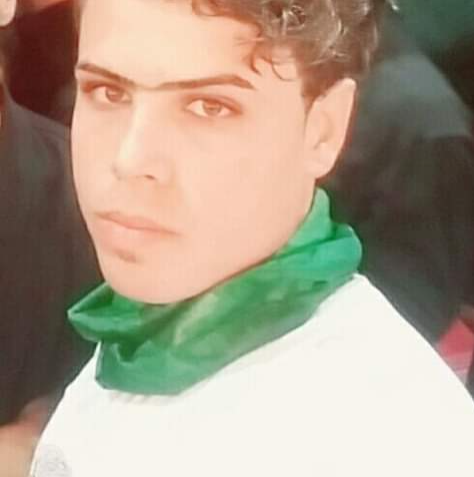
Activists are still being killed as a result of their participation in the protests to lobby the Iraqi government to reform the situation in the country and hold the killers of protesters accountable. On 09 February 2021, during the protests which resumed in Wasit Governorate, civil society activist Fouad Al-Majidi (Photo No. 1) was shot dead by security forces. Following the killing of Al-Majidi, Iraqi Prime Minister Mustafa Al-Kadhimi dispatched the head of the National Security Agency, Abdul-Ghani Al-Asadi, to the governorate to meet with the demonstrators and calm the situation there.
Al-Kadhimi’s delegate met with the protesters, who gave him a three-day period to fulfill their demands, the most prominent of which were the dismissal of the local government in Wasit, headed by Governor Mohammed Al-Mayahi, and the release of all detained activists. During the meeting, the demonstrators demanded that the authorities drop all complaints against them, which amounted to more than 75 judicial complaints. In addition, they called for a committee to be formed to uncover the killers of demonstrator Fouad Al-Majidi, whom the demonstration’s coordination accused the intelligence forces of killing with a pistol from a distance of 15 metres.
On 09 February 2021, a civil society activist in Wasit Governorate, Sajjad Salem, narrated the details of the bloody violence that accompanied popular protests calling for the dismissal of the local government. Salem said that “the departments that the demonstrators closed during the past days have resumed their work today. As for the demonstrators, they are stationed in the sit-in square in the city of Kut, the capital of the Wasit Governorate.” He added, “The security forces entered into clashes this evening with the demonstrators, which later turned into a violent clash in which the security forces used live bullets and other weapons. The clashes with the security forces resulted in the killing of demonstrator Fouad Majidi in Tamoz square, in addition to more than 40 wounded.”
On the same day, the government security information service announced that more than 150 people had been killed in violent protests in Wasit Governorate, southern Iraq.
On 22 February 2021, peaceful protester Ali Kamel Al-Rikabi (Photo No. 2) was killed during the renewed protests in Dhi Qar Governorate. Al-Rikabi, 16 years old, has been a participant in the protests since they first started in October 2019. Al-Rikabi, who is classified as a child according to the 1989 International Convention on the Rights of the Child, was killed in a protest while he was calling for the dismissal of Governor Nazem Al-Waeli.

On 25 February 2021, civil society activist Sajjad Mohammed Baden (Photo No. 3) was killed after being shot by the security forces. According to activists, “Baden died shortly after his injury – he couldn’t make it to the hospital.”
Activists in Dhi Qar told GCHR, “The security forces used all methods of violence against us and were continuously firing live bullets at us.”
During the demonstrations that took place on 26 February 2021, according to security sources who spoke to GCHR, nine demonstrators were shot dead by security forces, while more than 100 were wounded.
On 26 February 2021, Governor Al-Waeli resigned after the continuing protests that demanded his resignation and the many casualties of killed or wounded. His resignation was accepted by Prime Minister Al-Kadhimi, and Abdul-Ghani Al-Asadi was appointed as Governor of Dhi Qar in his place, in addition to holding a position as head of the National Security Agency.
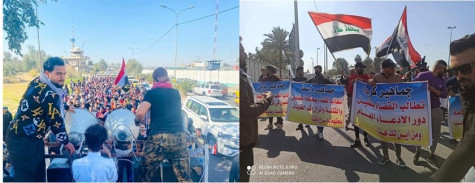
GCHR monitored excessive violence by the Iraqi security forces against the protesters in Dhi Qar (Photo above on the right), which indicates a great danger threatening the lives of demonstrators and civil society activists during the next stage of protests.
Members of death squad arrested
On 15 February 2021, the Iraqi Prime Minister posted the following tweet in Arabic, Kurdish and English: “The death squad that terrified our people in Basra and spread death in our beloved streets and killed good lives, fell into the grip of the heroes of our security forces in preparation for a fair and public trial. The killers of Jinan Madhi and Ahmed Abdel-Samad, and the killers of Reham and Al-Hashemi and all those murdered will face retribution in the near future… justice will not sleep.”

Local press reports mentioned detailed information about the death squad’s criminal activities and its 16 members, four of whom were arrested: Aqil Hadi Wahib Shukri, an employee of the Basra Oil Company, Hamza Kadhim Khudhair, a commissioner in the Judicial Police in Basra, Asaad Khalaf Al-Lami, a student at the College of Law, University of Basra, and Haider Fadel Abduljaber Al-Robaei, the director of the Technical Development Contracting Company. They have all admitted that they belong to a criminal outlaw group headed by Ahmed Abdulkarim Damad (also known as Ahmed Tawisa) who managed to escape, in addition to other accused fugitives.
Among the many assassinations carried out by the death squad were a number of personalities in Basra, including civil society activists and journalists.
On 22 January 2020, just before midnight, gunmen from the death squad in a civilian 4×4 car attacked a group of peaceful demonstrators near Al-Faiha Hospital in the city centre of Basra, killing human rights defender and volunteer paramedic Jinan Madhi Al-Shahamani (Umm Jannat) (Photo No. 4) and wounding a colleague of hers, a paramedic, and six other demonstrators, as they were on their way back from the protest square.
In another case linked to the death squad, on 10 January 2020, gunmen riding a motorcycle fired their weapons at a correspondent of the Dijlah satellite channel, journalist Ahmed Abdel-Samad (Photo No. 5), killing him instantly after shooting him in the head, while his colleague, journalist Safaa Ghali (Photo No. 6), was transferred to Basra General Hospital after being hit by three bullets in the chest, and died due to severe injuries.
On 22 February 2021, hundreds of citizens, including the families of the victims, demonstrated in the centre of Basra Governorate, demanding that the government disclose the results of the investigations into the death squad and not bow to any political pressure seeking to change the course of the investigations and close the case.
Assaults and assassination attempts against civil society activists
The killings were not limited to participants in the protests, but the number of deaths during the past month could have been more if some of the assassinations of civil society activists outside the demonstration squares had not failed.

On 03 February 2021, civil society activist Ihssan al-Hilali (Photo No. 7) managed to capture two people who were intending to assassinate him. During the week prior to the assassination attempt, Al-Hilali’s house had been targeted by bullets and the words “Blood Wanted” written on it, which prompted him to be careful, so with the help of his neighbours, he managed to arrest two people who were going to plant an explosive device in front of his house. Al-Hilali reported, “The two persons belong to one of the armed authorities in the governorate.”

A day after this incident, the Governor of Wasit, Mohammed Al-Mayahi, announced that two civil society activists had survived an assassination attempt in Kut, the capital of Wasit Governorate. Al-Mayahi said in a press release reviewed by GCHR, “Two civil society activists from Kut’s protest square were subjected to an assassination attempt by shooting at their car late on the evening of 03 February 2021.” They are Faleh Al-Mousawi (Photo No. 8) and Ahmed Juma (Photo No. 9).

On 07 February 2021, prominent civil society activist Ahmed Al-Helou (Photo No. 10) was beaten in Najaf by unknown persons after his continuous activity in the protest squares demonstrating against the Iraqi government and political parties.
Al-Helou appeared in a video in which he said that he was severely beaten by unknown gunmen while returning from the demonstrations in Najaf to his home in Babel Governorate. He said that he was attacked near Al-Qasim district in the city of Al-Hilla, the capital of Babil Governorate, accusing armed militia of being behind his targeting.
On 20 February 2021, three civil society activists were attacked in separate areas of Dhi Qar by unknown assailants. The first attack took place in the Al-Tar sub-district, south of the governorate, where the home of civil society activist Raed Karim (Photo No. 11) was targeted with a grenade, but it did not cause human casualties, only material damage to the house.
The second attack was carried out by armed men who fired on the house of civil society activist Sajjad Taleb in the Salihiya area, in the city of Nasiriyah. The attempt was aimed at Taleb, accompanied by his activist guests.
As for the third attack, it was in the Al-Hussain area in the centre of the Al-Rifai district, north of Dhi Qar, where the house of civil society activist Emad Jassim was targeted with bullets by unknown persons.

On 25 February 2021, Sheikh Hussain Ali Al Khayoun (Photo No. 12), the head of the Al-Abouda tribe, who is considered one of the most prominent defenders of the protests, escaped an assassination attempt, in which his personal driver was shot by the attackers. After the failed attempt on his life, he made statements to the press in which he said two Nevara cars opened fire on him and his bodyguard at dawn as they were leaving the farm near his home, in the middle of Al-Shatra district, north of Dhi Qar Governorate, and “the attack resulted in the bodyguard being seriously injured and taken to hospital.”
Sheikh Khayoun was known for his positions in support of the current popular movement. On 30 December 2020, he posted a video on his Facebook page showing his presence in the demonstrations in the city of Nasiriyah, near the Governorate Police Department of Dhi Qar. On 27 February 2021, he also published photos about his efforts with a group of young activists to end the clashes between the demonstrators and riot police in the city of Nasiriyah, which lasted for five days, and the success of their efforts.
At dawn on 28 February 2021, peaceful demonstrator Asaad Al Zubaid (Photo No. 13) was subjected to a failed assassination attempt by an unknown armed group in Najaf, as a result of which he was wounded with three bullets and was transferred to the hospital to receive the necessary treatment.
Kidnapping of civil society activists
Despite the decline of protests in the country, kidnappings are continuing, and the Iraqi authorities are still unable to discover the fate of some of those who have been missing for many months, including Sajjad Al-Iraqi (Al-Mushrifawi), who was kidnapped on 19 September 2020 in Dhi Qar Governorate, in the south of the country, and others listed in the seventh Iraqi report published by GCHR at: https://www.gc4hr.org/news/view/2448.

On 06 February 2021, Iraqi activist Raed Al-Daami (Photo No. 14), a member of the focal point of the demonstration in Karbala Governorate, in central Iraq, was kidnapped. After his release, Al-Daami said, “I was surprised when a government Nissan car stopped and four armed people got out of it and took me to an unknown destination.” He added, “They took me to an abandoned place, blindfolded. After interrogating me, they went to the Karbala cemetery, where I heard the voice of Qur’an, and released me.”
A video clip showed the moment Al-Daami was kidnapped by armed men in civilian clothes, who got out of their car in front of everyone and kidnapped the prominent protester, before releasing him hours later.
On 12 February 2021, at half past seven in the evening, four masked gunmen traveling in a pick-up truck with no registration number kidnapped civil society activist Ali Naseer Allawy (Photo No. 15), 25, from the Amir neighborhood in the city of Najaf. They threw him on the floor of the vehicle and covered his eyes. Although the car was passing in the opposite direction on Nationality Street where the security forces are present, no one dared to stop the vehicle. The gunmen took him to an office, where they began subjecting him to various forms of torture, kicking him with their feet, beating him with their hands and rifle butts, and shocking him after tying his chest and feet with electric wires, while asking him a torrent of questions about protesters participating in the popular movement in Najaf Governorate.
They also used an acid chemical to remove the “25 October” tattoo from his shoulder, and they did not leave him until after he fainted. When he regained consciousness, he managed to escape from his captors at around 5am in the morning and went to his house. From there, he went with some members of his family to a private hospital to receive the necessary treatment.
Allawy told GCHR that he is still in hiding due to the continuing threats against him that are demonstrated in various ways, including cars that roam the area in which his house is located searching for him, as well as through his Facebook page on which he posted a video explaining details of what happened to him during his kidnapping, including torture, and forcing him to record fake confessions about actions he did not commit.
More attacks and targeting of civil society activists

On 03 February 2021, a civil society activist in Dhi Qar Governorate, Ali Mahdi Ajil (Photo No. 16), found the phrase “blood feud” written on his home. As a result, he filed a legal complaint at Al-Hussain Police Station in the city of Nasiriyah, the Governorate’s centre.
On 08 February 2021, demonstrator Ali Emad (Photo No. 17), a resident of Al-Shamiya district in Nasiriyah, was wounded with four bullets after being shot by unknown persons, and as a result he was transferred to Al-Hussain Teaching Hospital.
On 08 March 2021, peaceful demonstrator Ali Fayyad (Photo No. 18) was severely beaten in Najaf by armed militias, leaving parts of his body bruised. His mother appeared in a video in which she asked, “What do I do and where do I go?” Likewise, Fayyad posted a number of pictures on his Facebook page, in which the effects of the assault on his back were evident. Despite that, he said, “I would like to inform you that I am fine.”
Peaceful demonstrations continue
Protests continued in Dhi Qar Governorate, and sometimes in other southern governorates such as Babil, Wasit, Qadisiyah and Muthanna, despite the threats of kidnappings and assassinations to which activists are subjected.

On 08 March 2021, mass demonstrations took place in Samawah, the capital of Al-Muthanna Governorate, calling for the resignation of Governor Ahmed Manafi and his two deputies. The governorate’s women participated in these rallies and also celebrated International Women’s Day.

On 07 March 2021, protesters in Babil (Photo on the left) demanded the resignation of Governor Hassan Mandeel, threatening to block the international road if their demand was not implemented. Demonstrators continued their protests for the sixth day in a row to sack the governor, whom they say did not offer anything to the people in the governorate.
On 06 March 2021, judicial authorities released six protesters on bail after an investigative judge ordered their release. Reliable local sources have confirmed that 15 other demonstrators and civil activists who participated in the peaceful popular movement were held for 24 hours before 13 demonstrators were released, and the other two are expected to be released on 11 March 2021. The authorities in the governorate have tried to press malicious charges against them, including “attacks on state institutions and attempts to burn them”, charges that all the detainees denied.
On 04 and 05 March 2021, in the city of Diwaniyah, the capital of Qadisiyah Governorate, large protests took place against the rampant corruption in the governorate where demonstrators demanded the resignation of the governor and other corrupt officials (Photo on the right).

On 01 March 2021, hundreds of citizens, including students, participated in a massive demonstration in Baghdad (photo on the right), under the title “Stop Blood” in solidarity with the protesters in the Nasiriyah Governorate, which headed towards Tahrir Square (photo above on the right). The riot police attacked the demonstrators as soon as they reached Tahrir Square and used stun grenades and tear gas grenades against them, as well as severely beating some protesters and assaulting them with batons. One of the videos that eyewitnesses recorded showed large numbers of riot police chasing protesters in the streets.
On 02 February 2021, the families of the victims of the popular movement who lost their lives and protesters from various central and southern governorates organised a mass march (photos above in the middle and on the left) that stopped in front of the Supreme Judicial Council in Baghdad. They condemned the judiciary’s negligence with corrupt officials and the murderers of civil society activists and peaceful protesters, and demanded that perpetrators be put on trial, activating the role of the public prosecution. They further called for an end to malicious cases against demonstrators in violation of their right to freedom of assembly.
Recommendations:
GCHR urges the Iraqi government and the authorities in the governorates to:
- Prevent and investigate attacks on and kidnappings of civil society activists;
- Provide the necessary protection for peaceful protesters who are expressing their views, and refrain from bringing them to court; ‘
- Free all those detained as a result of their participation in popular protests, who were taken into custody and charged in an effort to end the popular protests; and
- Carry out investigations into the killing and assassination of activists.

-
Latest News
-
Related Publications
Latest Urgent Action
 Bahrain
Human rights defender Naji Fateel re-arrested
Defenders Affected
-