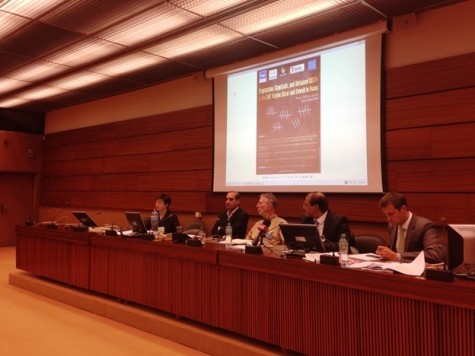
On 18 June 2014 the Gulf Centre for Human Rights (GCHR), Cairo Institute for Human Rights Studies (CIHRS), Human Rights Watch (HRW), International Service for Human Rights (ISHR) and World Alliance for Citizen participation (CIVICUS), organised a side event at the 26th session of the Human Rights Council to launch a new report on the situation of human rights defenders in Kuwait, to discuss the space in which civil society can operate in Qatar and how the mechanisms of the UN Human Rights Council can be maximised to protect human rights defenders against reprisals. The meeting was well attended by States parties and civil society organisations.
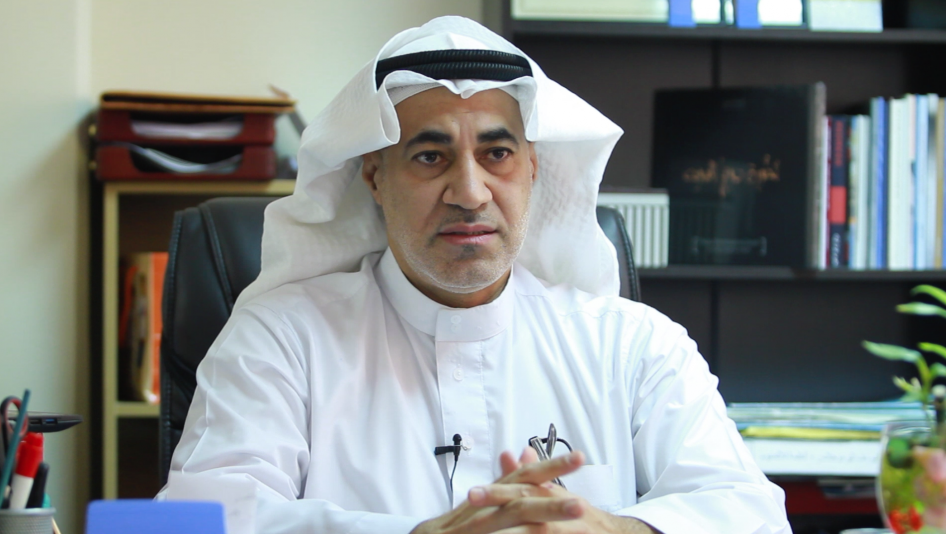
Khalid Ibrahim, co-director of the GCHR who moderated the meeting gave an overview about the situation for human rights defenders (HRDs) in the Gulf region and tracked the way in which the authoritarian Gulf governments are collaborating and using shared tactics against HRDs, such as the use of judicial attacks and travel bans. He also talked about the shrinking space in which civil society can operate in order to organize against the on going harassment, imprisonment, and torture of HRDs.
Joe Stork, board member of the GCHR, and deputy director of the MENA division for Human Rights Watch (HRW) spoke about the situation in Qatar. He described how although the constitution of Qatar guarantees freedom of assembly and of association, these rights are severely restricted in practice. Political associations are prohibited. Likewise, he said, freedom of expression has a constitutional guarantee, but the reality is that severe restrictions are in force. For example, article 134 of the penal code provides for sentences of up to 5 years for criticizing the Emir and draft media laws provide severe financial penalties for criticisms of the rulers or of “friendly countries”. He recounted the case of poet Muhammad Ibn Al-Dheeb Al-Ajami who received a life sentence, later reduced to 15 years, for incitement to overthrow the regime.
Mohammed Al Tajer, chairperson of the Bahrain Human Rights Observatory updated the situation for human rights defenders in Bahrain. He spoke of ongoing cases of torture and deaths in custody. He took the opportunity to welcome the release of Bahraini prominent human rights defender, Nabeel Rejab, director of GCHR. He spoke of his experiences in prison and the ways in which the authorities had directly attacked his human dignity as a result of his work as a lawyer and human rights defender in Bahrain.
Melanie Gingell, barrister and member of the GCHR advisory board, launched a new report on the situation for human rights defenders and the Kuwaiti Bedoon community in Kuwait. The report outlined the increasingly severe and widespread attacks on users of twitter and other social media with those who tweet being sentenced to between two and eleven years for comments that are deemed to insult the Emir.
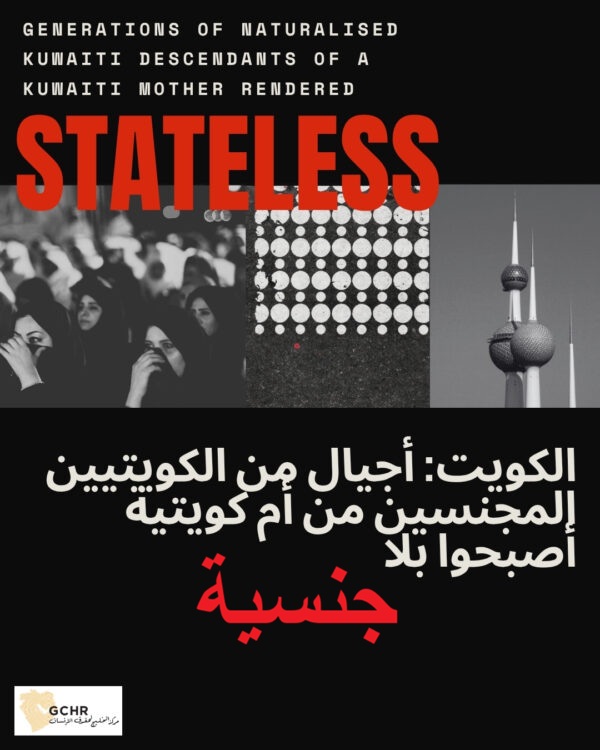
She said that the report also documents the discrimination against the Kuwaiti Bedoon, who are a group of more than 100 000 people who have been denied citizenship and all the basic rights that flow from that. The report gives real life examples of the blighted lives of Kuwaiti people who find themselves in this predicament, for example those who find themselves unable to complete their education, find housing and access benefits.
The meeting was concluded by Michael Ineichen, programme manager at the International Service for Human Rights (ISHR) who outlined the type of risks faced by HRDs when they interact with UN human rights mechanisms and how to mitigate those risks and to gain some protection. He analysed the reasons for under reporting of reprisals in the Gulf region and how capacity building and advocacy could start to ameliorate the situation.

-
Latest News
Defenders Affected