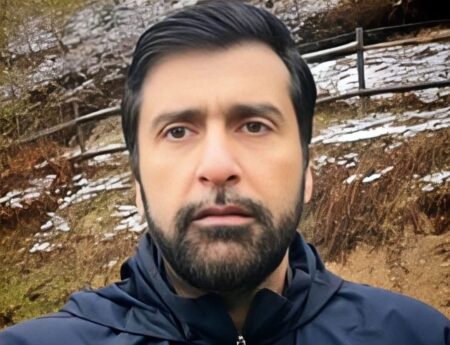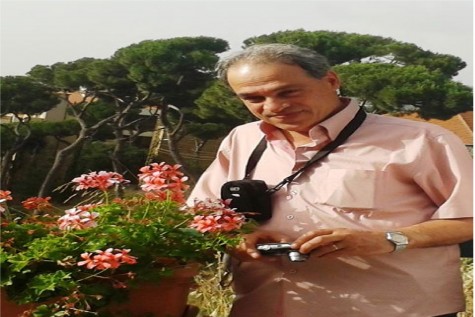
On the evening of 24 June 2013, human rights lawyer Faiq Hweigah, was arrested by Syrian authorities. The Gulf Centre for Human Rights (GCHR) received information that he was stopped at a checkpoint in Jdaidat Yabous, a village situated 45 kilometers west of Damascus, on the Lebanese-Syrian border. He was held for 24 hours before being released.
Reliable reports confirmed that Faiq Hweigah called his family at 6pm on the same day informing them that his passport had been confiscated and that the authorities at the checkpoint informed him that he had to appear before the Military Intelligence branch of area 279.
Faiq Hweigah is 53 years old and the father of two boys. He used to work at the Palace of Justice in Damascus, on cases of violations of political rights, defending the rights of prisoners of conscience. He is also a member of the committee of lawyers who volunteered to defend members of the Syrian Centre for Media and Freedom of Expression (SCM) during their trial and one of the co-founders of the Syrian Citizenship Centre 2013.
The GCHR while welcomes the release of Faiq Hweigah, expresses concern that the arrest was solely motivated by his peaceful and legitimate work as a human rights lawyer in Syria.
The GCHR calls on the Syrian government to:
- Immediately stop targeting and harassing human rights lawyer Faiq Hweigand. The Syrian Government has a responsibility to meet its international obligations to protect human rights defenders in the country;
- Guarantee in all circumstances that all human rights defenders in Syria are able to carry out their legitimate human rights activities without fear of reprisals and free of all restrictions including judicial harassment.
The GCHR respectfully reminds you that the United Nations Declaration on the Right and Responsibility of Individuals, Groups and Organs of Society to Promote and Protect Universally Recognized Human Rights and Fundamental Freedoms, adopted by consensus by the UN General Assembly on 9 December 1998, recognises the legitimacy of the activities of human rights defenders, their right to freedom of association and to carry out their activities without fear of reprisals. We would particularly draw your attention to Article 6 (c) “Everyone has the right, individually and in association with others: (c) To study, discuss, form and hold opinions on the observance, both in law and in practice, of all human rights and fundamental freedoms and, through these and other appropriate means, to draw public attention to those matters” and to Article 12.2, which provides that “the State shall take all necessary measures to ensure the protection by the competent authorities of everyone, individually and in association with others, against any violence, threats, retaliation, de facto or de jure adverse discrimination, pressure or any other arbitrary action as a consequence of his or her legitimate exercise of the rights referred to in the present Declaration.”

-
Latest News
Defenders Affected