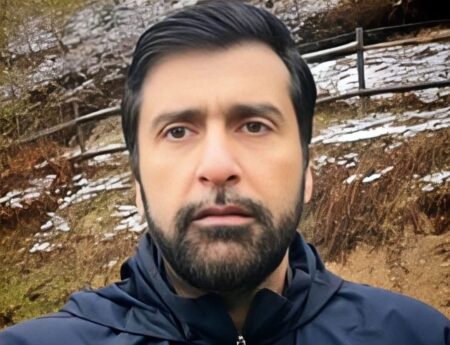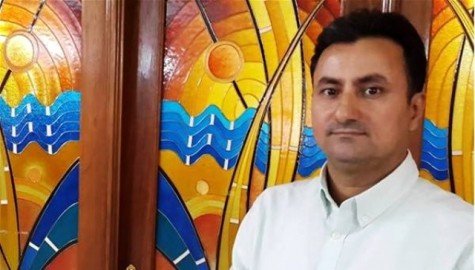
It is with great sadness and regret that the Gulf Centre for Human Rights (GCHR) has learned of the killing of journalist and human rights defender, Mohammed Bedaiwi. It strongly condemns this incident and demands that an immediate, impartial and thorough investigation is undertaken into his death.
On 22 March 2014, Mohammed Bedaiwi, the director of Radio Free Europe/Radio Liberté (RFE/RL’s) Radio Free Iraq in Baghdad was killed by a Capt. officer of the Presidential Regiment in the capital.
The incident allegedly happened at a checkpoint at the entrance to the presidential area in the Jadirya area, as Mohammed Bedaiwi was stopped on his way to work. A verbal argument reportedly began between the journalist and the officer which ended with his killing. It is reported that other soldiers took part in beating the victim, however details around the incident are still emerging. Although the officer in question has been arrested it is feared that this killing may result in impunity.
As well as being the director of Radio Free Iraq Mohammed Bedaiwi was a University Professor at the Faculty of Information in Baghdad. For the past two years he has held the position of Director of the Baghdad Office of Radio Free Iraq, which broadcasts from Prague in the Czech Republic in a senior role on various editorial boards in several media institutions.
His killing forms part of a pattern of the targeting and killing of journalists who peacefully and legitimately exercise their rights to freedom of opinion and expression in Iraq. Since 2003, journalists in Iraq have been working in extremely dangerous conditions risking assassination, imprisonment, torture and threats by either the militants or the government and armed groups aligned to the government. Hundreds have lost their lives and Iraq is regarded among the most dangerous places for journalists.
The Gulf Centre for Human Rights (GCHR) has issued several appeals on the situation of journalism and freedom of the press in Iraq including after the assassination of Kawa Kermyani in Kelar in December 2013 (https://www.gc4hr.org/news/view/554), after the arrest and detention of journalist, Zuhair Al-Al-Fatlawi (https://www.gc4hr.org/news/view/512) in October 2013, another on 9 October 2013 following the killing of Saad Zaghloul (https://www.gc4hr.org/news/view/502) and following the killing of Zamil Ghanam Al-Zoba’ie in June 2013 (https://www.gc4hr.org/news/view/435).
The GCHR strongly condemns the unlawful killing of Mohammed Bedaiwi and expresses serious concern for the situation of journalists as they exercise their profession in Iraq and all those who publicise and promote respect for human rights.
The GCHR urges the authorities in Iraq to:
- Open an immediate, independent, impartial and thorough investigation into the killing of Mohammed Bedaiwi with a view to publishing the results and bringing those responsible to justice in accordance with international standards;
- Ensure that journalists and those exercising their rights to freedom of expression and opinion can do so in a safe environment;
- Guarantee in all circumstances that all human rights defenders in Iraq are able to carry out their legitimate human rights activities without fear of reprisals and free of all restrictions including judicial harassment.
The GCHR respectfully reminds you that the United Nations Declaration on the Right and Responsibility of Individuals, Groups and Organs of Society to Promote and Protect Universally Recognized Human Rights and Fundamental Freedoms, adopted by consensus by the UN General Assembly on 9 December 1998, recognises the legitimacy of the activities of human rights defenders, their right to freedom of association and to carry out their activities without fear of reprisals. We would particularly draw your attention to Article 6 (b and c): “Everyone has the right, individually and in association with others: (b) As provided for in human rights and other applicable international instruments, freely to publish, impart or disseminate to others views, information and knowledge on all human rights and fundamental freedoms; (c) To study, discuss, form and hold opinions on the observance, both in law and in practice, of all human rights and fundamental freedoms and, through these and other appropriate means, to draw public attention to those matters”, and to Article 12 (1 and 2): “(1) Everyone has the right, individually and in association with others, to participate in peaceful activities against violations of human rights and fundamental freedoms. (2) The State shall take all necessary measures to ensure the protection by the competent authorities of everyone, individually and in association with others, against any violence, threats, retaliation, de facto or de jure adverse discrimination, pressure or any other arbitrary action as a consequence of his or her legitimate exercise of the rights referred to in the present Declaration.”

-
Latest News
Defenders Affected