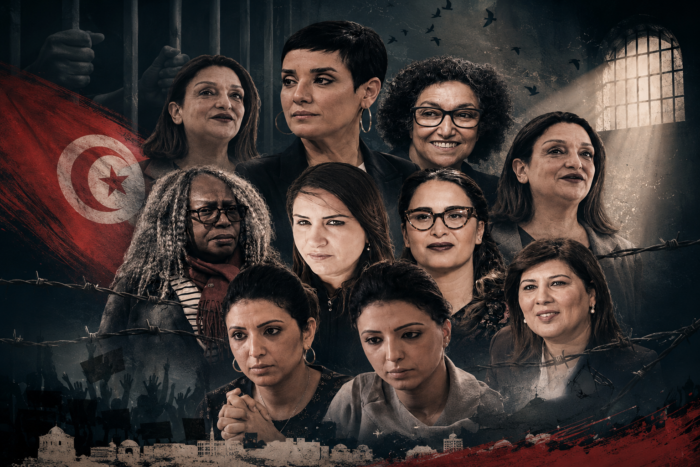
Opportunities and Challenges for Women Human Rights Defenders from Middle Eastern Countries
30/01/2025
A Report on a Study by the Gulf Centre for Human Rights (GCHR)
Report Highlights
The Gulf Centre for Human Rights (GCHR) conducted this research to learn of the opportunities and challenges facing women human rights defenders (WHRDs) in the Middle East and North Africa (MENA) while pursuing their activism. We developed a self-administered questionnaire, consisting of four parts, namely, personal characteristics of WHRDs, opportunities and pathways for pursuing activism, challenges and adverse outcomes of pursuing activism, and the lived experiences and lessons learned by WHRDs.
Key findings from those surveyed include:
- WHRDs were of older age groups, well-educated, and well-engaged in their own communities. They represented diverse professions, all closely tied to advancing human rights.
- WHRDs cited several motivations for their activism, including experiencing discrimination in their lives or supporting cases of discrimination and oppression, inspirations from members of families, work, or community activists, and seeking justice as a social responsibility.
- WHRDs pursued diverse rights, at times simultaneously, including advocacy for women’s rights, rights of children, climate change, support for prisoners of conscience, support for victims of torture, right to health, right to education, right to humanitarian assistance, right to freedom of expression and association.
- WHRDs identified various sources of support in pursuing activism, including from civil society organisations or from other feminists and activists, in building capacity and networking, as well as in training as lawyers, journalists, and others.
- Many used social media and public advocacy for outreach and raising awareness and support, while others preferred personal communication and low-profile advocacy due to fears of surveillance and potential risks of blackmail or persecution. Many worked without a license.
- There were different approaches and strategies that WHRDs used in pursuing activism, including media, coalition-building, networking, holding events, and meeting members of the government and stakeholders in businesses and other sectors.
- The majority of WHRDs identified support from family and friends as most helpful to overcome challenges, while a few reported receiving support from civil society and human rights organisations, indicating the limited support and outreach resources for WHRDs.
- WHRDs revealed distressing accounts of challenges and adverse outcomes of pursuing activism under repressive political systems, without measures of protection or access to justice, particularly for those advocating for gender equality, political and civil rights, and religious freedoms.
- Physical harm and abuses, including being beaten and raped, or threats of such acts of physical abuse or death, either to the women or their family members, were reported by WHRDs. Some WHRDs had family members imprisoned or legally harassed in relation to their activism.
- Several women suffered legal harassment or restrictions on mobility and travel. Some managed to leave their countries to avoid persecution. One woman received support to relocate by a human rights organisation. Financial constraints and limited support were reported by those who left their countries.
- Financial constraints were reported by the majority of WHRDs, either caused by employers or by state officials. Some women managed to receive financial support from civil society organisations, others had to look for other jobs to make ends meet.
- An overwhelming majority of WHRDs reported adverse mental health outcomes, including anxiety and depression, but few received any medical attention.
- Many WHRDs faced social isolation by family and friends, who feared being guilty by association. Many have reported defamation, online bullying, and other discrediting tactics by society and state officials.
- WHRDs identified several learned lessons of their journey of activism, including the abuse of human rights advocacy for political expediency. Women’s rights activism reflected on their positive transformation because of activism, and the newly-found appreciation for their roles in their families and communities as safeguards for justice. Many reported their government becoming more oppressive against women activists because of their activism.
- The majority of WHRDs viewed their pursuit of activism as vital to their communities. They expressed a profound conviction in the pursuit of rights and freedom despite the challenges.
Overview
Women Human Rights Defenders (WHRDs) face several and unique risks while advocating for human rights in the Middle East and North Africa (MENA). Particularly in the context of traditional, patriarchal societies where women’s code of conduct is monitored and controlled by their families and societies to maintain expectations. In addition, authoritarian governments, despite initiating limited reforms in women’s rights, continue to restrict women’s autonomy and mobility.
Human rights reports have long documented such practices, to varying degrees, in most of the Arab countries. Such practices are manifested mostly in discriminatory personal status codes, criminal and penal codes, legal and social measures of combating gender-based violence, low representations of women in key decision-making positions, and less economic opportunities and property rights for women compared to men. In addition, the increasingly authoritarian governments in the region have relentlessly worked to limit the civic space by targeting WHRDs, limit access to information, creating a façade of state-sponsored propaganda on women’s rights reforms, and criminalised any forms of peaceful protest or organisation of women’s rights groups. It is not surprising that the Arab countries have the worst gender gap, according to the World Economic Forum, in key areas of political and economic participation, education, and health, with an estimated 172 years needed to bridge this gap.
WHRDs play a key role in identifying key aspects of domination and subjugation of women in their own communities. While they face familial, societal, and state threats for their advocacy, they mobilise their communities to acknowledge and recognise the inherent risks facing women under such discriminatory policies and practices. In this report, the Gulf Centre for Human Rights (GCHR) presents the findings of preliminary research to identify the unique opportunities and risks facing WHRDs while pursuing their activism. The research will help GCHR in identifying useful resources to be added to its Emergency Resource Hub and strategies for WHRDs, as well as understanding the gaps in services and support systems.
This report follows a previous study by GCHR on tangible protection mechanisms for WHRDs in the MENA region and beyond, published in 2016.
The tentative objectives of this research are to:
- Identify motivation and pathways which motivated WHRDs to pursue activism despite the risks involved.
- Understand which opportunities, familial privileges, or influential positions within their communities enabled them to pursue activism.
- Identify what methods of activism are mostly practiced by WHRDs in different contexts and based on their unique demographics.
- Recognise the risks, existing or potential, that WHRDs face for activism, including health-related adverse effects, familial, societal, or state-linked threats.
- Document the experience of the WHRDs in this study in pursuing activism to inform and inspire the next generations of WHRDs in these countries.
Figure 1. Gender Gap in the Middle East 2024

Methodology
This study utilised a self-administered questionnaire, in Arabic and English (Appendix A), sent to MENA WHRDs via emails in 2024 and January 2025. Women were selected using a snowball method approach, and from a large database of WHRDs from the network of GCHR. Two of the WHRDs were interviewed in mid-2024 at first on a one-to-one basis for a pilot study, using secured platforms, one each from Saudi Arabia and Yemen. A total of four well-established WHRDs from Yemen and Saudi Arabia participated using the English Questionnaire, and thirteen participated using the Arabic questionnaire from the United Arab of Emirates (UAE), Sudan, Iraq, Yemen, Syria, and Libya. It is believed that some of the invited WHRDs were hesitant to participate due to safety concerns and the conditions of political unrest or repression in their own countries. It is notable that a good proportion of participating WHRDs were working in exile because of their advocacy, mainly in Egypt, Turkey, Iraq, United States, Canada, Belgium and Italy.
The questionnaire included questions exploring five main themes: Personal characteristics of WHRDs, opportunities and pathways to pursue activism, existing or potential risks facing WHRDs, and lived experience of WHRDs after pursuing activism. Under the personal characteristics section, participants were asked about their country of activism, country of residency, gender, age group, educational attainment, source of income, whether they were formally employed in a human rights-related job, and their marital status.
Under the opportunities and pathways to pursue activism section, participants were asked about the motivational role of family, work, activists, human rights organisations, or community members in activism, the enabling role of media, the factors that helped them avoid risks and problems, and the choice of different platforms to pursue activism.
Under the existing or potential risks for WHRDs from pursuing activism, participants were asked about the perceived threats and the actual threats facing them for pursuing activism, adverse health outcomes, reduction or loss of income or economic opportunities, social isolation or negativity from family and community, and whether their activism caused them to leave their country of origin.
The lived experience section of the questionnaire inquired about how WHRDs perceived the changes in values and practices toward women activists, both from the activists’ families, community, or state officials. WHRDs were also asked to comment on their experience for the next generation of activists.
To read the full report, click to download:
-
Related Publications
Latest Urgent Action
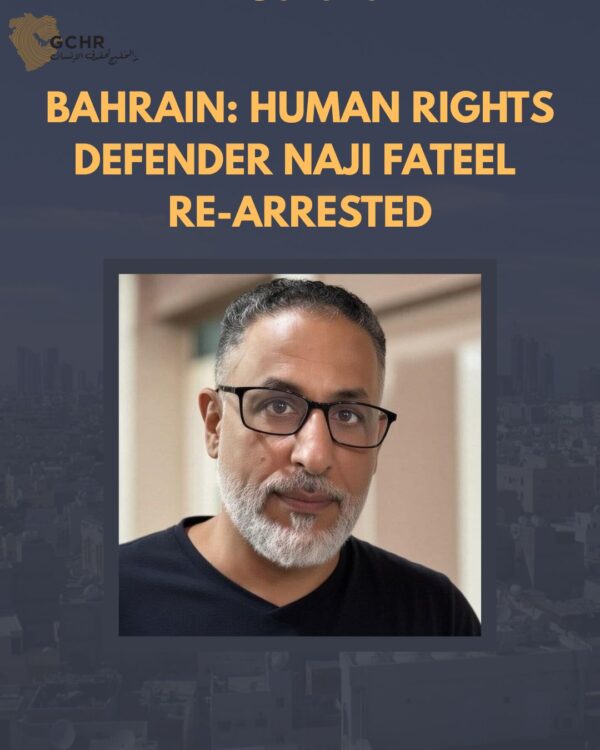 Bahrain
Human rights defender Naji Fateel re-arrested