State Security Bureau and Central Prison administration commit massive human rights violations
30/11/2021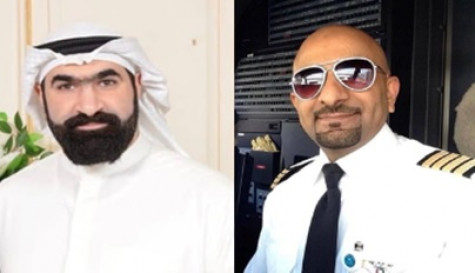
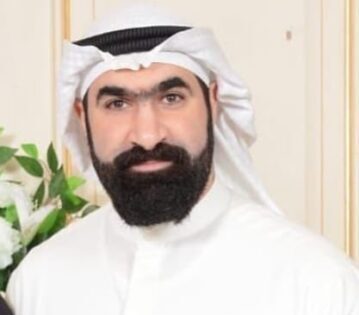
Kuwait’s State Security Bureau continues to arbitrarily arrest citizens on unknown charges. In the latest incident, on 23 November 2021, the State Security Bureau arrested Abbas Jarkhi (photo to the left), 34 years old, while he was on his way to work. The reasons for his arrest are not yet known.
Also, a 66-year-old citizen Abdulamir Al-Attar, and a 44-year-old expatriate Afghan citizen, Ghulam Ali, are still in the custody of the State Security Bureau since they were kidnapped on 21 November 2021.
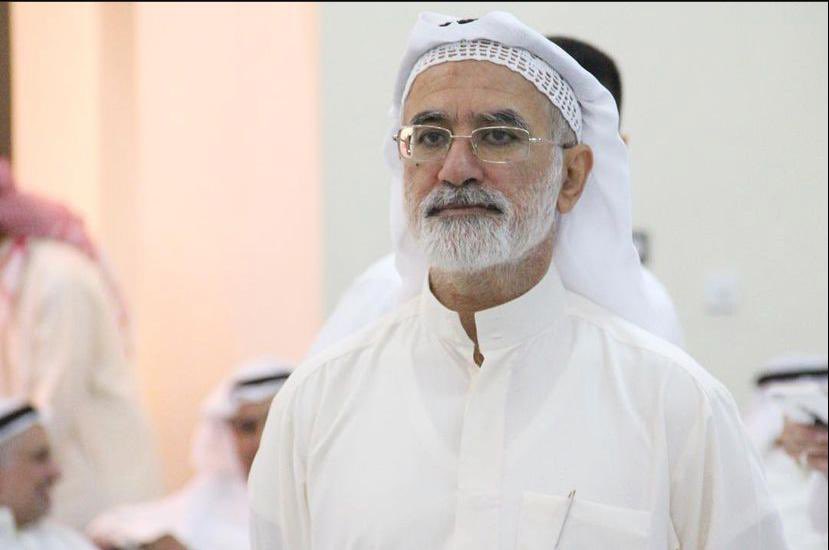
A 72-year-old citizen, Habib Ghazanfari, who heads a charitable committee that collects and distributes donations to orphans, people with special needs, the elderly and poor families, has been in detention since he and seven other members of his committee were arrested between 04 and 08 November 2021. They are: Jassem Dashti, 68 years old, Mousa Al-Masri, 68 years old, Khaled Al-Baghli, 61 years old, Adel Dashti, 57 years old, Jamal Al-Shatti, 57 years old, Anwar Al-Hazeem, 60 years old, and Jalal Jamal, 50 years old. On 17 November 2021, they were transferred from the prison affiliated with the State Security Bureau to the Central Prison after the investigative judge decided to extend their detention pending investigation for another two weeks.
According to reliable local reports, the 11 detainees were subjected to lengthy interrogations by the Public Prosecution and the State Security Bureau, and they face charges of allegedly financing terrorism and money laundering. The Public Prosecution has not yet brought any formal charges against them. The local reports confirmed that they were not allowed to meet with their families and lawyers, as well as being prevented from receiving phone calls. This is in stark contrast to the United Nations Standard Minimum Rules for the Treatment of Prisoners (Nelson Mandela Rules), including Rule 5, which states, “The prison regime should seek to minimise any differences between prison life and life at liberty.”
According to press reports, the National Office for Human Rights, which is affiliated with the Cabinet of Ministers, visited the Central Prison and found that the number of its inmates is 4,500, while its capacity is only 3,000.
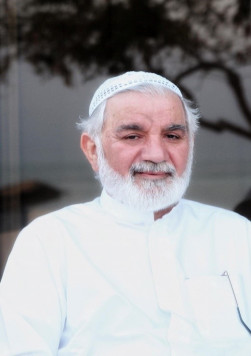
In a separate case, detained pilot, Captain Ahmed Ashour (photo to the right) began a hunger strike on 25 November 2021, after the Central Prison administration carried out the orders issued by higher authorities to transfer him to the cells occupied by Da’esh detainees. He was transferred from his original cell in Prison 3 to a cell in Prison 4 for detainees belonging to the terrorist organisation. According to reliable reports, Ashour stopped taking his medication for heart disease when he began his hunger strike. He assured his family that his life is in danger due to the nature of the charges he was convicted of, namely “insulting a friendly country”, Saudi Arabia. He said he would hold the prison administration responsible for his personal safety, and for any attack he may be subjected to.
It is worth noting that Ashour is scheduled to be released on 16 January 2022, and there are many doubts about on the motives for transferring him to Da’esh cells and exposing his life to imminent danger.
On 16 February 2017, the |Cassation Court sentenced Ashour to three years in jail for offending the Kingdom of Saudi Arabia and his criticism Decisive Storm Operation on his Twitter account. The Appeals Court had earlier sentenced the pilot to two years imprisonment with hard labor with bond of Kuwait Dinar 1,000 to suspend implementation of the ruling in return for good conduct for three years.
Recommendations
The Gulf Centre for Human Rights (GCHR) urges the authorities in Kuwait to:
- Immediately and unconditionally release all detainees working in the Charitable Committee, along with other innocent citizens who are arbitrarily detained, and drop all charges against them because charitable work is not a crime punishable by Kuwaiti law;
- Pending their release, transfer them to an official government prison where the UN Standard Minimum Rules for the Treatment of Prisoners (the Nelson Mandela Rules) are fully applied;
- Protect public freedoms, including the right to freely carry out charitable work; and
- Ensure in all circumstances that all human rights defenders and online activists in Kuwait are able to carry out their legitimate human rights work without fear of reprisals and without restrictions including judicial harassment.

-
Latest News
Defenders Affected