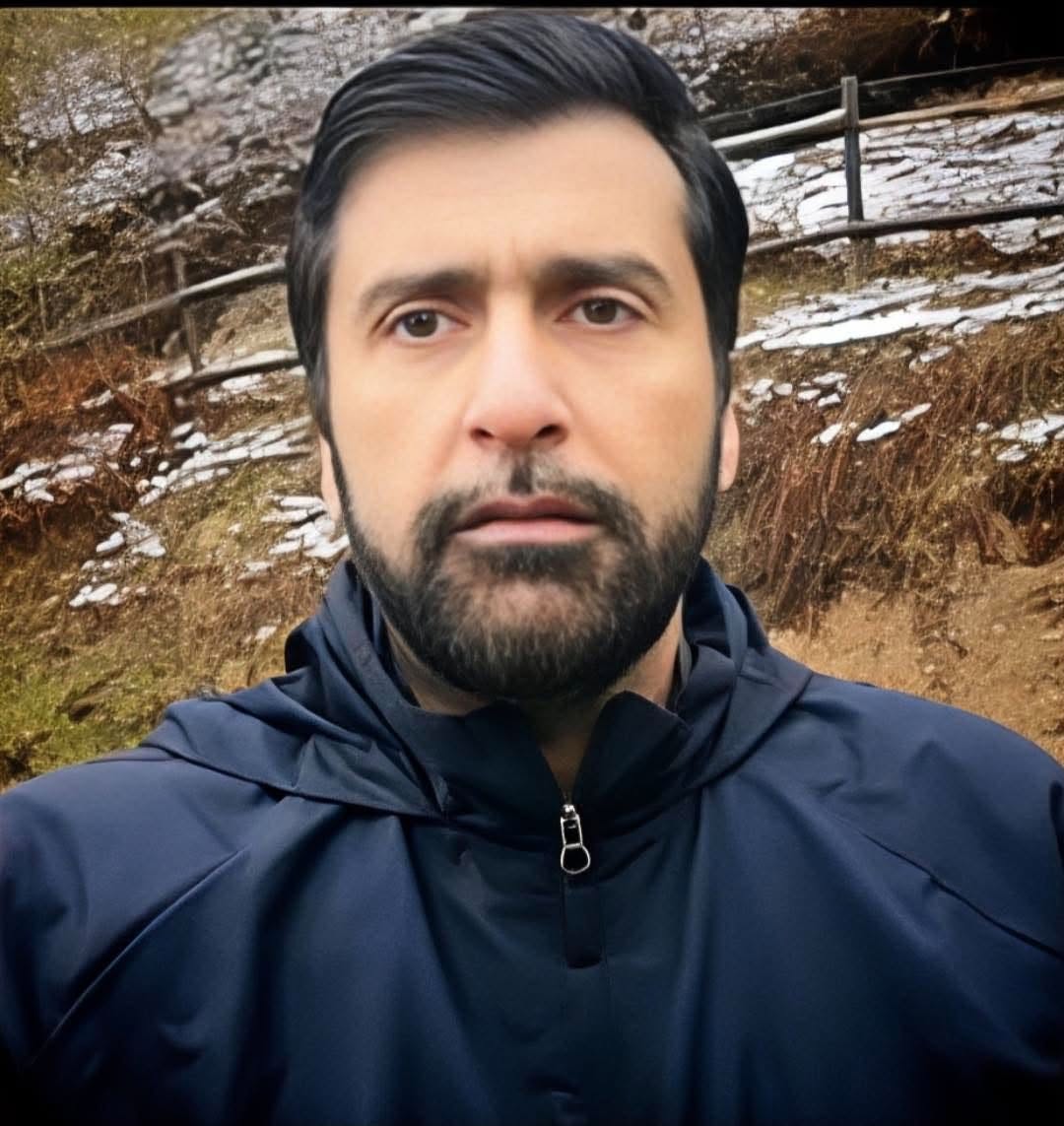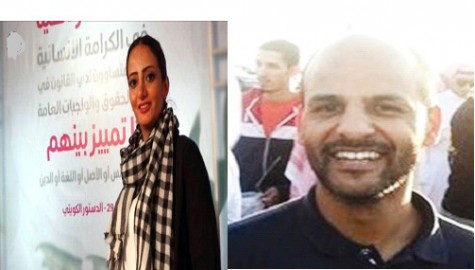
Two human rights defenders were arrested in Kuwait in the past week, according to reports received by the Gulf Centre for Human Rights (GCHR). On 18 April 2016, Kuwaiti security forces arrested Bedoon human rights activist Abdulhakim Al-Fadhli. Human rights defender Rana Al-Sadoun, who was arrested two days previously, was released from prison on 17 April on a 500 KD bail.
Al-Fadhli was at a gathering held on 18 April 2016 at the home of detained politician Mussallam Al-Barrak, a former member of parliament, to show solidarity with him, when he was arrested by the security forces and transferred to Kuwait Central prison. Information received by GCHR indicates that Al-Fadhli started a hunger strike immediately after his arrest.
On 29 January 2015, the Criminal Court in Kuwait sentenced Al-Fadhli to one year in prison with hard labour. The court also decided not to accept bail from him and to serve a deportation order sending him outside the country once he has served the imprisonment. He then went into hiding for four months. (For background, see https://www.gc4hr.org/news/view/737).
His imprisonment is related to many charges including allegedly attacking and using force against police officers on duty, wounding some of them, and calling for an illegal demonstration in order to breach security.
Al-Fadhli is a Bedoon human rights activist as well as being involved in monitoring human rights violations in Kuwait. He was arrested many times before due to his activities in defending Bedoon (or stateless) rights.
On 16 April 2016, security authorities arrested human rights defender Rana Al-Sadoun on her arrival from Beirut at Kuwait International airport. On 21 June 2015, the Criminal Court in Kuwait sentenced Al-Sadoun in absentia to three years in prison with hard labour. The court convicted her of repeating a speech which was delivered in 2002 by former MP Musallam Al-Barrak in which he criticised the electoral law. Al-Barrak is currently serving a two-year prison sentence because of this speech.
The Criminal Court has ruled that because Al-Sadoun was sentenced in absentia, the case must now be re-tried.
Al-Sadoun is a co-founder of the National Committee to Monitor Violations (NCV) which is an organisation that documents violations of freedom of expression in Kuwait. She has continued to play an effective role in the activities of the NCV.
GCHR believes that the targeting of Abdulalhakim Al-Fadhli and Rana Al-Sadoun is solely due to their peaceful activities in the field of human rights. In a letter to United States President Barak Obama, prior to his meeting with leaders of the Gulf Cooperation Council (GCC) on 21 April in Saudi Arabia, GCHR and 10 other NGOs highlighted the case of Al-Sadoun and other human rights defenders in the region who are sentenced to prison for their peaceful human rights activities. See: https://www.gc4hr.org/news/view/1227
GCHR urges the authorities in Kuwait to:
- Revoke the one year sentence against Abdulhakim Al-Fadhli and release him immediately without any conditions;
- Revoke the three-year prison sentence and drop all the charges against Rana Al-Sadoun as they are related to her human rights activities;
- Guarantee in all circumstances that all human rights defenders in Kuwait are able to carry out their legitimate human rights activities without fear of reprisals and free of all restrictions including judicial harassment.
The GCHR respectfully reminds you that the United Nations Declaration on the Right and Responsibility of Individuals, Groups and Organs of Society to Promote and Protect Universally Recognized Human Rights and Fundamental Freedoms, adopted by consensus by the UN General Assembly on 9 December 1998, recognizes the legitimacy of the activities of human rights defenders, their right to freedom of association and to carry out their activities without fear of reprisals. We would particularly draw your attention to Article 5 (c): “For the purpose of promoting and protecting human rights and fundamental freedoms, everyone has the right, individually and in association with others, at the national and international levels: (c) To communicate with non-governmental or intergovernmental organizations“ and to Article 6 (c): “Everyone has the right, individually and in association with others: (c) To study, discuss, form and hold opinions on the observance, both in law and in practice, of all human rights and fundamental freedoms and, through these and other appropriate means, to draw public attention to those matters“.