GCHR’s 16th Periodic Report on Human Rights Violations in Iraq during the Popular Protests
15/07/2021
This is the sixteenth periodic report of the Gulf Centre for Human Rights on human rights (GCHR) violations in Iraq. The report highlights the killings of demonstrators and other peaceful citizens, and the continued targeting of civil society activists and protesters participating in the current popular movement. GCHR also documents the violence that targeted peaceful demonstrators who went out to protest against corruption and poor public services, especially related to electricity shortages in the country, which Iraqis have been suffering from for decades. GCHR also calls for an end to the negligence faced by the wounded demonstrators, many of whom were disabled as a result of the attacks they were subjected to during the protests. This report also deals with the loss of citizens’ lives due to the corruption that is spreading in the health system.
Fire at Al-Hussain Hospital in Nasiriyah
Article 25 of the Universal Declaration of Human Rights specifies that provision of health and medical care is a human right of all citizens, but the situation in Iraq contradicts this right. On 12 July 2021, a fire broke out in Al-Hussain Hospital, which is used to isolate and treat patients with Covid-19 in the city of Nasiriyah (the main photo), resulting in 60 victims, according to a statement issued by the Iraqi Ministry of Health.
The cause of the fire was the explosion of the hospital’s gas system, but specialists confirmed that, “The field hospitals, which were prepared to receive and isolate Covid-19 patients, were built from mobile rooms made of highly flammable materials, and were not equipped with any safety devices.” This reflects the rampant corruption that has put the lives of citizens in grave danger. Previous press statements had stated that the number of victims reached 92, and the number of injured exceeded 100.
This tragic accident comes after a similar fire that took place on 24 April 2021, which killed 90 people and injured more than 110 others, in Ibn Al-Khatib Hospital in Baghdad, where patients with Covid-19 were being isolated and treated.
Targeting journalists and media outlets

On 13 July 2021, the Arabic Russia Today (RT) channel announced on its website that the Iraqi security forces had arrested its correspondent in Baghdad, Ashraf Mohammed Al-Azzawi, on the pretext that the license to work of RT’s office in Baghdad had expired. The security forces took him to an unknown location after closing the office and confiscating its equipment. He was released after hours of arbitrary detention. Reliable sources confirmed that the main reason for targeting him was a tweet on the Twitter account of RT’s principal presenter Salam Mosafir, in which he indicated that Iraqis, “are grieving for electricity cuts and fires of corruption and neglect.”

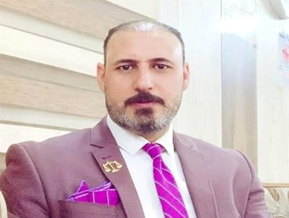
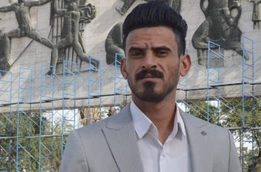
On 09 July 2021, journalist Ali Al-Mikdam was kidnapped (photo on the left) by an unknown armed group. He was found the next day in the Al-Dora area with signs of torture evident on his body (photo on the right). He required surgery for his nose, which was broken during his kidnapping. In a television interview from the hospital, he confirmed that he had been subjected to threats for years. Al-Mikdam has participated in the popular movement since its start on 01 October 2019, and uses his accounts on social media to support popular protests, defend citizens’ civil and human rights and to combat corruption. He is a member of the “Iraqi House” movement that aims for comprehensive reform in the country and was founded after the start of the current popular movement. His Facebook account and his Twitter account were temporarily suspended by his colleagues when he was kidnapped.
On 10 December 2020, he wrote on his second Facebook page on the anniversary of the victory over Dae’sh: “10 December between human rights and the anniversary of victory, innocent souls were killed, abandoned, forcibly disappeared and assassinated, neither victory is a victory nor are human rights actually in Iraq, but just in word.”
Murders of civilians and peaceful protesters

At one o’clock in the morning on 12 July 2021, unidentified gunmen in a car fired their weapons at a vehicle in which Sheikh Tahseen Khaled Jabr Al-Ali Al-Kaabi, the son of the Sheikh of the Bani Ka’ab tribe, was traveling which caused his car to deviate from its course, killing him on the spot.
The attack occurred near Al-Abous Bridge on the road linking the city of Al-Amarah, the capital of Maysan Governorate, with the district of Al-Musharrah. Sheikh Al-Ali had a good reputation and the reasons for the assassination were not yet known.

On 10 July 2021, an armed group shot lawyer Haider Wadi Al-Mousawi (photo on the left) in the city of Basra, which led to his immediate death. The next day, dozens of his fellow lawyers organised a protest sit-in in Basra (photo on the right), in which they demanded that weapons be confined to the hands of the state, and that Iraqi citizens be protected from uncontrolled weapons. In a statement published on its website, the Iraqi Bar Association condemned “the crime of his assassination… today in the city of Basra by a group of murderers, following the release of his client on bail, who was detained by the security authorities.”

On 02 July 2021, protests occurred in Maysan Governorate, in southern Iraq, due to the general power outage. Some protesters tried to set fire to the District Administration building, but the security forces fired gunshots to disperse them.
In that demonstration, GCHR monitored the injury of protester Haider Kadhim Al-Hussaini, born in 2001, who lives in the Qal’at Salih district in Maysan Governorate, where he is a daily worker. He was taken to the hospital, but he died there.
His family called on the Iraqi government to hold the killers accountable. His father, Kadhim Al-Hussaini, said, “I am asking for retribution from the killers. My son went out to demonstrate like the rest of the youth, and the security officer shot him directly.”
Civil society activists arrested

On 04 July 2021, the security forces in Al-Muthanna Governorate, southern Iraq, arrested civil society activist Fayez Waham Al-Ajibi (phot on the left) and a number of his fellow protesters, after they participated in protests that demanded the provision of public services, including electricity, to the Al-Mamlha area in this governorate. The arrest was made on the basis of an arrest warrant that came in accordance with the provisions of Article 4 of the Iraqi Anti-Terrorism Law, which applies to terrorists only.
A mass demonstration took place in the centre of Samawah, the capital of Al-Muthanna Governorate, on the same day of their arrest, demanding their immediate release (photo on the left). The next day, 05 July 2012, their colleagues and a number of citizens organised a sit-in before the Muthanna Court of Appeal to demand their release (photo on the right). They were then released by the judiciary, as there was no evidence to convict them and their actions fall within the framework of freedom of expression guaranteed by the Iraqi constitution in Article 38.
One of his colleagues said in a video that spread on social media, “Praise be to God, Fayez Waham Al-Ajibi and his colleagues were released after popular pressure from all governorates, and the charge related to terrorism was changed to an article related to protest.”
On 11 July 2021, Al-Ajibi mentioned on his Facebook page that a government official threatened him, and as a result, he filed a complaint against him in the Samawah City Investigation Court, then the government official initiated a complaint against him for defamation, which was to be considered that day, while the case of the threat will be considered on 28 July 2021. Unconfirmed reports have stated that he has been sentenced to prison in the defamation case against him.
Attacks against civil society activists and peaceful protesters

On 22 June 2021, unidentified gunmen targeted the house of civil society activist Falah Al-Ziyadi (photo on the left) located in Suq Al-Shuyoukh district in Dhi Qar Governorate with an audio device and then fled, which led to material damage to the front of the house without any casualties.
On 18 June 2021, an unknown group targeted the house of civil society activist Riad Khalaf Al-Khafaji (photo in the middle) located in Al-Gharraf district, north of Dhi Qar Governorate, with an explosive device, causing material damage to the front of the house without any human casualties. He was previously arrested on 12 December 2020 and was only released after four days of arbitrary detention. He was also targeted with an explosive device previously, on 22 December 2020, which did not cause any casualties. The main reason for his continuous targeting is his support for the popular movement and his participation in peaceful protests since 2016.
On 19 June 2021, Al-Khafaji wrote on his Facebook page – which he uses to support the popular movement, follow up on public issues of concern to citizens and fight corruption – the following, “The Octoberian is rebellious until victory or martyrdom.”
Civil society activists told GCHR, “The militias are still using the bombs as a card to threaten us and intimidate our families, and unfortunately, Mustafa Al-Kadhimi’s government has not done anything to stop this.”
On 10 June 2021, an armed group affiliated with one of the influential political parties surrounded civil society activist Nashwan Al-Nahi (photo on the right), after he called for a demonstration to dismiss the director of the Sheikh Saad sub-district in Wasit Governorate in southern Iraq. This group, which was armed with knives, surrounded him and attempted to stab him, but the police forces and a group of protesters succeeded in protecting him and forcing the armed group to withdraw. He went out to the street, accompanied by his colleagues, to demand that the concerned authorities repair the main Sheikh Saad Street, due to the presence of potholes, which caused a lot of traffic accidents, and claimed the lives of four citizens recently.
Al-Nahi’s colleagues said during interviews with GCHR that, “One of the officials in the sub-district sent a group affiliated with him. They assaulted Al-Nahi because he went out to demonstrate and demanded that he obtain services and cover the street.”
In this video, Al-Nahi is seen running away from the people who attacked him and taking shelter with the security forces that were close to the protest site.
On 29 June 2021, he wrote on his Facebook page, which he uses to defend the current popular movement, to remember the victims who fell during the demonstrations, to defend their rights, and to demand that their killers be revealed, “What crime did we commit that we were killed, displaced and tortured in this way?”
This is not the first time that groups affiliated with Iraqi political parties have attacked activists and demonstrators. GCHR has documented more attacks in its previous reports, and although this is taking place before the eyes of the authorities, they did not bring them to justice.
Injuries among the peaceful demonstrators of the popular movement

On 20 February 2021, peaceful protester Waad Al-Azzawi wrote on his Facebook page: “I am Waad Najm Abdullah. I demonstrated on 25 October 2019 in Al-Tahrir Square in Baghdad, and I worked in the morning and at night I went to Tahrir Square. On 12 April 2020 I was shot in the back, breaking the eighth vertebra and severely damaging my spinal cord and after the injury I felt like I was paralysed, and it really happened.”
On 13 June 2021, prominent lawyer, political activist and one of the founders of the National House, a new political party, Hussain Al-Gharabi, posted on his Facebook page: “This beautiful young man, Waad Al-Azzawi, was injured during the October demonstrations and is now half paralysed, asking us for a media campaign for his treatment outside Iraq, so do not be short with him, young people of the country.”

On 01 July 2021, another injured peaceful protester, Koumil Qassim, posted on his Facebook page an appeal to help him obtain treatment. He said, “For everyone who wants to know me, I am one of the revolutionaries. I demonstrated on 01 October 2019 in Al-Haboubi Square in Dhi Qar Governorate. I left my job to protest for change, and on 03 October 2019, I was injured, and a few days later I recovered, then I returned to protest on 27 October 2019.” He added, “On 26 January 2020, I was hit in the head, as a result of which they transferred me to the hospital due to the injury, and I am currently suffering from a crushed left jaw, broken teeth, nerve damage in the neck, and damage to the nerves in the left eye.”

Another peaceful demonstrator, Adel Fadl Al-Abadi, 16 years old, is still paralysed after he participated in demonstrations in Dhi Qar Governorate. At that time, the riot police used Molotov cocktails, hunting rifles with small iron balls, tear gas canisters, and large stones thrown with slingshots against the demonstrators.
Al-Abadi was on the Al-Naser Victory Bridge, close to the stairs connected to the bridge, with hundreds of young people dreaming of peaceful change, when the riot police came close to the bridge. One of the police fired a bullet from his pistol at Al-Abadi, which hit him and he fell on his face on the bridge. His spinal cord was completely severed, as the 12th thoracic vertebra broke, paralysing the lower extremities, and he became imprisoned in his chair and needed a long treatment.
Guilty verdict issued against killer of Sheelan Dara Raouf and her family
On 14 June 2021, the Al-Karkh Criminal Court in the capital, Baghdad, issued three death sentences by hanging against the killer of civil society activist Sheelan Dara Raouf, her father, lawyer Dara Raouf, and her mother, retired government employee Alia Rashid Najem, who were murdered on 15 September 2020.
The correspondent of the Media Centre of the Supreme Judicial Council said that “the criminal committed the murders when he was carrying out a theft of the family’s property in their apartment located in Baghdad Al-Mansour.” He added that “the court issued its decision … against the criminal in accordance with Article 406/1/a of the Iraqi Penal Code No. 111 of 1969 amended.”
GCHR has shown full solidarity with civil society activist Sheelan Dara Raouf and her parents Dara and Alia. However, as a human rights organisation, while GCHR condemns their brutal killing, it expresses its reservation about the use of capital punishment in general.
Popular demonstrations continue across Iraq

On 29 June 2021, hundreds of young people demonstrated in Al-Aziziyah district, Wasit Governorate, southern Iraq, to demand the electricity service that they were deprived of for many days, but riot police chased them and used excessive violence against them.
Civil society activist Mohammed Mulla Talal wrote on his Facebook page, in which he posted a video documenting the assault on the demonstrators, saying, “What happened in Aziziyah district today is a disaster for young people, that they chase young people to their homes and arrest them and during arrest by the Wasit Anti-Crime Forces they are electrocuted and hit with batons. Indeed, this is a disaster! All this is because they came out demanding an increase in the hours of electricity operation!” He continued, “Where did these forces come from? Who ordered the prosecution and dealing with young people in this way?!”
Talal uses his Facebook page to promote the objectives of the popular movement and defend people’s rights. On 26 May 2021, he wrote in a post, “Now we are under the rule of a non-state and what currently exists is a mere frame called the government of the Iraqi state that covers up all the killing and destruction we are experiencing.”

On 20 June 2021, the mother of a prominent human rights defender who is the head of the Karbala Coordination for the Civil Movement, Ihab Jawad Al-Wazni, started an open sit-in and set up a tent in front of the Karbala Appeals Court building, to demand the disclosure of those responsible for the assassination of her son, who was killed by gunmen on 08 May 2021. The Iraqi security forces dealt harshly with her on 22 June 2021 when they forcibly removed the sit-in tent, a behaviour that angered the citizens who expressed their support and stood with her.

On 21 June 2021, citizens including civil society activists in Karbala Governorate denounced the ignorance of the United Nations delegation which passed by Al-Wazni’s mother, who wanted to talk to them. However, they did not stop or lower the windows of their armoured cars to talk to her (photo on the right).
On 22 June 2021, a protest gathering was organised for mothers of the martyrs of the October popular movement before the Appeal Court of Dhi Qar, in solidarity with the Al-Wazni’s mother (photo on the left).
These pressures led to a visit by Jeanine Plaschaert, the Special Representative of the UN Secretary-General, with Al-Wazni’s mother on 24 June 2021, to talk about the measures taken to hold his killers accountable.
Recommendations:
GCHR urges the Iraqi government to:
1. Reveal the killers of peaceful demonstrators and civil society activists, and bring all perpetrators to a fair trial in accordance with international standards and due process;
2. End attempts to terorise protesters and civil society activists using the judiciary and anti-terrorism laws; and
3. Respect public freedoms for citizens, especially freedom of expression, freedom of peaceful assembly and freedom of the press.
GCHR also urges the United Nations to put pressure on the Iraqi government to hold accountable the killers of demonstrators and ensure they do not have immunity for crimes they have committed.

-
Latest News
-
Related Publications
Latest Urgent Action
 Bahrain
Human rights defender Naji Fateel re-arrested
Defenders Affected
-