Saudi Arabia- International spotlight shows broken human rights promises as oppression and violations continue
22/10/2013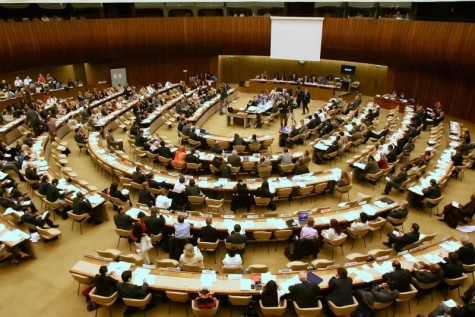
Saudi Arabia has failed to deliver on promises it made to the international community. In 2009 Saudi Arabia pledged to implement recommendations made at its Universal Periodic Review (UPR) in relation to its human rights record. At its second UPR, which took place in Geneva on 21 October 2013, Saudi Arabia failed to show that it had implemented or taken steps to implement the recommendations. On the contrary a crackdown continues across the country against those demanding that their human rights be respected.
Citizens continue to be deprived of their basic human rights and human rights defenders and their families continue to be targeted as a result of their human rights work. Many face a myriad of violations including arbitrary arrest and detention, torture, travel bans, judicial harassment and unfair trials. Alleged counter-terrorism measures are being increasingly used as a tool to arrest human rights defenders. Furthermore, civil society has been faced with a renewed crackdown over the past two years and impunity for human rights violations is increasing. For further information see Gulf Centre for Human Rights (GCHR) appeals on Saudi Arabia. (https://www.gc4hr.org/news/index/country/3)
Women continue to be discriminated against in Saudi Arabia. The GCHR issued an appeal on 17 October 2013, as authorities are targeting those campaigning for the right of women to drive. The GCHR fully supports the “26 October Campaign”, which designates the 26 October as a day for women to drive. (https://www.gc4hr.org/news/view/504)
Failure to implement the UPR recommendations marks a pattern of behaviour by Saudi Arabia, which has shown a persistent lack of cooperation and respect for UN mechanisms. On 18 October 2013 it declined a non-permanent seat on the UN Security Council on the basis that the body had failed in its duties to act in conflicts including that taking place in Syria. This move has been viewed as ironic by human rights organisations. Furthermore Saudi Arabia has yet to sign and ratify core UN human rights treaties and agreements such as the International Covenant on Civil and Political Rights, the International Covenant on Economic, Social, and Cultural Rights, the International Convention on the Elimination of All Forms of Racial Discrimination, and the Convention on the Protection of the Rights of All Migrant Workers and Members of Their Families. It has also refused to allow visits by seven UN Special Rapporteurs since 2009.
In 2013, many prominent human rights defenders have been convicted on broad charges following unfair trials. In March, two founders of the prominent Saudi Civil and Political Rights Organisation (ACPRA), Abdullah Al-Hamid and Mohammed Al-Qahtani, were sentenced to 10 and 11 years respectively due to their human rights activities and the organisation was dissolved. They were found guilty of “breaking allegiance and disobeying the ruler”, “undermining unity”, “questioning the integrity of officials”, “seeking to disrupt security” and “inciting disorder by calling for demonstrations”. Others convicted on such broad charges this year include Mikhlif Al-Shammari, Wajeha Al-Huwaider, Fouzia Al-Oyuni, Raef Badawi, Mohammed Al -Bajady and Sulaiman Al-Rashudi. Saudi courts are currently trying others, including the human rights lawyer Waleed Abu al-Khair, on similar charges while others continue to face harassment and travel bans.
The GCHR expresses serious concern at the on-going crackdown against human rights activists in Saudi Arabia and the disregard by authorities of the recommendations that it accepted four years ago. The UPR is an opportunity for Saudi Arabia to be held accountable for on-going human rights violations at the hands of the authorities and member states should call for this to happen. It is also imperative that the criminal justice system in Saudi Arabia is reformed, to prevent any further arbitrary arrests, judicial harassment and false confessions; that women are not discriminated against in law or in practice; and that civil society is allowed to carry out its peaceful and legitimate work without fear or impediments.
The GCHR urges the international community to call on the authorities in Saudi Arabia to:
- Immediately and unconditionally release and drop all charges against, Mohammed al-Qahtani, Mikhlif al-Shammari, Wajeha al-Huwaider, Fouzia Al-Oyuni, Raef Badawi, Mohammed Al -Bajady and Sulaiman Al-Rashudi who are in detention solely as a result of their peaceful human rights work.
- Drop all charges against, human rights defender Waleed Abu Al Khair;
- Implement the recommendations which they accepted following the 2009 UPR;
- Implement all recommendations made at 2013 UPR to ensure the promotion and protection of human rights in the country;
- Guarantee in all circumstances that all human rights defenders in Saudi Arabia are able to carry out their legitimate human rights activities without fear of reprisals and free of all restrictions including judicial harassment.
The GCHR respectfully reminds you that the United Nations Declaration on the Right and Responsibility of Individuals, Groups and Organs of Society to Promote and Protect Universally Recognized Human Rights and Fundamental Freedoms, adopted by consensus by the UN General Assembly on 9 December 1998, recognises the legitimacy of the activities of human rights defenders, their right to freedom of association and to carry out their activities without fear of reprisals. We would particularly draw your attention to Article 12 (2): “The State shall take all necessary measures to ensure the protection by the competent authorities of everyone, individually and in association with others, against any violence, threat, retaliation, de facto or de jure adverse discrimination, pressure or any other arbitrary action as a consequence of his or her legitimate exercise of the rights referred to in the present Declaration.”