Human rights defender Nargess Mohammadi’s sentence upheld, and journalist Issa Saharkhiz on hunger strike, while Professor Homa Hoodfar released
13/10/2016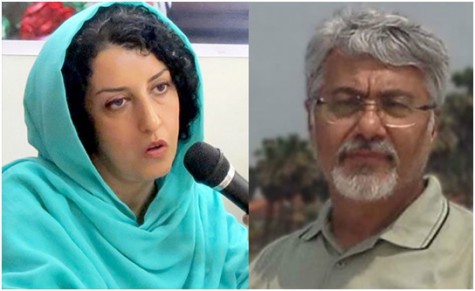
Though the story of Professor Homa Hoodfar ended positively with her release on 26 September 2016 on humanitarian grounds, other human rights defenders in Iran are still being treated unfairly based on trumped up charges relating to their human rights work, and accordingly kept behind bars despite ill health.
A number of dual nationals – like Iranian-Canadian Homa Hoodfar – have been arrested in Iran, where only Iranian nationality is taken into account by the authorities for those under arrest. Hoodfar was allowed to leave Iran and travel home via Oman in September, after international pressure to release her, particularly as her health was failing. For more info on her case, see https://www.gc4hr.org/news/view/1379
Some human rights defenders who have been jailed in relation to their legitimate human rights work have been sentenced on charges that are kept secret from them and their lawyers, which according to the current United Nations Special Rapporteur on Iran, Ahmed Shaheed, is “a mockery of justice.”
The Gulf Centre for Human Rights (GCHR) is most concerned about the Iranian nationals who have faced a series of judicial harassment and arrest despite the international calls for their release throughout the years. They include Nargess Mohammadi, former Vice-President of the Defenders of Human Rights Centre (DHRC) and President of the Executive Committee of the National Council of Peace in Iran who is the recipient of the “City of Paris” medal, and Issa Saharkhiz, a journalist and founding member of the Iranian Association for the Defense of Freedom of Press.
On 28 September 2016, Mohammadi’s sentence was upheld by Branch 36 of the Tehran Court of Appeals. On 17 May, she received a 10-year sentence on for “membership in the Step by Step to Stop the Death Penalty” (known by the acronym LEGAM). LEGAM is a group campaigning against the death penalty in Iran that Mohammadi founded and which has been closed since her arrest. In addition to her 10-year sentence, she received five years for alleged “collusion and assembly against national security” and one year for “spreading propaganda against the system.” See: https://www.gc4hr.org/news/view/1263
According to Article 134 of the Islamic Penal Code, Mohammadi must serve the highest sentence given, which is 10 years of imprisonment for membership in LEGAM. Though new evidence of her innocence was approved for submission to the court ahead of the upholding of the sentence, the decision was rushed and made before Mohammadi’s lawyers were able to submit them.
Mohammadi has faced various medical challenges due to ill health, including heart trouble, in jail and also went on hunger strike to gain access to communicate with her children. (See: https://www.gc4hr.org/news/view/1309). However, even when she was previously released on bail in this case, she continued her work outside prison and then, due to a meeting with a European Union representative, she faced reprisals and was arrested once again. This would highlight the importance of having mechanisms to mitigate reprisals and ensure the protection of human rights defenders who engage in international mechanisms.
Journalist Issa Saharkhiz started a hunger strike on 2 October 2016, asking the authorities to release him because he suffers from heart disease and has been hospitalized since March, reports the International Campaign for Human Rights in Iran. “I have no choice but to go on a food and medical hunger strike because I qualify for conditional release under Articles 502 and 522 of the Criminal Code for serving more than half of my imposed sentence in prison and the hospital,” he said. Article 502 states that “If a prisoner is suffering from physical or mental illness and his imprisonment would make his illness worse or delay his recovery, the judge can postpone the sentence being served until the prisoner regains his health after consultation with his physician.” Article 522 states that “…The time spent in the hospital for treatment is taken into account as part of the prisoner’s sentence.”
Saharkhiz was first arrested on 2 November 2015 with three other journalists and accused of being part of a foreign plot to spread anti-Iranian propaganda. In September 2016, Branch 28 of the Revolutionary Court reduced Saharkhiz’s sentence from three years in prison to 21 months after he was convicted on charges of “propaganda against the state” and “insulting the supreme leader.”
The Gulf Centre for Human Rights (GCHR) joins other international human rights organisations in calling for the Iranian authorities to:
- Immediately and unconditionally release human rights defender Narges Mohammadi from prison;
- Immediately and unconditionally release journalist Issa Saharkhiz from prison;
- Guarantee in all circumstances the physical and psychological integrity of Narges Mohammadi, Issa Saharkhiz and other human rights defenders in prison, including ensuring they receive proper medical treatment; and
- Guarantee in all circumstances that human rights defenders in Iran are able to carry out their legitimate human rights activities without fear of reprisals and free of all restrictions including judicial harassment.

-
Latest News
Defenders Affected