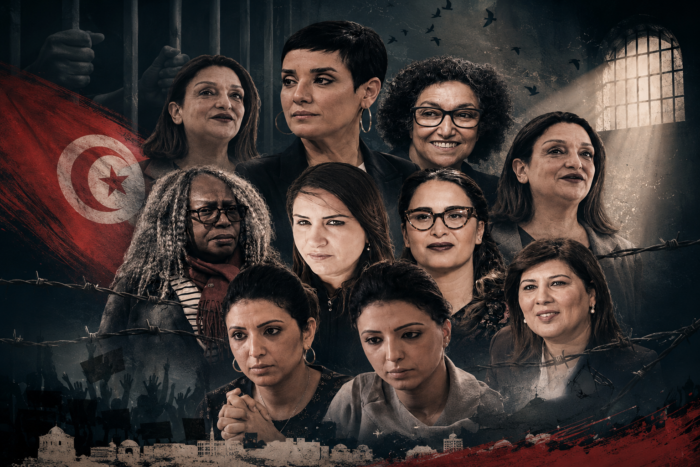
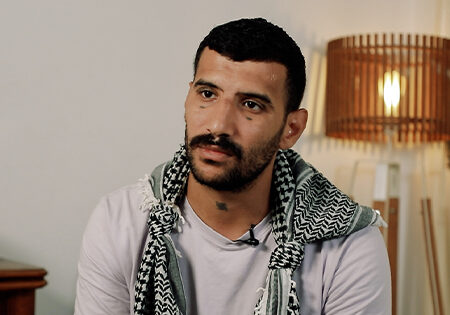
Fifteen years after a “revolution” that raised the slogans of “freedom, dignity, and justice,” Tunisia is now experiencing one of its most sensitive periods regarding human rights. Between constitutional texts that affirm the protection of rights and freedoms, and actual practices that tend toward suspicious restrictions and blatant repression, a fundamental question arises: Is Tunisia witnessing a systematic decline in its system of rights and freedoms, or has arbitrariness become the hallmark of the current era?
Between the constitutional text and popular reality
It is worth noting that public freedoms are not an intellectual luxury or an election slogan, but rather the backbone of any genuine democracy. Tunisia has set a rare example in the region in its pursuit of human rights and the establishment of freedoms by providing clear guarantees for freedom of expression, assembly, and the organisation of parties and associations. These guarantees enable citizens to express their opinions, engage in public life, and participate politically. However, political developments in recent years have sparked widespread debate about the extent to which these rights are respected in practice.
The landscape of rights and freedoms in Tunisia changed after 2011, with freedoms becoming enshrined in the constitution, particularly in the 2014 constitution. However, this did not last long due to exceptional circumstances, and the situation became even more ambiguous with the 2022 constitution, which can be considered a constitution that established a fully-fledged presidential system, granting the president very broad and comprehensive powers.
Reports from international human rights organisations and independent press indicate that since 25 July 2021—the day Tunisian President Kais Saied announced the dismissal of Prime Minister Hichem Mechichi, the suspension of parliamentary powers, and the lifting of immunity from members of parliament—the country has been undergoing an exceptional process that has directly impacted civil and political rights, the independence of the judiciary, and freedom of expression. This has occurred under official rhetoric justifying these measures with the necessities of “national security” and “combating terrorism and corruption.”
Local and international human rights organisations also documented indicators of regression in 2024, including legal prosecutions, pre-trial detentions, extensions of the state of emergency, and restrictions on freedom of the press and assembly. These practices not only contradict constitutional provisions but also create an atmosphere of uncertainty that undermines citizens’ trust in institutions and hinders the exercise of political and civil rights.
Constitutional and legal framework for freedoms in Tunisia
The gap between the text and reality has remained a reflection of the political and legal tensions in Tunisia. Since 2021, the country has entered a new phase of power concentration, culminating in the 2022 constitution, adopted through a referendum that sparked widespread debate regarding the expansion of presidential powers and the nature of constitutional guarantees. This transformation has created a clear discrepancy between the institutional form of rights and the practical mechanisms for their protection.
The Tunisian constitution officially stipulates the protection of a set of fundamental freedoms, but these rights are not limited to constitutional texts alone. They also extend to Tunisia’s international obligations, such as the International Covenant on Civil and Political Rights, which, specifically in Article 19, affirms the protection of freedom of expression as a fundamental human right. All of this has been disregarded by the authorities, who have persisted in imposing increasing restrictions on freedom of expression in Tunisia.
Despite widespread opposition to several repressive executive orders, issued as decrees and laws in exceptional circumstances, they were enacted. Among the most prominent was the so-called “Repressive Decree 54,” presented under the pretext of combating cybercrime, but later used to persecute human rights activists, journalists, and political opponents.
The trial of some 40 prominent human rights defenders, journalists, and political opponents on charges of conspiring against state security represented a severe blow to public freedoms in the country. It was a politically motivated trial, highlighting the danger of laws with vague and easily interpretable wording, granting judges broad discretionary power to issue unjust sentences. This will negatively impact the guarantee of freedom of expression as a constitutional right, and pave the way for a shift towards authoritarian rule. This approach links changes in the nature of state institutions with a decline in political freedoms and a loss of justice, creating a climate of fear of the authorities, who will then intensify their pressure on the opposition and civil society.
Freedom of expression under pressure and prosecution
Freedom of expression is one of the most significant gains achieved by Tunisians after 2011. However, this freedom is now besieged by various legal and security measures. Recent years have witnessed prosecutions against journalists, bloggers, and lawyers for their opinions or publications.
Decree 54 of 2022, concerning combating crimes related to communication systems, has been used to criminalise critical expression. Human rights organisations have deemed this legislation overly broad and detrimental to freedom of opinion. Furthermore, some civilians have been referred to military courts, in clear violation of international standards for a fair trial.
These steps have drawn local and international criticism, with some arguing that they have restricted the role of civil society and the judiciary, impacting the open civic space that Tunisia has been striving for since the revolution.
Despite the constitutional provisions, freedom of expression faces practical challenges due to laws such as Decree 54, which is frequently used to prosecute journalists and online activists, leading to their arbitrary arrest and trial. This has created a climate of fear among media professionals in general.
Journalistic work between threats and administrative interference
Reports from international human rights organisations indicate that journalistic work in Tunisia has become increasingly fraught with legal threats and administrative interference. This limits journalists’ ability to perform their duties freely, as clearly demonstrated in the reports of the Monitoring Unit at the Center for Occupational Safety, particularly the 9th annual report on the safety of journalists, which covers the period from November 2024 to October 2025.
Names of some of those recently detained
Below are some of the names of those who were detained or charged in 2025 and 2026 for social media posts or comments criticising President Kais Saied or the Tunisian government:
| Legal status | Reason for arrest/publication | Name |
| He was sentenced to 8 months in prison for “insulting the president via social media.” | He posted a message mocking President Kais Saied on Facebook. | Ahmed Sidani |
| He was arrested and charged with belonging to a “terrorist organisation” and investigated. | He posted a message criticising the president, calling him a failure. | Saber Ali |
| He was sentenced to death, a controversial ruling (which was not carried out). | He posted messages on Facebook that the judiciary deemed “insulting to the president” and “threatening to state security.” | Saber Chouchen |
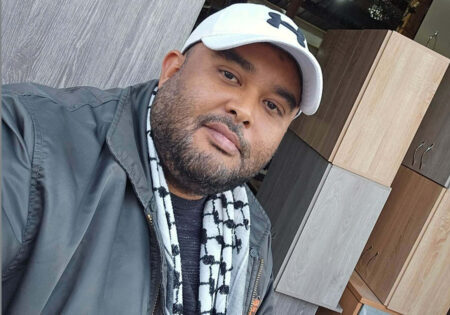
| He was sentenced to 8 months in prison for “insulting the president via social media.” | A young artist and Ultras member whose mural landed him in prison served two years for criticising the president’s policies on migrants on social media. | Rached Tamboura |
They were charged with offenses including “committing a heinous act against the President of the Republic,” “attacking the state with the intent to change its form,” and “spreading false news about a public official.” Many of these cases were based on charges related to the Information and Communications Crimes Law (Decree 54 mentioned above), the wording of which has been criticised by human rights activists as a tool for criminalising peaceful freedom of expression, particularly opinions critical of the government and its policies.
While the Tunisian government repeatedly claims its aim is to combat fake news or protect national security, it exploits the broad provisions of this decree to suppress various citizens, both those known for their influence in society and those who are not. This raises widespread concern among the human rights movement in Tunisia.
Names of other political detainees
Below are the names of some political detainees arrested in 2025 and 2026 in connection with the “conspiracy against state security” case:
| Name | Legal Status | Profession |
| Jawhar Ben Mbarek | He was arrested on 24 February 2023. He was initially sentenced to 18 years in prison, which was increased to 20 years on appeal. He was convicted of “conspiring against state security” and “attempting to overthrow the government.” | He is a university professor and opposition political activist. |
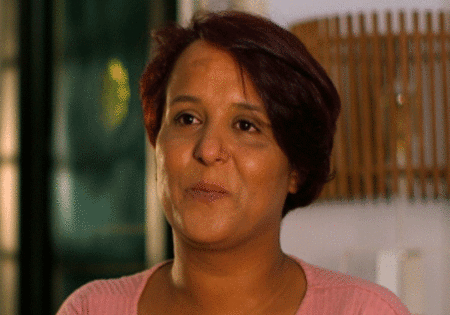
| Chaima Issa | She was arrested on 29 November 2025, on charges of “conspiracy against state security.” She was initially sentenced to 18 years in prison, which was increased to 20 years on appeal. | She is a human rights and political activist. |
| Issam Chebbi | He was arrested on 22 February 2023, on charges of “conspiracy against state security.” He was initially sentenced to 18 years in prison, which was increased to 20 years on appeal. | He is a Tunisian politician and member of the National Constituent Assembly representing the Republican Party. |
| Ghazi Chaouachi | He was arrested on 24 February 2023, in connection with the “conspiracy against state security” case. He was convicted on charges including “suspected membership in a terrorist organisation,” “conspiracy against internal and external state security,” and “incitement to overthrow the government.” He was initially sentenced to 18 years in prison, which was increased to 20 years on appeal. | He is a politician, lawyer, and leader in the Democratic Current party, and he represented the defendants in the conspiracy case as part of the legal team. |
| Ridha Belhaj | He was arrested on 24 February 2023, in connection with a case of “conspiracy against state security.” He was initially sentenced to 18 years in prison, which was increased to 20 years on appeal. | He is a lawyer and political opponent who served as a minister in 2011. |
| Abdelhamid Jelassi | He was arrested on 11 February 2023, in connection with the “conspiracy against state security” case. He was initially sentenced to 13 years in prison. This was reduced to 10 years on appeal. | He is a former leader in the Ennahda Movement and a political activist. |
| Kamel Ltaief | He was arrested on 11 February 2023, in connection with the “conspiracy against state security” case. He was initially sentenced to 66 years in prison, the harshest sentence handed down, which was later reduced to 45 years on appeal. | He is an influential businessman with political connections. |
| Sahbi Atig | He was arrested on 06 May 2023. On 19 June 2025, the Ariana Court of First Instance sentenced him to 15 years in prison and a fine in a money laundering case, following a tip-off from a former inmate convicted of burglary in 2016. This sentence was later upheld by the Court of Appeal. He was also sentenced to 13 years in prison in a separate case for “conspiracy against state security,” which was reduced to 10 years on appeal. | He is a former leader in the Ennahda Movement and a former member of parliament. |
| Said Ferjani | He was arrested on 27 February 2023, in connection with the case of Instalingo, based in El Kalaa El Kebira, Sousse Governorate, which is a company specialising in digital content production and modern communication. He was sentenced to 13 years in prison, a fine of 50,000 dinars, and a ten-year ban from holding public office. This sentence was reduced to 10 years on appeal on 13 January 2026. He was also initially sentenced to 13 years in prison in a separate case for “conspiracy against state security,” which was later reduced to 10 years on appeal. | He is a leader in the Ennahda Movement and a former member of parliament. |
| Noureddine Bhiri | On 24 February 2026, the lower court sentenced him to four years in prison in connection with the arrest of Jilani Dabboussi, a former member of parliament who died in prison after suffering health complications. The Court of Appeal in the capital had upheld a lower court ruling issued in October 2024, sentencing him to 10 years in prison for a Facebook post attributed to him in which he called for protests. In addition, he received a third sentence of 43 years in prison for “conspiracy against state security,” in which he was charged with offenses including “forming a terrorist group” and “committing a heinous act against the head of state.” This sentence was later reduced to 20 years on appeal. | He is a former Minister of Justice and a leader in the Ennahda Movement. |
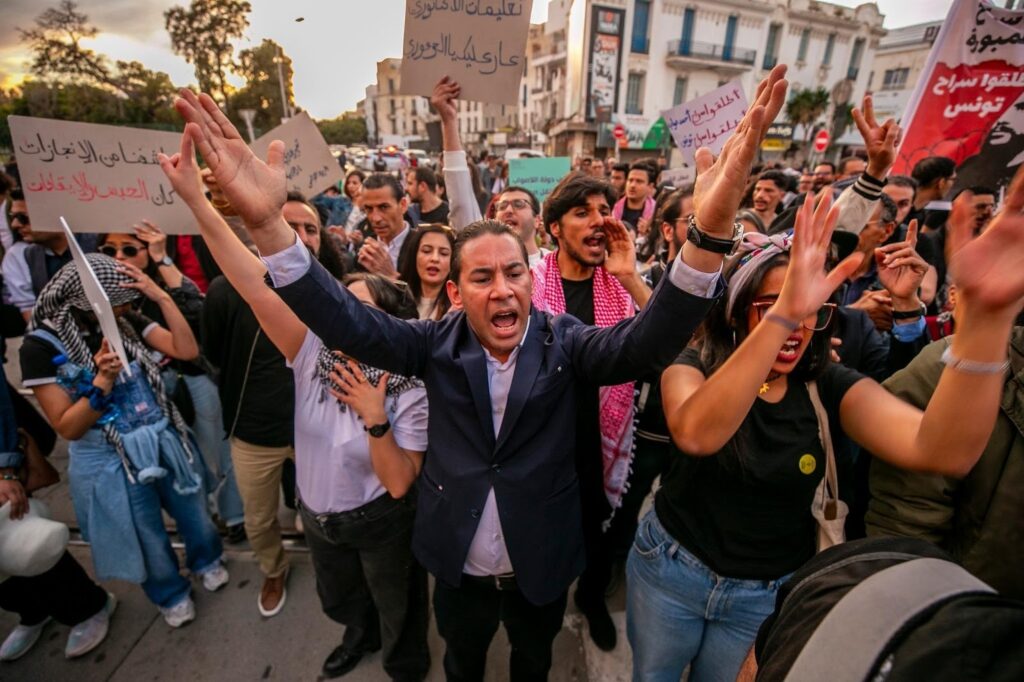
The Judiciary: Between betrayal and political exploitation
The judiciary is the cornerstone of protecting rights and freedoms. However, the judicial authority has undergone radical transformations that have raised widespread concerns. Among these is the dissolution of the Supreme Judicial Council and its replacement with a temporary body, which sparked considerable controversy regarding the independence of the judiciary. Furthermore, a number of judges were dismissed by executive decrees without respect for disciplinary guarantees and fair trial procedures. These developments have prompted civil society organisations to warn against the politicisation of justice and its transformation into a tool of political repression, especially after the wave of trials launched against opposition political figures on serious charges such as “conspiracy against state security.” This has led to doubts about the independence and impartiality of the judiciary, and calls for the government to reverse all policies that undermine judicial independence and guarantee fair trials for all.
In recent years, as detailed in successive reports by the Gulf Centre for Human Rights (GCHR) on Tunisia, the country has witnessed arbitrary arrests of human rights defenders, political opponents, and parliamentarians, who are often accused of “conspiracy against state security,” “inciting citizens,” “calling for demonstrations,” and other fabricated charges. Attacks on prisoners of conscience in detention centres and prisons have also occurred, shaking the confidence of citizens, including civil society activists, in the security and judicial authorities. This has been the subject of extensive debate among human rights activists and defenders of public freedoms.
The three documented cases below, in which the judiciary sentenced a member of parliament, a dismissed judge, and a former security and strategic expert to prison, confirm that the judiciary is being used to suppress freedom of expression and as a tool of showmanship and security in the hands of the authorities, especially after the appointment of a Supreme Judicial Council loyal to the presidency.
Member of Parliament Ahmed Saïdani
On 19 February 2026, the Tunis Court of First Instance sentenced Member of Parliament Ahmed Saïdani to eight months in prison after convicting him of “insulting others” via the public telecommunications network. This conviction stemmed from a Facebook post in which he mocked President Kais Saied, under Article 86 of the Telecommunications Law, which penalises those who cause “insult or harassment” via social media.
The legislator intended this chapter to establish a basis for combating harassing phone calls and anonymous messages. However, it is now being used by the authorities, as is evident, through a broad interpretation to criminalise digital expression in the form of posts, comments, and recordings on social media. This is a blatant violation of the principles of criminal law, which prohibit such interpretations that lead to the violation of citizens’ constitutional rights.
Judge Hichem Ben Khaled
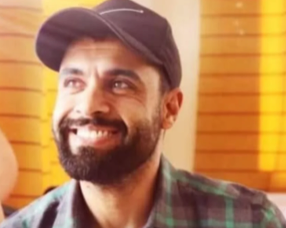
On 02 March 2026, the Tunis Court of First Instance sentenced the dismissed judge Hichem Ben Khaled to two years in prison for three Facebook posts attributed to him, with an eight-month sentence for each post. Judge Ben Khaled did not attend the trial, considering it “illegitimate.”
Judge Ben Khaled is among the prominent judges dismissed in June 2022, along with 57 other judges, on alleged charges including “corruption, covering up for corrupt individuals, and obstructing the prosecution of suspected terrorists.”
He had previously criticised the authorities on Facebook and in media appearances, and expressed his solidarity with prisoners of conscience.
Strategic security expert Noureddine Neifer
On 03 March 2026, the Tunis Court of First Instance sentenced former strategic security expert Noureddine Neifer to 12 years in prison after convicting him of possessing explosives.
The case dates back to late 2023, when he was arrested at his home following a complaint from his neighbour. He was subsequently charged with “possession of explosives.” He remained in detention for over 18 months without being released on bail, even temporarily, despite the absence of a formal trial that established any guilt against him, and the lack of any logical evidence presented to the public.
Some local observers categorised this case as one of the fabricated security cases used by the authorities to suppress public freedoms, silence dissent, and target independent public figures capable of critical analysis and criticism of the government and its authoritarianism.
Arbitrary arrest of a group of activists
On 07 March 2026, five activists participating in the Steadfastness (Sumood) Flotilla were arrested: Wael Nouar, his wife Jawher Channa, Dr. Mohamed Amine Bennour, Nabil Chennoufi, and Sanae Msahli. The detainees face charges brought by the Public Prosecutor’s Office, alleging suspicions of “forming a money laundering conspiracy, fraud, and misappropriation of funds obtained through donations for personal gain.”
The following day, activist Ghassan Hanchiri was arrested while participating in a solidarity march demanding the release of the detained activists. This arrest follows a series of restrictive measures targeting the Steadfastness Flotilla’s activities in Tunisia.
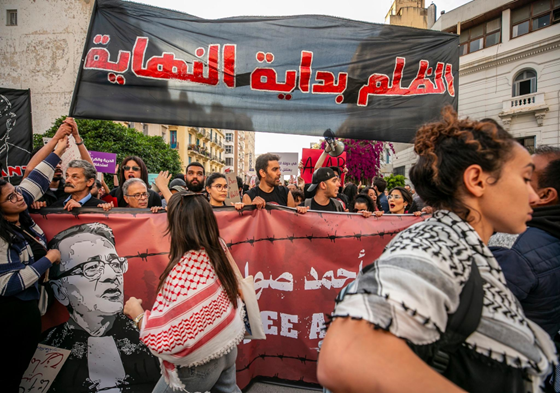
Release of Ahmed Souab and Sonia Dahmani
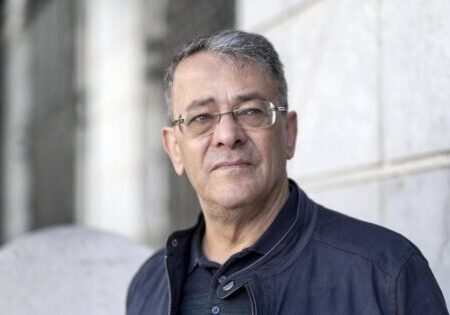
On 23 February 2023, prominent human rights lawyer Ahmed Souab, 69, a former judge and member of the defense team in the “conspiracy against state security” case, was released after the Tunis Court of Appeal reduced his sentence to 10 months, the time he had already served.
On 31 October 2025, the Specialised Criminal Chamber for terrorism cases at the Tunis Court of First Instance sentenced Souab to five years in prison and three years of administrative supervision, after convicting him of “endangering the lives of individuals,” for which he received a four-year sentence, and “threatening to commit a terrorist act punishable by criminal penalties,” for which he received a one-year sentence.
On 21 April 2025, Souab was arbitrarily arrested after making a statement on 19 April 2025, in front of the Tunis Bar Association building, criticising the abuses related to the “conspiracy against state security” case. He was then referred to the Judicial Counter-Terrorism Office for investigation based on an interpretation of his statements published in a video. His health deteriorated while in prison.
He remains in danger, as the Court of Appeal, in its ruling for his release, sentenced him to a 2-year suspended prison term for “endangering the lives of individuals,” warning him against making similar statements again within the legal timeframe.
Also, on 27 November 2025, journalist and media personality Sonia Dahmani, 60, was released after spending more than 18 months in prison, following a conditional release order issued by the Ministry of Justice.
On 30 June 2025, a Tunis court sentenced her to two years in prison after convicting her in a case related to a media statement in which she criticised racist practices against African migrants. Dahmani is known for her criticism of the policies of the current president.
Dahmani had faced ongoing legal harassment since her arbitrary arrest on 11 May 2024, when masked members of the security forces, dressed in civilian clothes, stormed the headquarters of the Tunis Bar Association. Her arrest came after she made statements during a television appearance in which she questioned the government’s stance on migrants in Tunisia.
Five separate cases were filed against her under Article 24 of Decree 54 concerning what was termed “fake news.”
For more information, click here.
Conclusion
The ongoing series of arbitrary arrests and trials, which we have documented, are politically motivated and orchestrated by the Tunisian presidency. The presidency is using the judiciary as a tool to silence all its critics, including human rights defenders and other activists, both online and offline.
This has instilled a general sense of fear among citizens, who have resorted to self-censorship and are unable to freely express their opinions on public affairs. Furthermore, the significant decline in the participation of most civil society organisations in public life, particularly in addressing serious human rights violations, the reluctance of some journalists to cover sensitive topics, and the loss of confidence in legal accountability mechanisms for prosecuting perpetrators and providing redress for victims, have all contributed to a substantial erosion of public freedoms in the country.
Undoubtedly, the most prominent examples confirming this decline are the ongoing arrests targeting various activists, as well as the prolonged periods of pre-trial detention. Arbitrary arrests have become a systematic policy employed by the authorities, and the families of prisoners of conscience suffer from the difficulty of obtaining justice in the sham trials their loved ones face.
Furthermore, Tunisian prisons have witnessed unprecedented overcrowding in the last two years, reaching 200% in some prisons, with the number of inmates increasing by more than 10,000 in the past two years.
Recommendations
GCHR calls on the Tunisian government to:
- Immediately annul the harsh sentences issued against all defendants in the case of conspiracy against the state and release them unconditionally;
- Repeal or revise laws that restrict freedom of expression, and carry out an immediate legislative review of the articles of Decree-Law 54 and other vague provisions, and end judicial harassment of all citizens for peacefully and respectfully expressing their opinions;
- Strengthen the independence of the judiciary and establish procedural legal safeguards to prevent arbitrary detention and abuse of power;
- Work to establish the principles of equality before the law and the separation of powers;
- Implement international standards regarding the concept of a fair trial and due process;
- Refrain from restricting the work of civil society organisations under legal and administrative pretexts, which constitutes a violation of freedom of association and effective civic participation;
- Support the establishment of independent oversight institutions and a strong civil society that monitors and reports violations, and activating mechanisms for accountability and transparency; and
- Guarantee, in all circumstances, the ability of human rights defenders in Tunisia to carry out their legitimate human rights work without fear of reprisal and without undue restrictions, including judicial harassment.

-
Latest News
-
Related Publications
Latest Urgent Action
 Bahrain
Human rights defender Naji Fateel re-arrested
Defenders Affected
-