Executive Summary
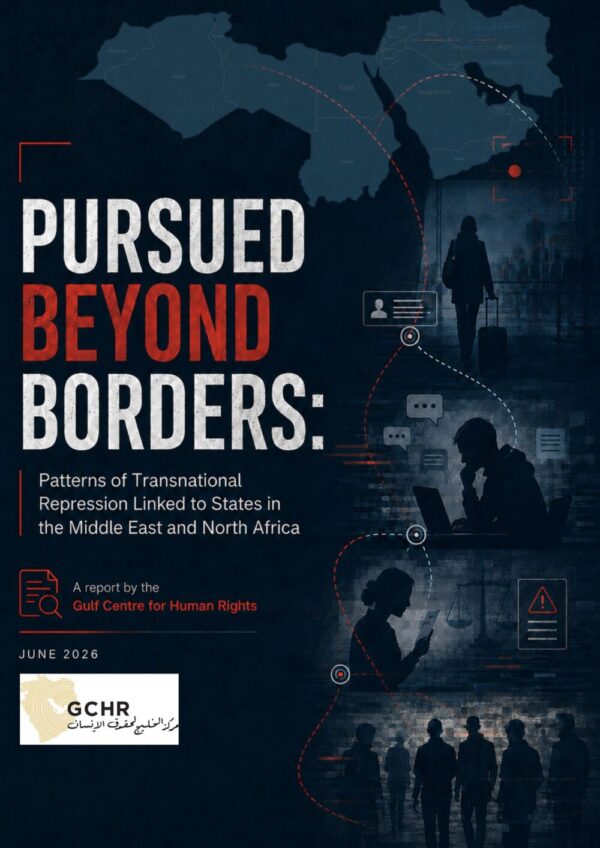
This report by the Gulf Centre for Human Rights (GCHR) documents how transnational repression linked to States in the Middle East and North Africa (MENA) restricts and endangers the work of human rights defenders (HRDs), journalists, writers, academics, trade unionists, bloggers and other peaceful civic or political actors abroad, including through pressure on their relatives and associates. Drawing on more than twenty documented or credibly alleged cases connected to seven States in the region — the United Arab Emirates, Saudi Arabia, Kuwait, Bahrain, Egypt, Jordan and Algeria — over the period 2022 to 2026, together with earlier cases that saw significant developments during that period, it relies on GCHR documentation, reports by other human rights and press-freedom organisations, United Nations communications and opinions, national court records and independent technical and forensic investigations. It does not seek to document every relevant case, and distinguishes documented conduct from conduct that is credibly alleged.
It focuses on four recurring patterns: removal, transfer and risk of refoulement; direct and indirect transnational intimidation and reprisals; misuse of legal, administrative and security measures; and transnational digital surveillance. Although the methods differ, they converge on a common aim: to silence, punish or deter peaceful activity carried out from abroad. The report sets out the safeguards required to protect those targeted, prevent refoulement and reprisals, curb abusive legal and security cooperation, ensure accountability and effective remedies, and prevent unlawful or arbitrary cross-border surveillance.
Introduction and Scope
Transnational repression unsettles a core assumption of protection: that leaving the territory of a State can place a person beyond the immediate reach of State-linked coercion. When State authorities, or actors operating with their consent, acquiescence or support, target or exert pressure on individuals abroad to silence, punish, restrict or deter the peaceful exercise of their rights, distance and borders may cease to function reliably as safeguards. The cases examined in this report indicate recurring forms of cross-border pressure affecting safety, liberty, legal status, family members, property, privacy, communications and the ability to continue peaceful public work.
Such conduct weakens the protective function of exile, asylum, residence abroad and engagement with international human rights mechanisms. Individuals who have sought or obtained protection may remain exposed to removal, intimidation, legal or administrative restrictions, digital surveillance or pressure on relatives and associates. Because these measures operate across jurisdictions, they may also engage the responsibilities of States of residence, asylum or transit, including where those States cooperate in transfers, fail to prevent foreseeable harm, or do not provide effective protection, investigation or remedy within their jurisdiction.
In the context of the Middle East and North Africa (MENA), the cases reviewed in this report indicate how cross-border pressure connected to States in the region may reach individuals in countries of residence, asylum or transit. The persons affected include human rights defenders, journalists, writers, academics, trade unionists, bloggers, online commentators and peaceful political or civic actors, as well as family members or associates targeted as a means of exerting pressure on them. The report does not address repression within the region generally, but focuses on cross-border practices linked to the peaceful exercise of internationally protected rights.
This report examines a selection of more than twenty cases of documented or credibly alleged transnational repression connected to seven States in the Middle East and North Africa region: the United Arab Emirates, Saudi Arabia, Kuwait, Bahrain, Egypt, Jordan and Algeria. It covers cases documented during the period 2022 to 2026, as well as earlier cases that were subject to significant developments during that period. It does not seek to document every relevant case, and its scope is shaped by the information available at the time of writing.
The report organises its analysis around four recurring and interrelated patterns: removal, transfer and risk of refoulement; direct and indirect transnational intimidation and reprisals; misuse of legal, administrative and security measures; and transnational digital surveillance. These categories are analytical rather than rigid: a single case may engage more than one pattern. Together, they provide a framework for examining how different tools of cross-border pressure may be used to restrict, punish, isolate or deter peaceful public activity beyond national borders.
Read the full report here:
-
Related Publications
Latest Urgent Action
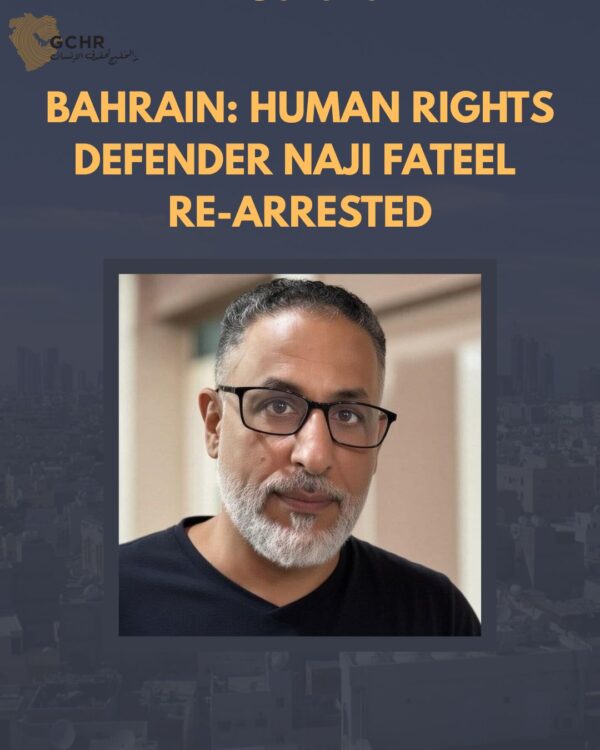 Bahrain
Human rights defender Naji Fateel re-arrested