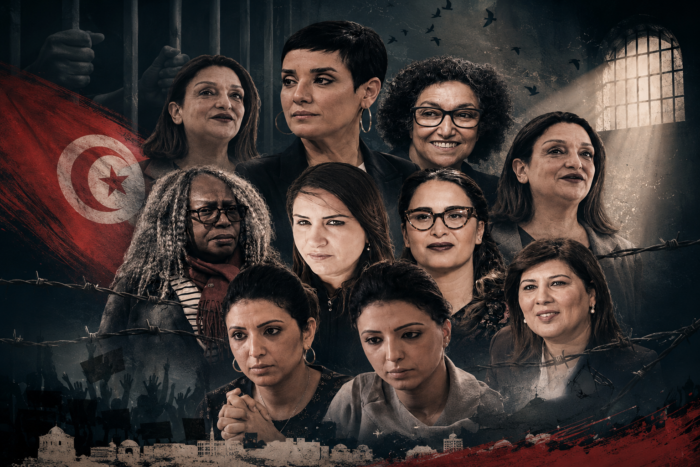
The Gulf Centre for Human Rights (GCHR) pays tribute to the brave women of Iraq who are fighting for women’s rights at a time when violence against women is constantly in the news, and calls on the authorities to join in honouring their work rather than prosecuting them. In addition, GCHR calls on Iraqi Parliament to immediately pass a domestic violence law, as tragic incidents continue to claim the lives of young women.
In this second part of its eighth periodic report, GCHR also reports on attacks on protesters and the media and calls on the authorities to protect freedom of expression and assembly, including in Iraqi Kurdistan, where civil society activists have been arrested. During the past month, numerous demonstrations took place across Iraq calling for an end to corruption, the implementation of measures to ensure fair elections, and for the killers of peaceful protesters to be put on trial. Meanwhile, protesters have contributed by cleaning up Al-Tahrir Square.
Judicial targeting of women’s rights organisation
Women’s rights groups are needed to promote and protect the rights of women in Iraq, and their work should be welcomed by the government. Yet, the Organisation of Women’s Freedom in Iraq (OWFI), which is legally registered, is facing judicial targeting for helping women flee abusive homes, and due to its unlimited support for the current popular movement in Al-Tahrir Square in Baghdad, the main sit-in area in Iraq, where it set up two tents. The OWFI actively participated in different cultural and social activities on women’s rights and their role in protests.
The General Secretariat of the Council of Ministers has filed a lawsuit against prominent human rights defender Yanar Mohammed (photo above on right) as the head of the organisation. The complaint included several allegations, including breaking the law by harbouring women fleeing from their homes in various cases and exploiting girls by facilitating their travel outside the country.
The Karrada Court of First Instance in Baghdad held three sessions to hear the case, the first of which was on 23 March 2020. During the third session on 17 September 2020, headed by Judge Lamia Hussain, the court decided to postpone hearing the case until 01 October 2020 at the request of the defence team consisting of attorneys Mustafa Hadi Al-Saadi and Anmar Haitham Al-Saadi.
The OWFI established the first safe haven for women in Iraq in 2003 and expanded the number of safe houses to 11 in five Iraqi governorates. Due to its work defending Iraqi women’s rights, it received the Gruber Prize for Women’s Rights in 2008 and Norway’s Rafto Prize in 2016.
This complaint lacks legal basis due to the close cooperation between the OWFI and various competent government agencies, including the Ministry of Labour and Social Affairs, since its establishment in 2003. As well, the NGO Department is entrusted with the task of resolving violations by civil society organisations through meaningful, healthy dialogue and meetings between the representatives of the two parties. Resorting to the judiciary should happen only after exhausting all means, including starting with a warning, according to the first paragraph of Article 23 of the Non-Governmental Organisations Law No. 12 of 2010, which states the following: Notifying the organisation that the violation should be removed within a period not exceeding (10) ten days from the date of notification.
GCHR requests that the UN Special Rapporteur on the situation of human rights defenders Mary Lawler and the Special Rapporteur on Freedom of Peaceful Assembly and Association Clément Nyaletsossi Voule call on the Iraqi government to immediately act to revoke this complaint.
Domestic violence legislation must be passed into law

In a heart-breaking example of violence against women, on 30 August 2020, another victim of domestic violence, Hanin Al-Zubeidi from Baghdad, who was in her twenties and eight months’ pregnant, died after her husband poured petrol on her body and set her on fire. Her husband, to whom she had been married for seven years, reportedly became addicted to drugs and beat her frequently. Al-Zubaidi was taken to hospital for treatment, but died after several days, and her baby did not survive. It had taken her five years to get pregnant.
These repeated tragic incidents require the speedy passage of a law that works effectively to stop domestic violence, including gender-based violence, by prosecuting those responsible, and providing real legal protection for children and women.
On 04 August 2020, the Iraqi government approved the Law on Combating Domestic Violence in order to protect vulnerable segments of society, especially children and women. The bill has been sent to Parliament for debate and approval.
Women’s rights activist celebrated

On a positive note, GCHR welcomes the news that Iraqi woman human rights defender Intisar Al-Mayali received the 2020 Per Anger Prize for Human Rights and Democracy. It is an international prize, established in 2004 by the Swedish Government to promote initiatives supporting human rights and democracy. The Government has commissioned the Living History Forum to manage the nominations, appoint a jury and organise all the various aspects of the prize.
Al-Mayali has worked as a volunteer in the field of civil and human rights since 2003 and is a defender of women’s rights, a writer and freelance reporter in newspapers, magazines and websites, a member of the secretariat of the Iraqi Women’s League (IWL), and a member of the coalition to support the national plan related to United Nations Resolution 1325, on women, peace and security. She holds a diploma from the Institute of Fine Arts in Baghdad. She participated in a number of local and international courses inside and outside Iraq, and has written many articles and writings related to women’s rights, gender and the constitution. Al-Mayali uses her Facebook page, which was topped by a sentence that introduced herself, “A Woman from a Time of War and Peace”, to comment on public issues of concern to citizens as well as in support of the current popular movement.
The award’s website published a video of Al-Mayali’s ongoing human rights work, at the end of which she said, “We can change, and we will change!” She won the award because she “fights for women’s rights in Iraq – a country where patriarchy, traditions, and sectarianism lead to discrimination and violence against women. Despite threats, she has documented human rights abuses for 20 years. She shines a light on domestic violence, child marriages, and honour killings. She raises awareness of the pressing needs of women and girls victimised by Dae’sh and other extremist groups.”
Attack on TV channel and targeting of journalists

On 31 August 2020, a group of people broke into and burned the headquarters of the Dijlah satellite channel in the capital, Baghdad, in protest against the broadcast on one of the Dijlah Foundation channels – Tarab Channel – of singing on the tenth of Muharram, which is the mourning day of Ashura, marked on 30 August 2020, when dozens gathered in front of the channel’s headquarters in the Al-Jadriya area in Baghdad, chanting slogans of protest. They stormed the headquarters, broke the channel’s furniture and equipment, and then set fire to it at a time when the security forces stood by and did not intervene to stop these attacks.
The attack took place despite the Dijlah Media Foundation’s formal apology on 30 August 2020, which stated, “What happened on the night of Ashura was not intended at all. Rather, there is an independent administration for the Dijlah Tarab channel, which does not follow the policy of the main Dijlah channel, and therefore continued broadcasting the channel’s programmes like any other day without observing the privacy of this sad and heart-breaking night, for which we highly appreciate the extent of sadness and the heat of tears. Therefore, on the basis of the principle of patriotism and professionalism, we present this clarification accompanied by an apology to all believers in Iraq. The Dijlah Tarab channel will also be closed temporarily out of respect for the greatness of the occasion.”
On the same day, Al-Rusafa court issued an arrest warrant against the owner of the channel after a number of lawyers submitted a complaint regarding the intentional offense of religious rituals in Iraq, according to Article 372/1 of the Iraqi Penal Code.
Likewise, on 31 August 2020, the Ministry of Interior issued a statement in which it said “it affirms respect for the sanctity of the sacred month of Muharram” but “at the same time it rejects the attacks that affected one of the satellite channels and that freedom of journalism and media work in the country originally governed by an enforceable law.”
Reliable sources from the Dijlah Channel have confirmed to GCHR that 75 people have lost work due to the destruction of the channel’s headquarters, including administrators, editors, reporters, photographers, program providers and their technical staff, while in central and southern Iraq, nine reporters and nine photographers lost their jobs. A number of these workers were forced to leave their work due to various threats and pressures.
Among those who were forced by the repeated threats from the armed militias to leave their work and their cities are: Zaid Ali Jawad Al-Fatlawi, a journalist and field reporter for the Dijlah channel in the Governorate of Diwaniyah, the Dijilah channel correspondent in the Wasit Governorate, Ali Mohammed Abdulalreda, the field correspondent for the Dijlah channel in the Governorate of Najaf, Karar Mohammed Abd Ali Al-Assaf, and Mohammed Hassan Kazem, a photojournalist for the Dijlah channel in Al-Diwaniyah Governorate.
GCHR calls on the Iraqi government to fulfil its constitutional obligations, protect the media, prevent any attacks against them, and confront all those who threaten and intimidate journalists. Likewise, the security forces must do their duty to the fullest in protecting public and private property, including preventing such attacks in the future.
Peaceful demonstrators remembered

Peaceful demonstrator Zaid Riad Al-Ghalbi lost his life on 28 November 2019 during demonstrations in the city of Najaf, and after his death his family spent the money that he collected to get married on the expenses for his funeral. His sister had a baby on 13 September 2020 who looked like her brother, so she remembered him by naming her son Zaid. Through such acts, citizens will not forget those who sacrificed their lives for the freedom of a nation and a homeland free from corruption, terrorism, discrimination and oppression.
On 29 August 2020, peaceful demonstrator Allawi Al-Deeb died after being infected with the Novel Coronavirus (Covid-19). He participated from the beginning in the activities of the sit-in square in the city of Samawah, the central city of Al-Muthanna Governorate, and despite his Down syndrome, he participated in all religious and national events. Those who knew him said he was pure and kind-hearted, so everyone loved him.
Restoration of Al-Tahrir Tunnel

On 07 September 2020, a group of Al-Tahrir Square protesters carried out a campaign to rehabilitate, clean and restore the Al-Tahrir Tunnel in preparation for the first anniversary of the start of the popular movement in October. The cleaning campaign lasted for three days, and on 11 September 2020, the campaign to paint the walls of the tunnel began, and it continued until 16 September 2020.
Demonstrations across Iraq
During the past weeks, numerous demonstrations took place in various Iraqi Governorates calling for an end to corruption, the implementation of measures to ensure fair elections, and for the killers of peaceful protesters to be put on trial.

Despite the high temperatures, demonstrations took place on 08 September 2020 (photo 1), across Babil Governorate to focus on the most important goals of the popular movement, which is the completion of the election law and accountability for the killers of the demonstrators. On 15 September 2020, two mass demonstrations began at the same time (photo 2) – the first demanded the release of ration card items for citizens, while the second demanded the completion of the election law, accountability for the protesters’ killers, and the state’s control of weapons.
On 06 September 2020, a mass demonstration began in the city of Nasiriyah (photo 3), demanding the completion of the election law and the implementation of the multiple electoral district system.
On 06 September 2020, a march took place in Al-Tahrir Square in Baghdad (photo 4), in which protesters claimed the upcoming elections would be rigged if people were allowed to use old electronic identity cards and demanding that biometric identity cards be used to ensure the integrity of the vote.

On 23 August 2020, a huge march took place in Basra, calling for the prosecution of the protesters’ killers and the dismissal of Basra Governor Asaad Al-Eidani (photo above left.)
On 17 August 2020, in the city of Al-Amara, the central city of Maysan Governorate, mass demonstrations demanded the election law be completed (photo above right.)

On 06 September 2020, a group of Iraqi doctors organised a demonstration in front of the Ministry of Health, in which they demanded their rights, including the activation of the Physicians Protection Law and the acceleration of the appointment of doctors who graduated in 2019 to fill the severe shortfall in their numbers, which in turn affected the medical services provided to citizens. On 19 September 2020, Iraqi doctors began a general strike in hospitals, to push the government to implement their demands, which they announced in an official statement, including limiting working hours, activating a law to protect doctors, preventing attacks against them, providing necessary treatment in hospitals, and increasing financial allocations to hospitals. The strike only included the hospital’s junior doctors.

On 01 September 2020, a march was organised in Al-Tahrir Square to demand the rights to government compensation of the peaceful demonstrator Nour Ahmed Awad Al-Kinani, who lost his life in Al-Tahrir Square, but the authorities recorded his place of death as his home so claimed his family did not merit compensation. Several of his friends participated in the march.
Al-Kinani was born in 2000, and lived with his family in Al-Baladiyat district in Baghdad. He did not complete his studies, and worked with his father in a food factory, and for two years in a youth cafe, after which he worked selling men’s clothing and at fashion shows. He also participated in several activities, including the ceremony of the Beauty King of Baghdad in which he was first runner-up. He died on the morning of 29 December 2019, after clashes between riot police forces and protesters in the Turkish restaurant building, where some people in civilian clothes threw bombs, stones and pieces of iron. At that time, Al-Kinani was in his tent next to the restaurant building near the first line on Al-Jumhuriya Bridge, but he went out to extinguish the fire that broke out in a nearby tent, when a piece of iron hit him in the head. He was taken to the hospital, where he died from severe bleeding. He was interested in poetry and had a book of his poems. One of his friends, named Ali, describes him as having “good manners, gentle in spirit, humble, lover of life and supportive of all. His whole dream was to find permanent work in order to be able to bond and complete his life’s path.”
Protests and arrests in Iraqi Kurdistan

On 04 September 2020, GCHR released an appeal which stated, “On the evening of 22 August 2020, large demonstrations took place in various cities of the Kurdistan region of Iraq, including the cities of Sulaymaniyah, Halabja, Darbandikhan, Kalar, Chamchamal, Koya, Zakho, Akre, and Shiladze, where people demanded payment of salaries which have not been paid in six months, and also rejected the government’s decision to cut 21% of employees’ salaries despite the delay. Demonstrators also stressed the need to put an end to rampant corruption, and to form an independent election commission in Iraqi Kurdistan under the auspices of the United Nations.” On 10 September 2020, GCHR issued another appeal reporting that GCHR “has received credible reports confirming that Asayish forces (Internal Security) continue to arbitrarily detain people without a judicial order and place detainees in prisons that lack health care and cleanliness at a time when the Novel Coronavirus (COVID-19) pandemic is spreading, which puts the lives of the detainees at imminent risk.”
The series of arbitrary arrests of activists, teachers, journalists, and critics of the region’s policies continued in the Governorates of Dohuk and Erbil by the security authorities of the Kurdistan Democratic Party (KDP) headed by Masoud Barzani, which began on 18 August 2020. These arrests are related to popular protests due to the financial crisis, poor living conditions for people and deterioration of public services.
On 22 September 2020, writer and journalist Bahroz Jafar (photo on the left) was arrested after a complaint against him by the President of the Republic, Barham Salih, which was registered by his representative. The complaint relates to an article that Jaafar published with the title, “For How Long Will the President of the Republic Go Against the Direction?” Jaafar is a writer, journalist, and director of the Mediterranean Center for Regional Studies (MIRS) in Sulaymaniyah and a member of the Kurdistan Journalists Syndicate. The Metro Center for Defending the Rights of Journalists issued a press statement after the arrest demanding his release, and indicated that, “The presence of writers, journalists and activists in prison simply for writing a post on social media, or on some websites or in a newspaper, will negatively affect any A government that claims democracy and openness. ” Jafar uses his Facebook page to express his views and publish his various articles.
On 14 September 2020, after more than 28 days spent in detention, the Duhok Misdemeanour Court sentenced human rights defender Badal Abdulbaqi Barwari (photo in the middle) to a fine of two million Iraqi dinars (USD$1680) under article 2 of the Law on Misuse of Communications in the Kurdistan Region. However, the court did not approve the defence team’s request to release him from prison on bail, alleging that there was another court case against him.
A hearing in another case against Barwari on charges of calling for mass demonstrations on 22 August 2020, and publishing the call on social media networkers and other communications platforms, was scheduled to be held on 22 September 2020. It was postponed as his defence team, consisting of seven lawyers, submitted a request to the Investigation Court to dismiss the case as there is no legal basis for it. The request will be decided upon next week.
On 09 September 2020, a special detachment of the Asayish forces (Internal Security) raided the house of civil society activist Walat Jamil Kewda (photo on the right) in the city of Zakho, and arrested him in front of his family. He was charged with inciting peaceful demonstrations and for voicing his criticism of the policies of the regional government and its bad treatment of detainees in the Governorate. The next day, his house was raided again under the pretext of searching it, when his mobile phone, computer and some other possessions inside the house were confiscated without any judicial warrant. He is still detained.
GCHR condemns in the strongest terms the actions of the authorities in the Kurdistan region who continue to pursue repressive policies aimed at curtailing the public freedoms of citizens. The Kurdistan Regional Government should immediately stop the arrests and release all detained teachers, activists, journalists, and peaceful protesters without any conditions. The authorities must fulfil their constitutional obligations not to violate public freedoms any more, including freedom of peaceful assembly, freedom of expression, and freedom of the press.

-
Latest News
-
Related Publications
Latest Urgent Action
 Bahrain
Human rights defender Naji Fateel re-arrested
Defenders Affected
-