The Gulf Centre for Human Rights (GCHR) has documented the human rights situation in Iraq during the past five years since the start of the popular movement in October 2019, including by publishing 36 periodic reports detailing the grave violations taking place in the country. They can be viewed here.
The 36th periodic report addresses various types of violations, including the gross human rights violations witnessed in Iraq over the past five months, including numerous killings of professionals and journalists, in addition to torture, arrests, violations of media freedom and violence against peaceful demonstrators.
Serious violations ahead of the parliamentary elections
The Coalition of National Election Monitoring Networks and Organisations in Iraq issued a preliminary report monitoring election campaigns and hate speech for the period from 03 October 2025, the date announced by the Independent High Electoral Commission as the start of campaigning for candidates, until 15 October 2025. The Parliamentary elections are scheduled for 11 November 2025.
The report was based on an analysis of 309 monitoring forms, 123 of which were completed in the field. The remaining 186 monitoring forms were collected from social media networks, confirming that “the digital space has become the main arena for political conflict, particularly with regard to violations of speech and defamation,” according to the report.
Based on the geographical distribution, Erbil Governorate topped the list of governorates in terms of the number of violations, with a percentage of 18%, followed by Nineveh Governorate with 17.1%, and Basra Governorate with 16.2%.
The violations monitored in Erbil Governorate included hate speech, vote-buying, and the exploitation of state resources. In its analysis of these violations, the report attributed the reasons to partisan and financial conflict, intense media confrontation, and the exploitation of the Kurdistan Region’s resources.
In Nineveh Governorate, the violations included the systematic destruction of election campaign materials and the exploitation of government institutions. The report attributed this to power struggles and financial conflicts.
In Basra Governorate, the violations included the destruction and burning of election materials, in addition to the exploitation of vulnerable groups due to fierce competition for economic influence and the exploitation of the needs of the poorest populations, as the report explained.
In Kirkuk Governorate, where the number of violations constituted 6.5%, it was notable that racist and discriminatory rhetoric was observed, in addition to the targeted destruction of election materials. The report attributed this to the city being a hotbed of ethnic tension and the exploitation of elections to increase tensions between the city’s ethnic groups.
In the capital, Baghdad, where the number of violations constituted 4.9%, extremely serious attacks and the exploitation of public roads were observed. The report attributed the cause of political violence to the desire to radically exclude some candidates in the capital.
Among the report’s foremost conclusions was that “the challenges facing the electoral process at present relate to money, power, and influence, not merely procedural violations.” In addition, “the legal deterrent to sabotage is weak.” It also pointed to the escalation of violence and the existential threat it poses, describing it as “targeted political violence,” leading to “tearing apart the social fabric,” as “hate speech on digital platforms goes beyond mere defamation to become a tool for ethnic and sectarian polarisation.”
The report included several recommendations, such as urgent measures for immediate deterrence, including increasing the penalty for sabotage and activating a hotline for reporting threats. The report also recommended, among other medium-term measures, the establishment of a specialised judicial investigation body for electoral corruption. In addition, as part of long-term measures aimed at structural reform, the report recommended amending the Political Parties Law to impose deterrent financial penalties on violating entities as a whole, rather than individual candidates; establishing a permanent, independent observatory to monitor campaign financing and vote-buying; and developing a binding code of conduct to combat hate speech on digital platforms.
Violent incidents accompanying election campaigns

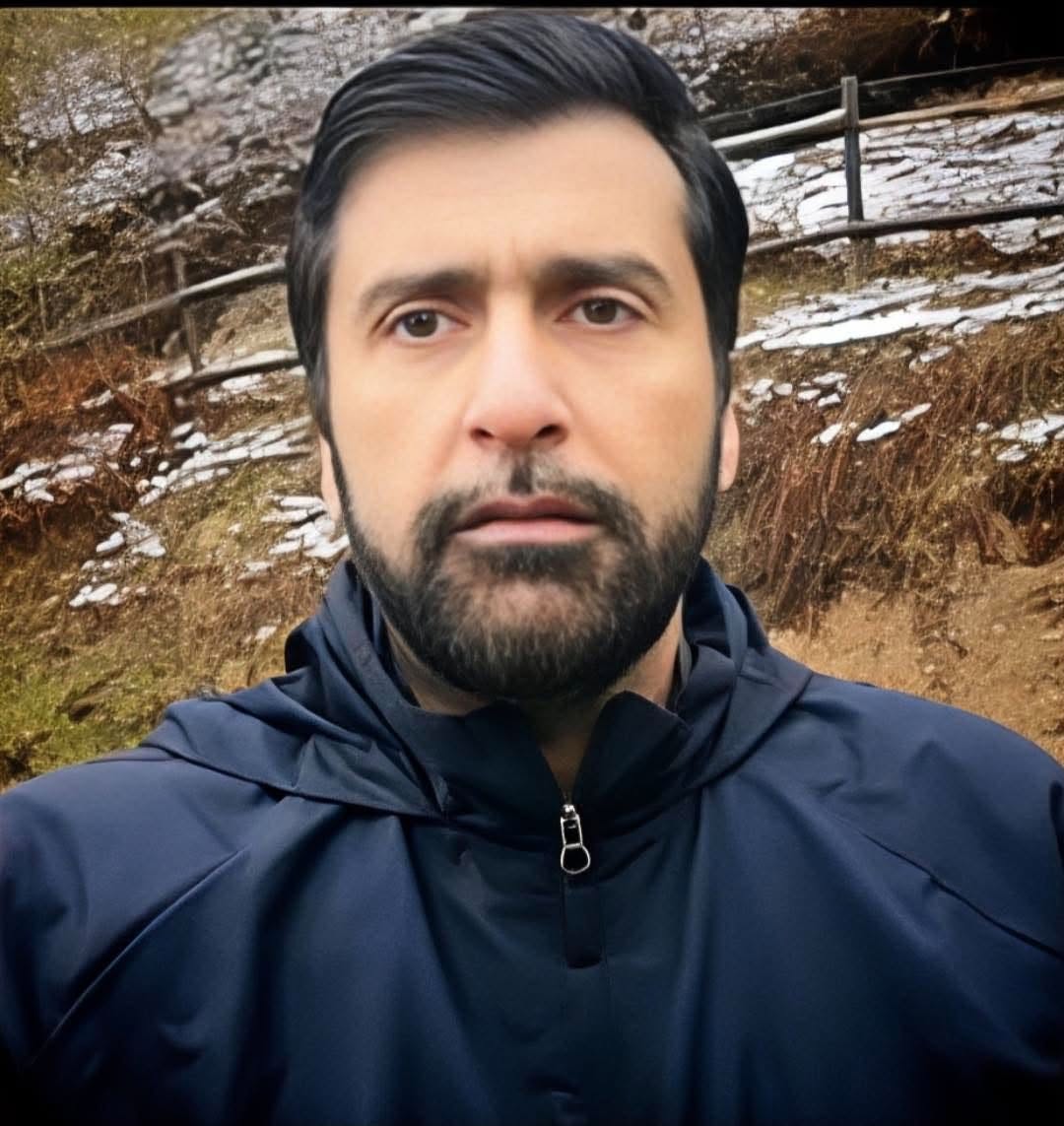
On 20 October 2025, the home of Kirkuk parliamentary election candidate Nawfal Hamad Al-Lahibi (pictured left) was attacked by unknown gunmen. The gunmen fled the scene, causing no injuries.
On 15 October 2025, a member of the Baghdad Governorate Council who is a candidate in the parliamentary elections, Safaa Al-Mashhadani (pictured centre), was killed and four others injured when a sticky bomb placed in his car exploded in the Al-Dhubat neighbourhood of the city of Tarmiyah, north of Baghdad.
His killing sparked outrage among citizens across the country, raising fears of a return to a series of political assassinations. The Baghdad Operations Command announced the formation of a joint technical criminal task force, under the direction of Prime Minister Mohammed Shia Al-Sudani, to investigate the circumstances of the incident.
At dawn on 18 October 2025, unidentified gunmen opened fire on the office of Baghdad Governorate Council member and parliamentary candidate Muthanna Al-Azzawi (pictured right) in the Yusufiyah district, 25 kilometers south of Baghdad. The attack injured a member of the security team, and the gunmen fled.
Al-Azzawi wrote on his Facebook page after the incident, “We strongly condemn and denounce the cowardly attack that targeted our office in the Yusufiyah district, which resulted in the injury of one of our brothers, and the subsequent acts of filming, defamation, extortion, and attempts to insult, which have nothing to do with morals or values.”
Widespread opposition to amending the Personal Status Law

Iraqi women participate in a protest in Al-Tahrir Square on 28 July 2024, in Baghdad, against the amendment to Personal Status Law No. 188 of 1958.
On 27 August 2025, the Iraqi Parliament voted on the Ja’afari Code of Sharia Provisions for the Personal Status Law. It became effective on 06 October 2025, the date of its publication in the Official Gazette.
The code faced widespread opposition from a large number of Iraqi women and civil society organisations. Retired judge Rahim Al-Akili wrote an article titled, “What Women Lost in the Ja’afari code,” in which he began, “Iraqi women—Shiites in particular—are now obligated to submit to this code—themselves and their minor children—if their husbands choose to implement it, regardless of their consent or disapproval.
In his article, Al-Akili outlined 17 instances of women’s rights losses under the code, most notably the following:
- It is no longer possible to award a woman subject to the code arbitrary compensation if her husband divorces her arbitrarily.
- The lack of a minimum age for marriage. Accordingly, marriage of an adult (nine lunar years for females and fifteen lunar years for males) is permissible according to the code. If marriage is not conducted in court, then outside the courtroom, without criminalising marriage outside the courtroom as it is under the Personal Status Law. Consequently, marriage of minors outside the courtroom is legal and not criminalised.
- Article 9 of the code allows a woman to stipulate that her husband may not marry another woman or divorce her without her consent. However, it empties the condition of its meaning. If he marries another woman or divorces her without her permission, the contract is valid and enforceable, and the only consequence is that the husband is described as “sinful according to Islamic law.”
- Article 81 of the code, while granting maternal custody until a child reaches the age of seven, completely ignored the criterion of the child’s best interests, stipulating that custody automatically transfers to the father after this age “until the end of its term,” without any restriction linking it to the child’s best interests. Thus, the code has overturned the principle of “the best interests of the child,” a cornerstone of all modern legislation, and replaced it with an automatic, formal transfer that prioritises the form of the marital relationship over the child’s fundamental interests.
Constitutional experts have confirmed that the code violates Article 88 of the Iraqi Constitution, which stipulates the independence of the judiciary, as it allows clerics to interfere in their affairs. Furthermore, the code grants citizens’ rights based on their religion, not their citizenship. This violates Article 14 of the Constitution, which emphasises equality and the rejection of discrimination, stating, “Iraqis are equal before the law without discrimination based on gender, race, nationality, origin, color, religion, sect, belief, opinion, or economic or social status.”
Iraq’s Communications and Media Commission violates freedom of expression online

Meta, the social media company, stated in its October 2025 Transparency Report, “We received two notices from Iraqi Communications and Media Commission )CMC) restricting access to two Facebook posts, based on Federal Supreme Court Decisions No. 325 and 331 of 2023 and Article 229 of the Iraqi Penal Code. The posts reportedly included accusations of corruption and bias against high-ranking judicial officials. Risks of failure to comply with the CMC notice include the possibility of ads being blocked and payments to Meta being stopped by the Central Bank.”
Meta confirmed, “The reported posts did not violate Meta’s Community Standards.” However, it restricted “access to the posts in Iraq for allegedly violating local law, and notified the affected users.”
Meta owns and operates several prominent social media platforms and communication services, including Facebook, Instagram, WhatsApp, Messenger, and Threads.
GCHR condemns in the strongest terms the Communications and Media Commission’s violation of Article 36 of the Iraqi Constitution, which stipulates that the state guarantees freedom of expression by all means, despite being a publicly funded institution. It also calls on Meta not to submit again to such requests that violate the rights of Iraqi citizens.
Commemorating the 6th anniversary of the October popular movement

On 01 October 2025, to commemorate the sixth anniversary of the start of the popular October movement on the same day in 2019, dozens of participants from the 2019 protests and families of those who sacrificed their lives demonstrated in Al-Tahrir Square in central Baghdad, demanding a corruption-free homeland where social justice and respect for civil liberties prevail. They lit candles in their memory and once again demanded that the perpetrators of their killings be held accountable.
Popular protests across the country
Massive popular demonstrations were held in Baghdad, and several other cities, with demonstrators demanding civil and human rights, improved living conditions, and various other demands. Security forces attempted to disperse some of these demonstrations using excessive force.
Protests continue for safe drinking water

Citizens in the Al-Tamimiyah and Al-Hayaniyah areas of Basra Governorate have been protesting for days after the water supplied to their homes became salty and unfit for drinking. Basra Governorate has suffered from water pollution for decades, as the scarcity of river water has led to a rise in the salt content of the Shatt Al-Arab branch of the river, contaminating the governorate’s fresh water.
On 11 October 2025, the demonstrations continued, with protesters blocking several streets with burning tires and expressing their anger at the government’s failure to resolve this chronic problem.

A video clip showed riot police brutally beating a citizen in Basra who participated in these demonstrations. Press reports indicated that the Basra Governorate Police Commander ordered an investigation to determine the details of the incident and take legal action against those responsible.
Protests for financial rights of contract employees

On 06 October 2025, contract employees in Maysan Governorate organised a demonstration in front of the governorate’s office to protest the non-payment of their salaries after nine months of regular work. Riot police forcibly dispersed the demonstration and arrested some of the protesters, who were briefly released the same day.
The day before their demonstration, the contract employees wrote on their Facebook page, “Our protest tomorrow is for our rights, and we will not retreat until justice is served. We will continue to demonstrate and hold sit-ins until funding is completed and our salaries are paid.”
Demonstration by engineers demanding job opportunities suppressed by riot police

On 16 September 2025, dozens of engineers staged a peaceful demonstration in central Baghdad, demanding job opportunities and employment. Riot police suppressed them, beating them, spraying them with hot water near one of the gates of the Green Zone, and preventing them from exercising their right to peaceful demonstration.
Protests demand improved electricity supply

In May 2025, protests erupted in several Iraqi cities due to frequent power outages across the country.
The protests began in the Al-Haidariya district of Najaf Governorate, where power outages reached nine hours per day, compared to only two hours of service. The demonstrations, in which residents of the district participated, continued for days, blocking roads.
Riot police intervened to disperse them, and the protesters were subjected to severe repression. More than 20 demonstrators were arrested, all of whom were released after several days of arbitrary detention.
These protests spread from Al-Haidariya to the districts of Al-Munathira and Al-Mashkhab in the same governorate, and to the Ghammas district in Al-Qadisiyah Governorate.
Security forces violate citizens’ rights during arrest or detention
A large number of cases have been documented in which citizens were subjected to ill-treatment, severe beatings, and torture by security forces upon arrest or during their detention. The main reasons for the prevalence of this chronic condition among members of the security forces, and in their prisons and detention centres, are a lack of awareness of human rights, and a widespread phenomenon of impunity and a lack of accountability when it comes to powerful officials and those who work with them, as we see in the two cases below.
Public roads blocked following the death of a citizen in custody

On 23 September 2025, dozens of young men from the Al-Ayed tribe blocked the public road opposite Al-Zahra Hospital in the Al-Kafaat neighborhood in central Kut following the death of their relative, 48-year-old Ali Rahi Fazaa. Reliable local sources reported that he was found dead, with clear signs of torture on his body, just two hours after his arrest by security forces in the governorate. The city’s police chief announced an official investigation into the circumstances of the incident, but this did not diminish the anger of his family and the governorate’s citizens.
Policeman hit young citizen in the eye with a stick

In June 2025, 18-year-old Dhu Al-Fiqar Murtadha, a student at the Institute of Fine Arts in Diwaniyah, was violently beaten in the eye with a stick while he was studying with his brother in front of his home. He was later taken to the University District Police Station in the same city, without receiving any first aid. This led to a deterioration in his health and the loss of sight in one eye. Diwaniyah city is the capital of Al-Qadisiyah Governorate.
A culture of violence in society & spread of unregulated weapons
The violent incidents documented by GCHR below underscore the need to promote a culture of non-violence in Iraq and to restrict the possession of weapons to the state.
Photojournalist Wissam Al-Ghanimi murdered

On 28 July 2025, security forces found the body of sports photojournalist Wissam Al-Ghanimi in a remote area near the Third River in the Al-Badir district of Al-Qadisiyah Governorate, two days after his disappearance. The body bore multiple stab wounds to his back, abdomen, and chest. His vehicle was also found at the same location.
The following day, the Diwaniyah Police Command announced the arrest of the two perpetrators of the murder, both residents of the same governorate. They stated that one of them was from the Afak district, and the other from the Al-Badir district. The motive for the murder has not yet been revealed.
Citizen assassinated in front of her home

In the early hours of 07 October 2025, Hamsa Hasim Mohsen Al-Hasnawi, 30, was assassinated in front of her home in the Al-Amiri area of Kut, the capital of Wasit Governorate. She died instantly after two unidentified gunmen on a motorcycle fired seven bullets at her while she was inside her car.
Al-Hasnawi, who was preparing her doctoral dissertation, worked for several years at Wasit TV before moving to the Wasit Governorate Water Directorate and being appointed as the governorate’s National Security Advisor. Her sister had previously lost her life in a car accident years earlier, followed by her second sister, who died after giving birth.
The Minister of Interior ordered the formation of a task force to investigate her murder. Meanwhile, her brother, journalist Amir Al-Wasti, stated in a television interview that his sister had received threats before her assassination and that he had provided information about these influential figures to the relevant authorities during the investigation.
One of her colleagues wrote about her: “She was not just a colleague, but a sister in this journey, a symbol of giving and dedication to work. She was a beacon of activism, a struggling human rights activist who dedicated her voice and pen to the causes of truth and justice.”
Case of Dr. Ban Ziad Tariq…suicide or murder?

On 04 August 2025, Dr. Ban Ziad Tariq was found dead under mysterious circumstances in her home in Basra. Initial photos and reports confirmed deep wounds and bruises on her body, sparking widespread media attention and widespread suspicion among citizens that she had been the victim of a premeditated murder.
Despite this, the Supreme Judicial Council issued an official statement on 18 August 2025, confirming that criminal investigations had proven her death to be a suicide.
Dr. Tariq was born in Basra and completed her medical studies at the University of Basra in 2015, specialising in psychiatry. She was known among her colleagues for her professional competence and dedication to her patients. Even before her death, she had participated in several local medical conferences.

Demonstrations took place across Iraq, including the cities of Basra (pictured left) and Al-Tahrir Square in Baghdad (pictured right), demanding the truth and an independent investigation. Protesters held government authorities responsible for their continued failure to protect women in the country.
University nurse killed in Maysan Governorate

On the evening of 27 May 2025, university nurse Hawra Abdulmohsen Younis, a staff member at Maysan Children and Maternity Hospital, was killed when four assailants opened fire on the staff at a pharmacy adjacent to the nursing clinic where she worked in the evenings in the Al-Majidiyah area of Amara. They refused to dispense prohibited medication without a prescription. The attack left her seriously injured upon entering the pharmacy and she was taken to the hospital for treatment, but she died eight hours later.
The following day, on its Facebook page, the Maysan Police Command announced the arrest of five suspects in her murder.
Citizens across the country expressed their grief over her tragic passing, and the Iraqi Pharmacists Syndicate issued a statement saying, “We strongly condemn and denounce this barbaric, illegal act. We affirm that our colleagues’ commitment to professional rules and regulations must not be met with threats or assault, and we call on the relevant security and judicial authorities to take urgent and decisive action.”
Fire engulfs commercial building, killing several citizens

On the evening of 16 July 2025, a fire broke out inside a five-story commercial building (the Corniche Hypermarket) in the centre of Kut city. Reports confirmed the death of 69 people, while 11 others were reported missing. Hundreds of people were injured with varying degrees of severity. The building, which housed a restaurant and a shopping centre, had only been open for seven days but lacked safety measures, including emergency exit stairs, fire extinguishers, and fire alarms. Informed sources confirmed that the building originally housed a restaurant that was closed due to safety violations. They noted that it is unclear how the building’s owners obtained permission to convert it into a multi-story shopping centre with a restaurant on the top floor.

The city of Kut witnessed several demonstrations following the fire, which resulted in the loss and injury of several innocent citizens. Angry demonstrators headed to the Wasit Governorate building and blocked its entrances, asserting the responsibility of local authorities for the incident and demanding an end to the rampant corruption that citizens are paying the price for with their lives.
On 22 July 2025, Prime Minister Mohammed Shia Al-Sudani announced at a cabinet session that hosted the special investigative committee into the fire incident (which he had ordered formed on 17 July 2025) that he approved its recommendations and directed the relevant authorities to implement them.
The committee revealed serious negligence by a number of officials and employees, after it was proven that they had failed to fulfill their duties and deviated from their responsibilities. This included allowing the project owner to build without official permission, connecting the building to electricity without proper approvals, and failing to take legal and administrative measures that would have mitigated losses and protected citizens’ lives.
Furthermore, based on the committee’s findings, former Wasit Governor Mohammed Jamil Al-Mayah and a number of officials and employees were referred to the judiciary for negligence in performing their duties. Al-Mayah announced his resignation from his position on 23 July 2025, a day after he was referred for investigation.
Right to Access Information Law

On 17 September 2025, the Iraqi Parliament included the draft Right to Access Information Law, submitted by the Culture, Tourism, Antiquities and Media Committee, on its agenda for a vote. However, the lack of a quorum and the consequent inability to convene the session led to the postponement of the vote on the draft law.
The Council of Ministers had approved the draft law on 04 October 2023, and referred it to the Council of Representatives for enactment. GCHR reviewed the draft law from the outset and found it did not fulfill the intended purpose of enacting the law, namely, ensuring access for journalists, researchers, and all citizens to information that affects their daily lives.
On 13 September 2024, GCHR signed, along with its partners, primarily ARTICLE 19, a joint appeal titled “Parliamentarians must propose fundamental amendments to the draft law on the right to access information.” The appeal expressed deep concern “over the progress made toward ratifying this law.”
It also explained that “the draft law conflict with the spirit of the Iraqi Constitution and international standards on the right to access information and freedom of expression, both of which Iraq has committed to upholding as a party to the International Covenant on Civil and Political Rights (ICCPR) and the UN Convention against Corruption (UNCAC). In particular, several provisions in the bill impose restrictions on access to information in key areas of government activities without considering the public interest and in a way that is incompatible with human rights standards.” Therefore, the appeal warned of “the danger of passing the draft law in its current form.”
Independent journalists targeted by the authorities
The authorities and the armed militias they support often follow a pattern of systematic suppression of independent voices. They work to suppress independent journalists, attempt to stifle their voices, and harass them through intimidation, including the use of judicial harassment, as seen in the examples below, documented by GCHR.
Journalist Wissam Rashid arrested

On 18 October 2025, journalist Wissam Rashid was arrested in Najaf Governorate on the basis of a lawsuit filed against him. He disappeared for hours before his family learned the next morning that he was being held by the National Security Service in the governorate without any further details, nor were they allowed to meet him or appoint a lawyer to attend his interrogations.
Journalist Taher Al-Assaf beaten

On 27 May 2025, Taher Al-Assaf, journalist and director of the Al-Awla satellite channel‘s office in Najaf Governorate, wrote the following on his Facebook page, along with an image of an X-ray: “A bruise and a fracture in one of my ribs… The price of defending the rights of our people in Al-Haidariya… I will continue to defend the rights of my people in this area… I will remain their loud voice in the face of the authorities.”
Riot police had physically assaulted and verbally abused him while he was performing his journalistic duties covering citizen protests in the Al-Haidariya district of Najaf Governorate. He had previously been subjected to several similar attacks in recent years.
Al-Assaf uses his Facebook page to express his personal views, address daily citizens’ concerns, and combat rampant corruption. He also actively contributed to the October 2019 movement, providing first aid to injured protesters.
Journalist Hadeel Al-Mawla faces systematic cyberattack

After Safiya Hadeel Al-Mawla, director of Basra 365 Channel, was subjected to a systematic cyberattack on social media aimed at distorting her image and damaging her reputation, in a blatant violation of her civil and human rights, including freedom of expression and privacy, she posted the following on her Facebook page on 19 May 2025: “At a time when media freedom in Iraq continues to face repeated challenges, political and media circles circulated news that MP Mustafa Sanad had filed a lawsuit against journalist Hadeel Al-Mawla, director of Basra 365 Channel, before the Third Criminal Court. This move was seen by many as an extension of a new cycle of escalating pressure on media voices uncontrolled by political desires.”
The post also stated, “Amid these statements, a fierce online campaign led by Sanad’s supporters on social media has been launched, targeting the channel’s director personally, with descriptions and insinuations that undermine her dignity and professionalism. This campaign brings back to the forefront a repressive discourse that criminalises journalists rather than discussing them, and demonises women rather than engaging them, especially when they are influential media decision-makers in a conservative space like the south.”
It also emphasised that “the lawsuit—whatever its context—will not deter the channel from its mission to provide independent, professional content, and that its first and final commitment is to the citizens and their right to access information, free from intimidation or intimidation.”
Separately, press reports indicated that the head of the Journalists Syndicate branch in Basra Governorate, instead of defending Al-Mawla, filed a lawsuit against her, following her statements criticising the administrative work of the syndicate’s branch in the governorate.
Recommendations
Once again, GCHR calls on the Iraqi government to assume full responsibility in protecting all citizens, including human rights defenders, journalists, civil society and members of vulnerable minorities.
In addition, the relevant Iraqi authorities must clearly and unequivocally identify all perpetrators of the kidnapping, torture and killing of citizens, including human rights defenders, peaceful protesters and other activists, and bring them to justice immediately.
The authorities must fulfil their constitutional obligations not to violate public freedoms, including freedom of peaceful assembly, freedom of expression, and freedom of the media, and not to legislate laws that violate the rights of all citizens, including women and girls.

-
Latest News
-
Related Publications
Latest Urgent Action
 Bahrain
Human rights defender Naji Fateel re-arrested
Defenders Affected
-