Human rights defenders sentenced to jail as pattern of systematic judicial harassment continues
8/02/2016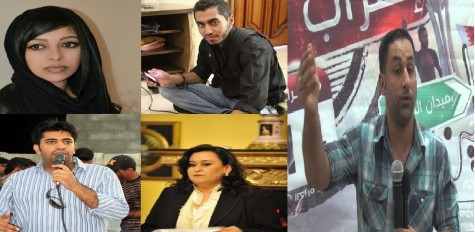
The systematic targeting of human rights defenders and activists by the government of Bahrain continued unabated as three human rights defenders and an activist photographer received prison sentences in January and February. Another human rights defender had his case heard twice last month after being told the judge had acquitted the wrong man.
Human rights defenders Zainab Al-Khawaja now faces a total of three years and one month in prison in relation to her peaceful human rights activities, putting her at immediate risk of being arrested at any time. On 02 February 2016, a nine-month prison sentence was upheld in absentia for “entering a restricted area” at Jaw Prison when she tried to visit her father, prominent human rights defender and co-founder of the Gulf Centre for Human Rights (GCHR) Abdulhadi Al-Khawaja, when he was on hunger strike in August 2014.
On 03 December 2015, Al-Khawaja also lost her right to appeal in three other cases that were heard in court. Two charges of two-month sentences were first handed down on 09 December 2014 for “destroying public property” when she ripped a picture of the King at Budaiyah police station, as well as a charge of allegedly “insulting a public official” (a police officer), for which she was sentenced to one year in prison. On her birthday which is, 21 October 2015, the court reduced a three-year sentence to one year for ripping up a picture of Bahrain’s monarch during a court hearing in October 2014. See: https://www.gc4hr.org/news/view/1138.
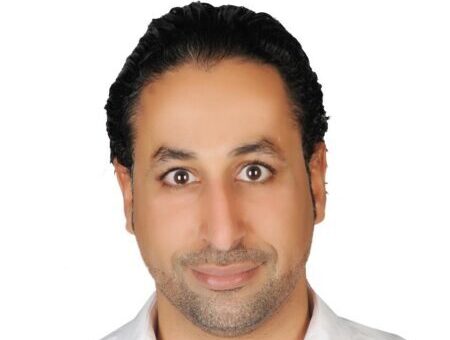
On 03 February, the Bahrain Appeal Court upheld the three-month jail sentence of human rights defender and photographer Ahmed Al-Fardan, and he was arrested after the hearing to begin serving the sentence. The sentence was originally imposed on 17 February 2015, when Al-Fardan was convicted of an alleged “attempt to participate in an illegal demonstration,” a charge brought against him following his arrest in December 2013. Al-Fardan’s lawyer, Mohamed Mehdi, asked for the sentence to be commuted to community service or a fine, but that was rejected. Al-Fardan, an award-winning photographer who recently got married, has been working for the past year for the “Gulf Daily News”, a local paper and EPA as a freelancer photojournalist. Al-Fardan was beaten at the time of his arrest at home in Abu Saiba on 26 December 2013, and freed two weeks later on bail of 100 dinars pending trial.
Perhaps most shocking of all, on 25 January, human rights defender Naji Fateel was among 57 prisoners sentenced to additional 15-year terms for allegedly being involved in disturbances in Jaw prison in March 2015. The public prosecutor reportedly accused the men of having “unleashed acts of chaos, riots and rebellion inside (prison) buildings,” and they were charged with allegedly “damaging public property, attacking police, arson and resisting authorities,” among other offences. Fateel, a board member of the Bahrain Youth Society for Human Rights (BYSHR), was already serving a 15-year prison sentence for “establishing a group for the purpose of disabling the constitution,” and has been in prison since May 2013. He had reportedly been injured during the disturbance in prison.
Also in January, women’s human rights defender Ghada Jamsheer was sentenced to an additional four months in prison, among 12 cases against her in connection to comments she made on twitter. After she accused the management of King Hamad Hospital of corruption, complaints were filed against Jamsheer by Salman Attiyat Allah Al-Khalifa, a member of the Bahrain ruling family who is the head of the hospital and Khaled Shael. Jamsheer received two months in prison on 18 January 2016. She has already been sentenced to a year in prison, suspended for three years and is next due in court on 09 March. See: https://www.gc4hr.org/news/view/1138.
In an unprecedented occurrence, human rights defender Mohammed Al-Maskati‘s lawyer received a letter informing him that the acquittal verdict on 07 January was not recorded for his case, so his appeal would again be heard before the court. Fortunately, Al-Maskati, the founder and former president of BYSHR and a digital security consultant at Front Line Defenders, was again acquitted on 31 January. He had received a six-month imprisonment sentence at the Lower Criminal Court in Bahrain on 31 December 2014 on charges of allegedly “rioting and participating in an illegal gathering.” See: https://www.gc4hr.org/news/view/1156
The GCHR expresses its concern about the ongoing judicial harassment of human rights defenders in Bahrain and calls on the authorities to:
- Overturn prison sentences handed down against Naji Fateel, Zainab Al-Khawaja, Ghada Jamsheer and Ahmed Al-Fardan in all these cases that contravene international law;
- End the judicial harassment of Zainab Al-Khawaja; provide a birth certificate to her son and renew her passport; and
- Release Ahmed Al-Fardan, Naji Fateel, Abdulhadi Al-Khawaja and all human rights defenders in Bahrain immediately and ensure their protection from any harassment, torture, and persecution in relation to their peaceful human rights activities.
The GCHR respectfully reminds you that the United Nations Declaration on the Right and Responsibility of Individuals, Groups and Organs of Society to Promote and Protect Universally Recognized Human Rights and Fundamental Freedoms, adopted by consensus by the UN General Assembly on 9 December 1998, recognises the legitimacy of the activities of human rights defenders, their right to freedom of association and to carry out their activities without fear of reprisals. We would particularly draw your attention to Article 11: “Everyone has the right, individually and in association with others, to the lawful exercise of his or her occupation or profession (…),” and to Article 12 (2): “The State shall take All necessary measures to ensure the protection by the competent authorities of everyone, individually and in association with others, against any violence, threat, retaliation, de facto or de jure adverse discrimination, pressure or any other arbitrary action as a consequence of his or her legitimate exercise of the rights referred to in the present Declaration.”

-
Latest News
Defenders Affected