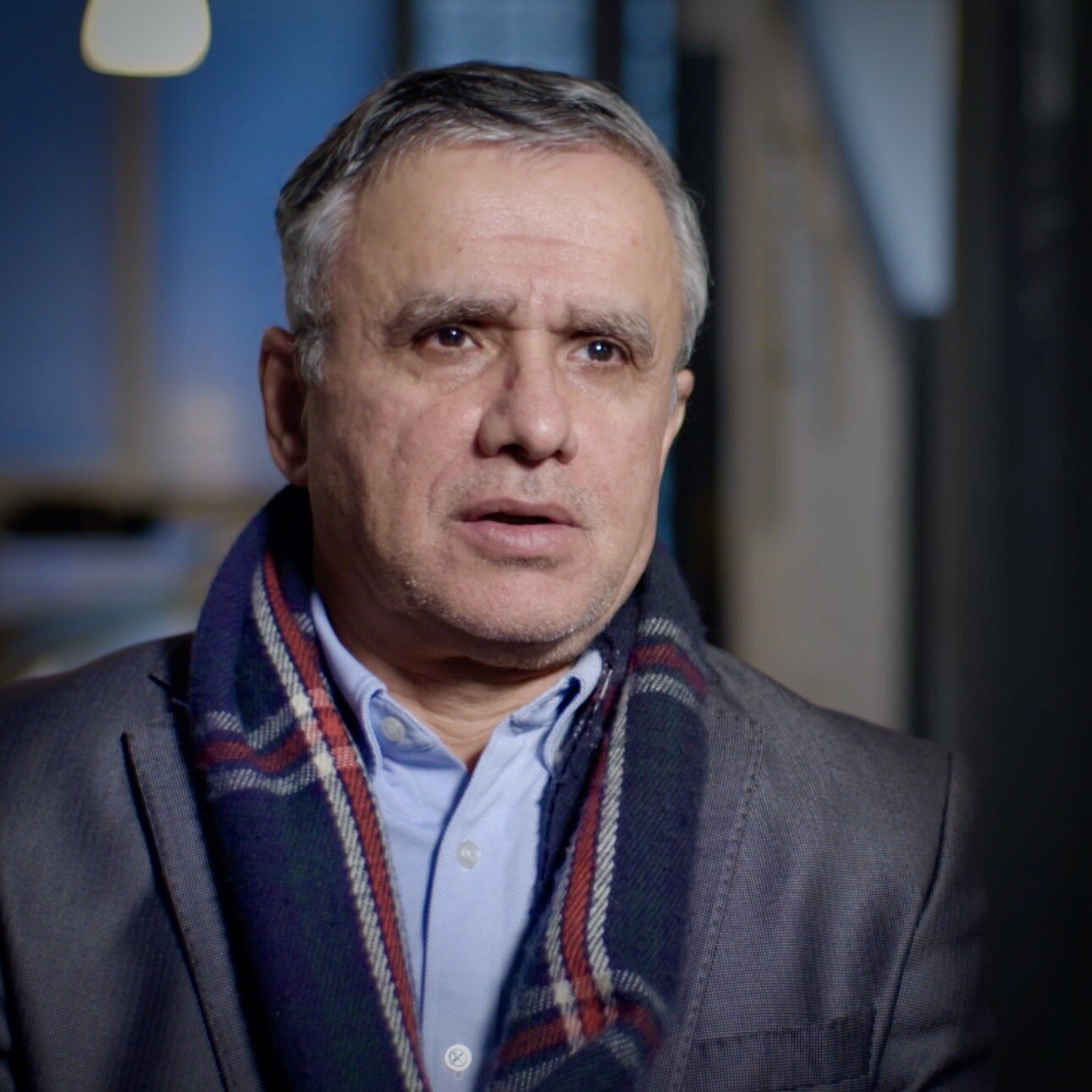
The Gulf Center for Human Rights (GCHR) strongly condemns the arrest of human rights lawyer Narges Mohammadi and calls for her immediate and unconditional release. On 5 May 2015, Mohammadi, who might go on hunger strike, was taken to Tehran’s Evin prison after being forcibly arrested from her home. She is facing a six-year prison sentence, handed down in April 2012.
Facing charges of “spreading propaganda against the system”, “assembly and collusion against national security” as well as various other national security related charges, she had stood in the courtof Judge Abdolghasem Salavati, also known as “the judge of death”, two days before her recent arrest. As feared by GCHR, Mohammadi’s summons on 8 November 2014, as well as constant judicial harassment, led to her re-arrest.
Now that she has been arrested, the court might impose on her the remaining six-year prison sentence received on 22 April 2012, in addition to the sentence that she might face based on the new charges. It is still unclear if her arrest is related to her recent charges or her previous case, for which she was released on bail in July 2012 following serious illness in jail.
Mohammadi is Deputy Director of the Defenders of Human Rights Center (DHRC) and President of the Executive Committee of the National Council of Peace in Iran. She has a lot of international support and was awarded the Per Anger Prize by the Swedish government for her human rights work in 2011.
She has always been highly committed to demanding respect for human rights in Iran through her participation in protests such as the one against acid attacks (see https://www.gc4hr.org/news/view/798).
She regularly gives interviews in the media, and lends her support to families of prisoners of conscience – specifically Sattar Beheshti’s mother. She also founded the “Step by Step to Stop Death Penalty” (also known as LEGAM), a group campaigning against the death penalty in Iran. She has had increasing influence within and beyond Iran after her release on bail in July 2012.
Mohammadi’s lawyers were not given access to see her case-file before the start of her trial, which was eventually rescheduled. In an interview with the International Campaign for Human Rights in Iran, Mohammadi said: “One of my lawyers […] had appeared nine times at Branch 15 to read my case file, and (he) even mentioned the dates he had appeared at the court, but he had not been allowed to read the case file. Judge Salavati said in court that my lawyers can go to the branch on Tuesday, May 5 to read my case, but at the beginning of the court meeting, the Prosecutor’s representative read my three charges with reasons for them.”
She has also been banned from traveling, which means her family remains torn apart. Her husband, Taghi Rahmani, a well-known activist, chose exile in France in 2011 after being repeatedly threatened, arrested, and jailed by the Iranian authorities, leaving two children behind with his wife.
Looking back at the last time Mohammadi was in prison, there are fears for health. She was reportedly “suffering from seizures and temporary loss of vision as well as periodic muscle paralysis,” which was the main reason behind her release on bail on 31 July 2012. If she were to go back to prison now, her medical condition will likely deteriorate again.
Human rights defenders in Iran, like Mohammadi, constantly face judicial harassment as well as arbitrary arrest or arrest based on security charges while carrying out their peaceful human rights work. The GCHR calls on the international civil society to support the release of Mohammadi and rally to improve human rights standards in Iran.
In light of these facts, the GCHR strongly condemns the arrest of Mohammadi, whose work has focused on peace and promoting human rights. Also, GCHR fully supports the group of family members of prisoners and human rights defenders rallying outside Evin Prison demanding the release of Mohammadi and calls on the Iranian government to:
1. Release Narges Mohammadi immediately and unconditionally as she is detained solely for working peacefully on human rights issues;
2. Ensure full access to information for Narges Mohammadi’s lawyers;
3. Guarantee Narges Mohammadi’s physical and psychological integrity, security and health, which includes providing any necessary medical attention; and
4. Work on improving human rights standards in Iran and guarantee that human rights defenders in Iran have the full capability to carry out their legitimate human rights activities without fear of reprisals and free of all restrictions.
The Iranian authorities are violating the Universal Declaration of Human Rights, which states under:
Article 9: No one shall be subjected to arbitrary arrest, detention or exile.
Article 10: Everyone is entitled in full equality to a fair and public hearing by an independent and impartial tribunal, in the determination of his rights and obligations and of any criminal charge against him.
Article 19: Everyone has the right to freedom of opinion and expression; this right includes freedom to hold opinions without interference and to seek, receive and impart information and ideas through any media and regardless of frontiers.
Article 20: 1. Everyone has the right to freedom of peaceful assembly and association. 2. No one may be compelled to belong to an association.
Furthermore, the United Nations Declaration on the Right and Responsibility of Individuals, Groups and Organs of Society to Promote and Protect Universally Recognized Human Rights and Fundamental Freedoms, adopted by consensus by the UN General Assembly on 9 December 1998, states:
Article 6 (b and c): “Everyone has the right, individually and in association with others:
(b) As provided for in human rights and other applicable international instruments, to freely publish, impart or disseminate to others views, information and knowledge on all human rights and fundamental freedoms;
(c) To study, discuss, form and hold opinions on the observance, both in law and in practice, of all human rights and fundamental freedoms and, through these and other appropriate means, to draw public attention to those matters”,
Article 12 (1 and 2):
“(1) Everyone has the right, individually and in association with others, to participate in peaceful activities against violations of human rights and fundamental freedoms.
(2) The State shall take all necessary measures to ensure the protection by the competent authorities of everyone, individually and in association with others, against any violence, threats, retaliation, de facto or de jure adverse discrimination, pressure or any other arbitrary action as a consequence of his or her legitimate exercise of the rights referred to in the present Declaration.”

-
Latest News
Defenders Affected