Silenced Voices: Judicial targeting of human rights defenders in Saudi Arabia
11/04/2016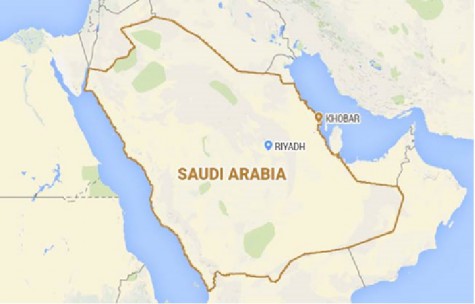
Overview:
Saudi Arabia is a member state of the United Nations and therefore committed to uphold and respect the basic tenets of the Universal Declaration of Human Rights without reservations. Over the past decade, the UN Human Rights Council’s Universal Periodic Review and the efforts extended by independent human rights organizations and citizens have brought to light the grave situations of human rights defenders (HRDs) in Saudi Arabia. Systematic targeting of HRDs showed that the Saudi authorities equate their work with that of the militant opposition; particularly when the work of HRDs involves carrying out advocacy with the public or the international media for reforms related to human rights. Several tactics have been used by the authorities to silence activists, including the imposition of travel bans, arbitrary detention, defamation, legal intimidation and prosecution and lengthy sentencing, fines and flogging.
In particular, two laws are used systematically by State Prosecution to target activists; the Anti-Terror Law and the Anti-Cybercrimes Law. Article one of the Anti-Terror Law defines a terror crime broadly as “any act intended to violate public order, destabilize the societal security or the state stability, endanger the national unity, obstruct the basic system of governance or some of its articles, offend the state’s reputation or status, forcing the state to do or abstain from certain action or threaten or incite others of such actions.”
Article six (1) of the Anti-Cybercrimes law criminalizes “producing online or computer materials aimed at impinging on the public order, religious values, public morals or privacy.” The broad language of these two articles has been used by the Saudi prosecution representatives to target HRDs for a wide scope of peaceful human rights activities, including establishing a human rights organization, empathizing with convicted or targeted activists, criticizing the State’s record of human rights, calling for constitutional monarchy or for State reforms, supporting public campaigns to empower men and women – like the women driving campaigns, speaking to regional or international human rights organizations, calling for or participating in protests or demonstrations, among many other peaceful advocacy activities.
The trials of HRDs are carried out in a Specialized Criminal Court (SCC) in Riyadh and overseen by judges appointed by the Minister of the Interior personally. Individuals accused of “terror” based on their human rights activities are treated as enemies of the state in the same manner as those accused of violent and terror-related crimes. The Saudi legal system is based on religious Islamic jurisprudence or Sharia’a without any codification of crimes and punishment. The only codified laws are the procedural laws. Ironically, procedural law is repeatedly violated when HRDs are legally prosecuted without any legitimate reference to clearly codified crimes or violations. In the absence of a clearly written law criminalizing the acts of HRDs, judges refer to the dated principle of “disobedience of the rulers (Wali Ul-Umr)” to justify punishing HRDs for activities deemed to violate the absolute obedience expected in the ancient Islamic era. The principle of Ta’azir, a discretionary authority of judges to issue appropriate punishment, is frequently used to sentence HRDs to lengthy prison sentences, lashes, fines or even the death penalty.
For the full Annual Report Click above on “Download File“. It is also available in Arabic.
-
Related Publications
Latest Urgent Action
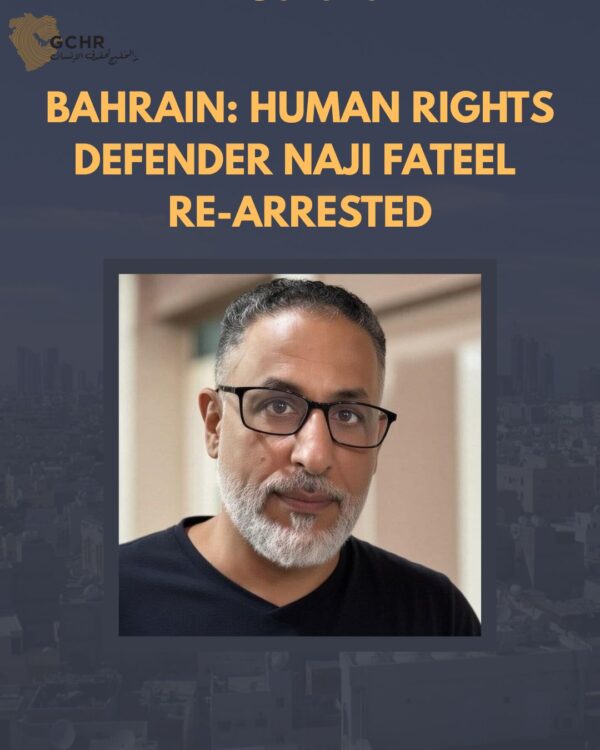 Bahrain
Human rights defender Naji Fateel re-arrested