1. Overview
A regional space for women human rights defenders
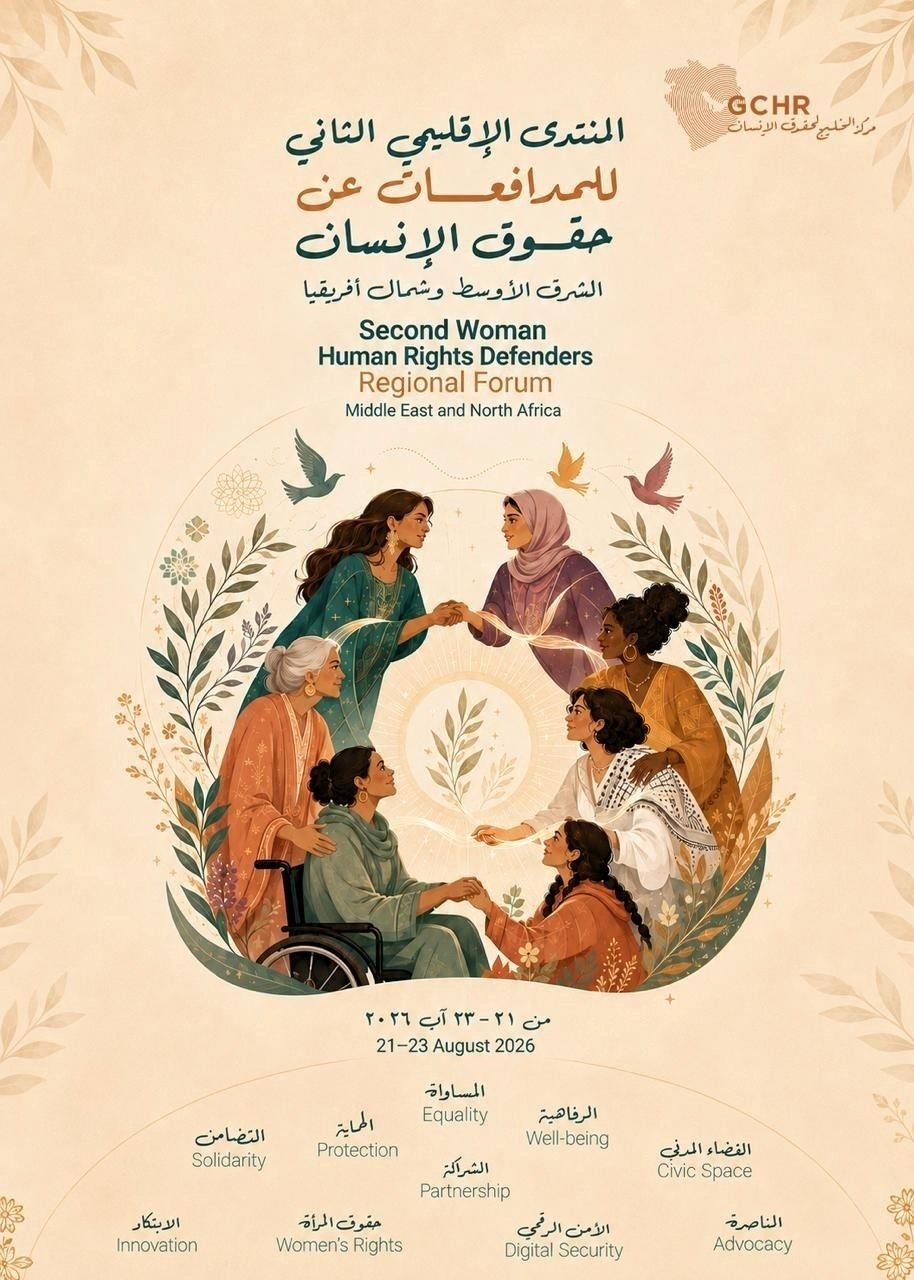
The 2nd Women Human Rights Defenders (WHRDs) Forum brought together 50 women human rights defenders, feminist leaders, civil society actors, CSO partners, donors and international human rights mechanisms including the UN Special Rapporteur on Human Rights Defenders from 15 countries across the Middle East and North Africa (MENA) and beyond.
Purpose and approach
The regional forum, organised and facilitated by the Gulf Centre for Human Rights (GCHR) in Istanbul in August 2026, provided a rare organic space for defenders to exchange experiences, identify shared challenges, build solidarity, and reflect collectively on the future of human rights work in an increasingly restrictive environment.
A shared regional reality
A central message emerged throughout the discussions: WHRDs are facing growing and interconnected threats, while the resources and institutional spaces available to respond to those threats are shrinking. At the same time, there is significant potential for regional solidarity, intergenerational organising, collective protection and new forms of collaboration.
“We are tired, but we are resilient.”
Resilience, solidarity and sustainability
The discussions demonstrated that exhaustion and resilience are not contradictory. WHRDs continue to work under extraordinary pressure while recognising the importance of building collective structures that make their work more sustainable. Participants also reflected on how their individual efforts complement one another and can create an impact even when results are not immediately visible. As one participant reflected, echoing a sentiment shared by many defenders:
“The butterfly’s effect is unseen, yet it never fades.” – Mahmoud Darwish.
2. Main Findings
2.1 Shrinking Civic Space and Increasing Repression
WHRDs across the region reported increasingly restrictive environments, including criminalisation, arbitrary detention, surveillance, restrictions on civil society organisations, limits on freedom of expression and assembly, and reprisals against defenders and their families.
Countries represented:
Algeria, Bahrain, Egypt, Iraq, Jordan, Lebanon, Libya, Morocco, Oman, Palestine, Saudi Arabia, Sudan, Syria, Tunisia and Yemen.
Women defenders face additional gender-specific attacks, including defamation and smear campaigns, threats based on their personal lives, online harassment, gender-based violence and attempts to undermine their legitimacy as activists.
These pressures are particularly severe in conflict-affected and politically fragile contexts.
“The WHRDs’ situation needs a holistic approach.”
Participants stressed that attacks against WHRDs are tied to the wider political, social and security environments in which they operate.
2.2 The Mounting and Unsustainable Pressures on Women Defenders
Participants repeatedly described feeling tired, exhausted, drained and isolated. This exhaustion is not simply an individual well-being issue. It reflects prolonged exposure to violence, threats, political repression, displacement, financial insecurity and the continuous responsibility of responding to crises.
WHRDs are carrying both the public burden of human rights work and, in many contexts, a disproportionate private and family burden.
“We know you are tired and you are exhausted.”
The Forum therefore highlighted the need to treat well-being, healing and collective care as integral components of protection and sustainability.
2.3 The Limits of Documentation as a Pathway to Protection
Participants repeatedly identified a gap between:
Documentation → Advocacy → International attention → Actual protection
While international mechanisms remain important, defenders reported that communications and complaints can take too long to produce meaningful responses, particularly when a defender is facing an immediate threat.
“When W/HRDs are facing threats, timely action is important.”
There was a strong call for greater follow-up, coordination and responsiveness from international mechanisms, particularly in cases involving detention, reprisals, threats and criminalisation.
2.4 Growing Distrust in International Accountability
Participants expressed concern about the perceived selectivity of international attention and accountability.
Questions were raised about why certain conflicts and countries receive greater international attention while violations elsewhere receive comparatively limited responses.
“Why do some people deserve more life than us?”
This reflects a broader concern about the credibility and legitimacy of the international human rights system, particularly when political interests appear to influence the degree of attention given to different crises.
2.5 Funding is Increasingly Affecting the Survival of the Movement
The funding crisis emerged as one of the most significant shared concerns.
Cuts and changing donor priorities have resulted in organisations losing staff, institutional knowledge and long-term capacity. In some cases, organisations have been forced to close programmes or reconsider their existence altogether.
Participants also highlighted the specific vulnerability of feminist and WHRD organisations, which often receive limited resources while operating in some of the highest-risk environments.
“We lost the capacities we really needed and invested in their development.”
Funding restrictions can also become a form of political pressure, particularly where governments criminalise foreign funding, impose registration restrictions, or where sanctions and banking limitations prevent organisations from accessing resources.
Download the full report here:
-
Related Publications
Latest Urgent Action
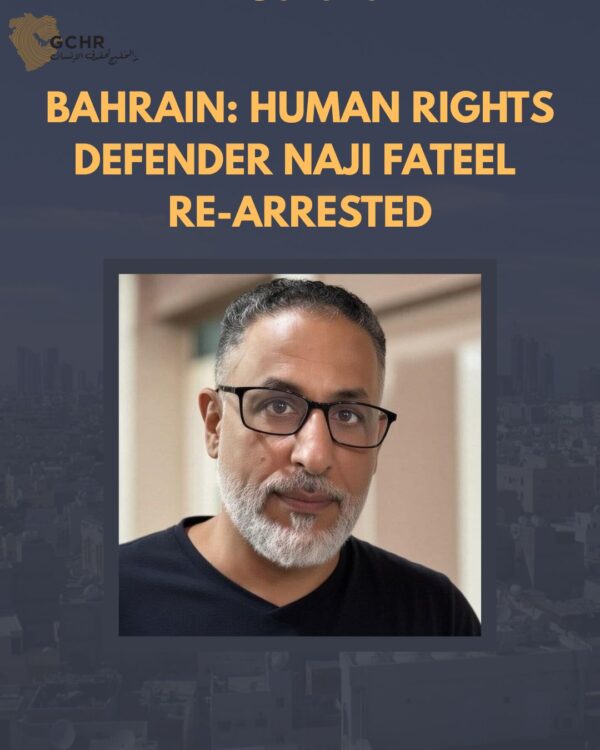 Bahrain
Human rights defender Naji Fateel re-arrested