The Gulf Centre for Human Rights (GCHR) has been documenting the human rights situation in Iraq over the past five years since the start of the popular uprising in October 2019. This documentation includes 38 periodic reports detailing the serious violations occurring in the country. These reports can be accessed here.
The 38th periodic report addresses various types of violations, including serious human rights abuses witnessed in Iraq during the past seven months. These include numerous targeted attacks at various levels against professionals, journalists and activists, as well as arbitrary arrests and restrictions on the public freedoms of all citizens.
Massive demonstrations commemorate the anniversary of the October popular movement
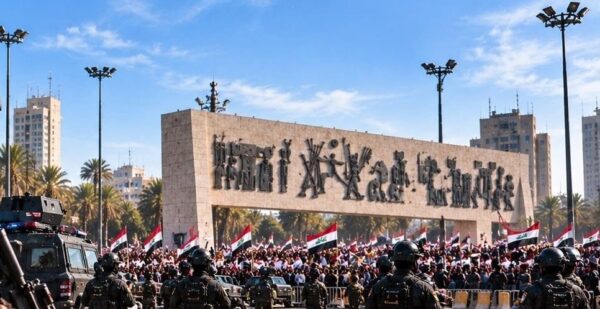
On 25 October 2026, Baghdad and several central and southern cities witnessed massive demonstrations to commemorate the seventh anniversary of the start of the popular movement in October 2019. Thousands participated in these demonstrations, and in Tahrir Square, in the heart of Baghdad, participants raised Iraqi flags and lit candles in remembrance of the hundreds of victims of previous protests (main photo).
Through several statements and slogans, the demonstrators reiterated their demands for the identification and prosecution of those responsible for killing protesters in the 2019 protests, as well as for information on the fate of the disappeared. Participants emphasised the need to end the sectarian quota system, hold high-ranking corrupt officials accountable, and amend the election law. The protesters also demanded a reduction in the dollar exchange rate, a curb on rising prices of goods and food, the creation of job opportunities, and the improvement of basic services in light of the financial crisis facing the country.
An observer who monitored the Tahrir Square demonstrations on behalf of GCHR confirmed that security forces were heavily deployed in Tahrir Square and had banned the movement of motorcycles and small tuk-tuks.
Widespread incitement campaign carried out against human rights defender and journalist
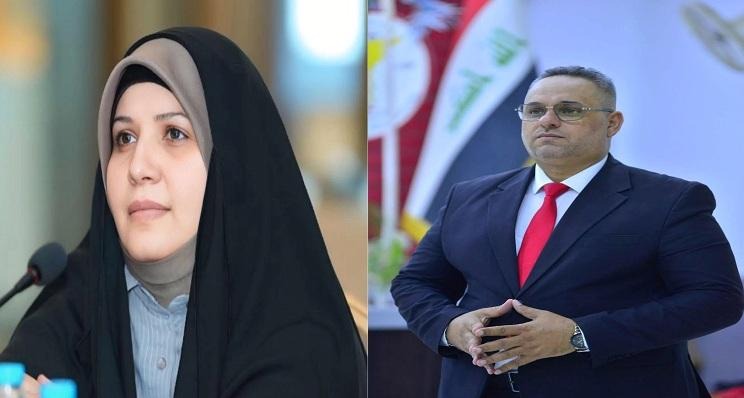
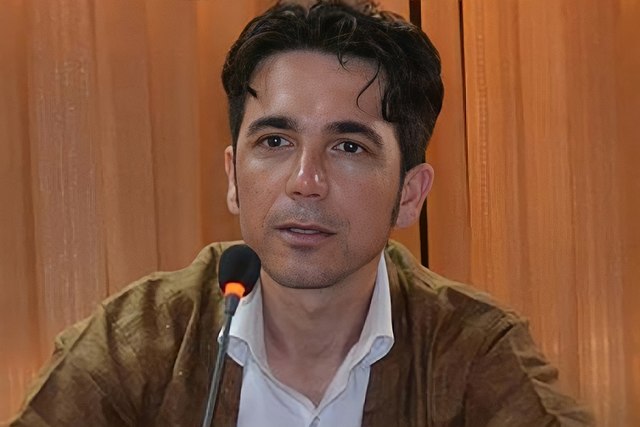
On 15 August 2026, human rights defender Manar Al-Zubaidi, a resident of Diwaniyah, the capital of Qadisiyah Governorate, announced on her Facebook page that she and her husband, journalist Ahmed Al-Shibani, head of the Iraqi Journalists Syndicate branch in Diwaniyah, had been subjected to a widespread incitement campaign, including threats and hate speech, via fake pages and accounts on social media networks. The campaign lasted for several days. In her statement addressed to the Ministry of Interior and the relevant security agencies in Diwaniyah, Al-Zubaidi stressed “the necessity of preventing online incitement campaigns from escalating into actual threats or attacks.” She called on “the relevant authorities to deal with this issue seriously and firmly, in order to protect our safety and the safety of our family, and to safeguard freedom of opinion and journalistic and professional work.”
Media and Communications Commission stifles freedom of expression with its unjust decisions
Since the beginning of this year, the Communications and Media Commission (CMC) has issued dozens of decisions at an increasing pace. These decisions include banning journalists, analysts, and political researchers from appearing on television, suspending programs, and issuing warnings, reprimands, and fines to various media outlets, based on what the Commission deems violations of its broadcasting regulations.
GCHR reviewed more than ten arbitrary decisions issued by the CMC in November 2026, which were published on its website. These decisions included the following:
1. Issuing a warning to political analyst Zaidoun Al-Salmani and deleting the content posted on his personal Facebook page.
2. Banning political analyst Haitham Al-Khazali from appearing on all media outlets in Iraq for 30 days, effective from 11 November 2026. A warning was also issued to the programme “With Yasser Amer,” on Al-Rasheed TV, in which he appeared, in addition to removing the content from digital platforms. The programme received another warning on 22 November 2026.
3. Issuing a warning and a fine of ten million Iraqi dinars to Rudaw TV for violations that occurred in August and September 2026. The channel was also ordered to remove the offending material from its digital platforms and issue a formal apology within five days.
4. Issuing a warning and a fine of five million Iraqi dinars to Lana Media Agency for violations related to its programme “Lana and the People.” The agency was ordered to remove the offending material from its digital platforms and issue a formal apology within five days.
5. Banning sports analyst Talib Jaloub from appearing on all Iraqi media outlets for 90 days, effective from 10 November 2026, due to statements he made during the “Studio Al-Jamahir” programme on Al-Nahrain TV and other programmes.
6. Blocking the Telegram application starting 16 November 2026, in order to “maintain national security and combat illegal content.” This ongoing decision has caused significant harm to many institutions and individuals, including educational institutions in Iraq that use this application to develop their scientific capabilities.
Journalist and her programme suspended
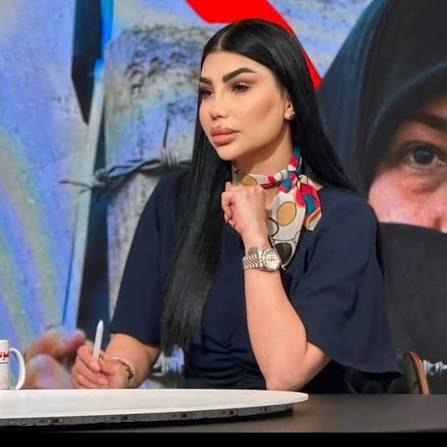
On 08 September 2026, the CMC issued a decision banning TV presenter and journalist Marwa Hashem from appearing on television for 90 days, due to violations related to her programme “Voice of the People,” which airs on Iraq Al-Hadath TV. The decision also suspended the programme for the same period, requiring the removal of the offending material and the issuance of a formal apology within five days.
These practices by the CMC blatantly contradict Article 38 of the Iraqi Constitution, which obligates the state to protect freedom of expression and freedom of the press. The commission cannot continue to violate the Iraqi Constitution, suppress freedom of expression, and obstruct the work of media institutions under the guise of broadcasting regulations. Any expansion of these regulations would infringe upon constitutional rights and constitute a violation thereof.
Prominent human rights defender Dr. Dergham Majid Mahdi targeted
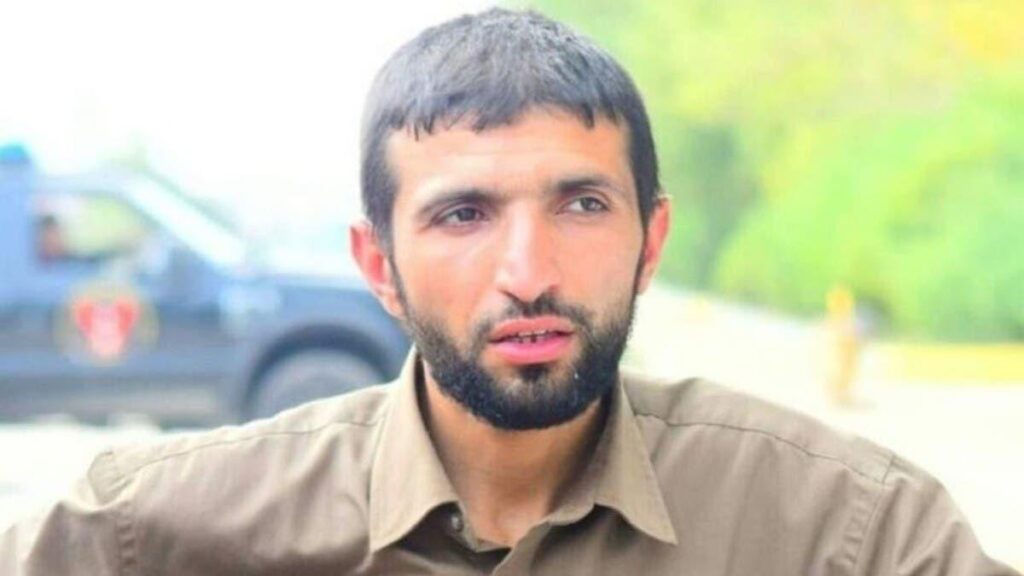
On the morning of 21 April 2026, prominent human rights defender Dr. Dergham Majid Mahdi survived an assassination attempt when two individuals stormed his shop in Al-Midhatiya, the centre of Al-Hamza Al-Gharbi district, south of Babylon Governorate. They then opened fire on him and fled on two motorcycles.
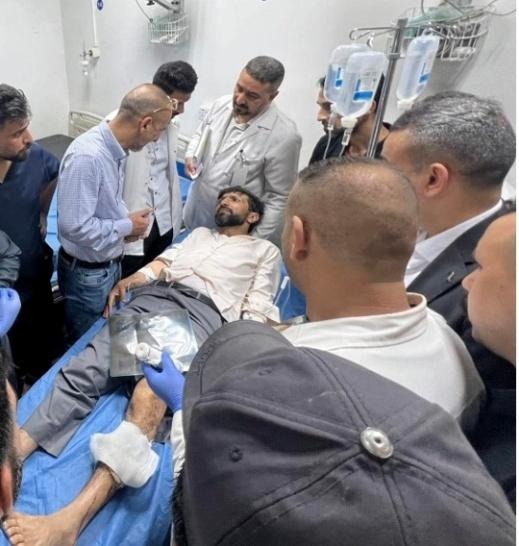
He was taken to the hospital for treatment after the assailants shot him in the left leg. He was released after his condition stabilised.
In a press statements given later that day from his home in Al-Midhatiya, he confirmed that he had received death threats for about a week and accused the Asa’ib Ahl Al-Haq group, which has significant political influence in the current government, of being behind the assassination attempt.
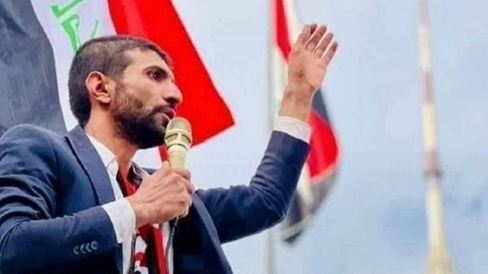
Despite being constantly targeted, he continued his work defending citizens’ rights. On 21 October 2026, he gave a press statements on the seventh anniversary of the October/November protests, saying, “The 25 October demonstrations are a final warning to the government, and procrastination will escalate our actions.”
His father, Sheikh Majid Mahdi, confirmed in a recorded statement that Dr. Dirgham’s absence from Tahrir Square was due to malicious lawsuits filed against him. He denounced the fact that the perpetrators who attempted to kill him in the assassination attempt remained free, while his son was displaced because of his human rights work. He asserted the existence of “a conspiracy to silence all patriotic voices.”
Head of Iraq Centre for Human Rights faces malicious lawsuits
Prominent human rights defender and head of the Iraq Centre for Human Rights, Ali Al-Abadi, is facing malicious lawsuits filed against him by some officials and influential figures in the local authority of Basra Governorate.
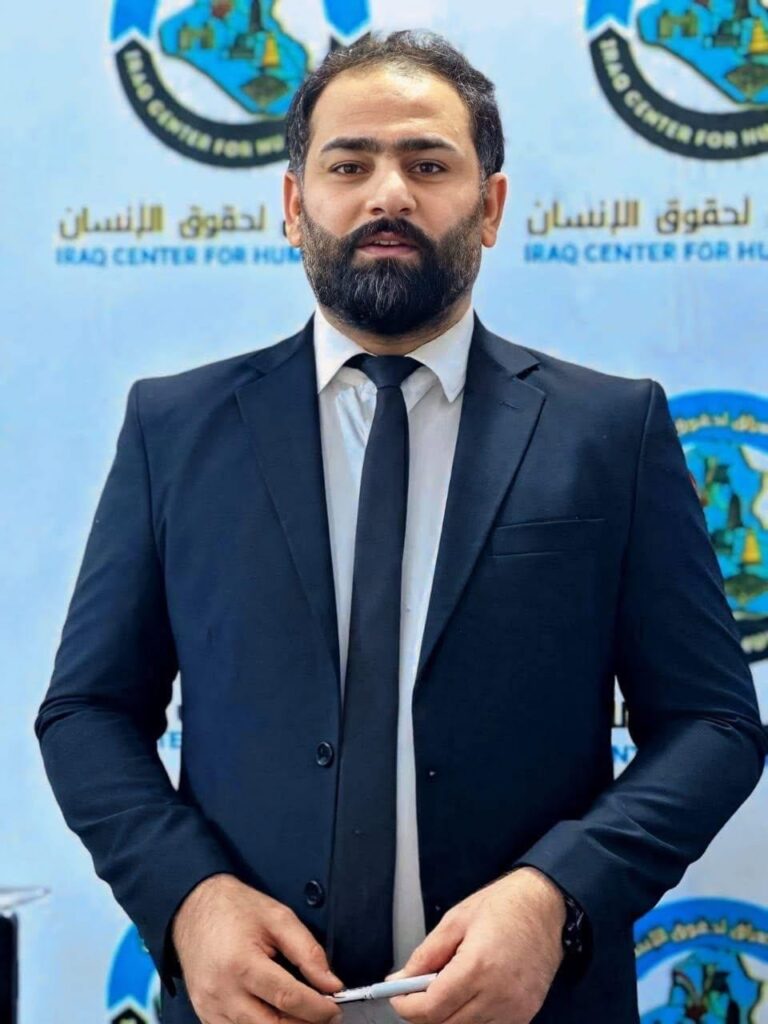
The Basra Health Department (through its legal representative) filed a lawsuit against him following public statements and criticisms he directed at the department’s performance and his exposure of what he described as shortcomings and administrative violations within it. Al-Abadi affirmed that these actions fall within his human rights activism and his identification of deficiencies in government institutions in the governorate. On 06 July 2026, the Basra Court of Appeals decided to release him on bail of five million Iraqi dinars.
This is the sixth such lawsuit Al-Abadi has faced from various government departments in Basra Governorate in recent months, as he announced in a video statement on 02 July 2026, addressed to the Prime Minister and the citizens of Basra Governorate, in which he called for an end to corruption in the governorate.
Prior to this, on 31 December 2025, he was detained for several hours at the Basra Governorate Internal Security Service office following a complaint filed against him by the 41st Brigade, affiliated with the Asa’ib Ahl Al-Haq group. The complaint stemmed from a leaked WhatsApp group conversation in which he discussed a member of the brigade who alleged he had been tortured. The Basra Court of Appeals ordered his release on bail of 10 million Iraqi dinars.
The Iraq Center for Human Rights operates from Basra, the capital of the southern Iraqi governorate, and focuses its activities on monitoring human rights violations in Iraqi prisons, including torture.
Second conference of the Iraqi Council for Rights and Freedoms held following its establishment
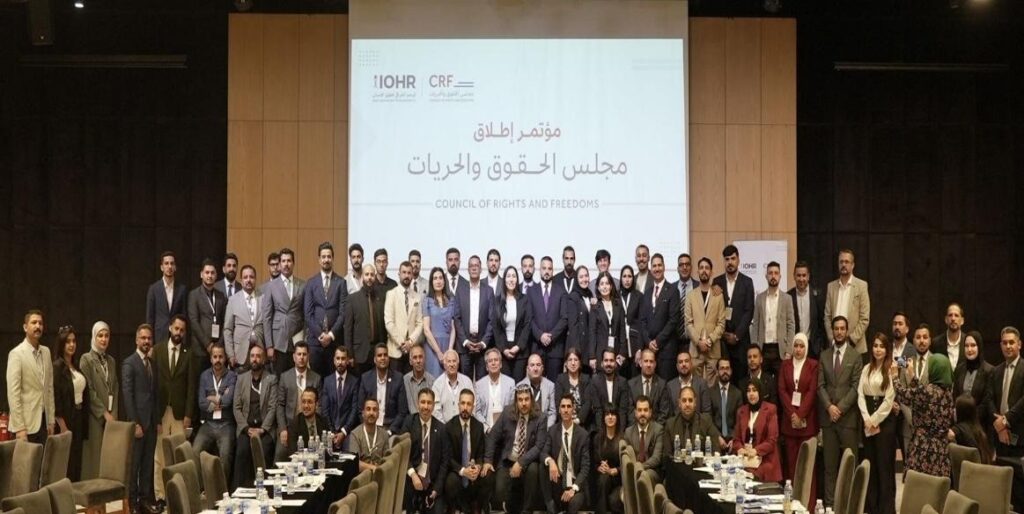
On 17 May 2026, the establishment of the “Council for Rights and Freedoms” was announced in Baghdad under the auspices of the Iraqi Observatory for Human Rights (IOHR). The founding conference was attended by dozens of human rights defenders, journalists, and other activists, as well as representatives from numerous civil society organisations.
The Council aims to unify the efforts of the human rights movement and civil society in Iraq, shifting its role from “defense and confrontation” to “initiative and implementation.” Its objectives include monitoring and documenting violations of human rights, freedom of expression, and press freedom; submitting legal proposals to prevent the passage of legislation restricting freedoms and to develop laws that align with international standards; and working to create a safe and sustainable space for expression without fear, intimidation, or targeting.
The conference resulted in the election of an administrative body for the Council, headed by former member of the Iraqi Parliament Sajjad Salem, and comprising six other members, including four women activists.
The Council held its second conference on 29 October 2026, in Baghdad, where it discussed the increasing pressure on freedom of expression, the need to review vague legal texts, and the impact of uncontrolled weapons outside the state’s authority on undermining citizens’ public freedoms.
On 07 November 2026, the Council issued the conference’s final statement, which focused primarily on the issue of freedom of expression and the persecution of opinion leaders and human rights defenders in the country. The statement also included five clear demands directed at official authorities to guarantee the protection of public freedoms and to stop the harassment of activists and journalists.
It is worth noting that GCHR is a founding member of the Council for Rights and Freedoms in Iraq.
Draft regulations for digital content in Iraq: A repressive draft par excellence
The CMC announced on its website an invitation to all interested parties to participate in what it called a “public consultation” regarding the draft regulations for digital content in Iraq. It provided an email address for receiving comments until 12 October 2026.
GCHR reviewed this draft, which contains 80 articles, and found it to be in direct contradiction with Article 38 of the Iraqi Constitution, which guarantees freedom of expression. The drafts are worded in a way that restricts citizens’ freedom of expression instead of protecting this fundamental right.
The draft uses vague, ambiguous, and poorly-defined terms such as “insulting or showing contempt for the Iraqi state,” “public interest,” “public morals,” “national security,” “social peace,” “public order,” and “inciting sedition.” These terms could easily be used by the authorities to imprison online activists after deeming the digital content they publish – which expresses their peaceful personal opinions on public affairs – as prohibited.
The draft grants the authority broad powers, including blocking or restricting access to content, removing and correcting content, suspending or disabling accounts, pages, channels, or websites, and closing, revoking registration or licenses, as well as referring cases to the appropriate authorities. These are harsh repressive measures that will lead to the demise or arrest of independent platforms and free voices, and force online activists to self-censor to avoid giving authorities a pretext to target them.
Furthermore, the draft grants the authority the unilateral right, without any judicial oversight, to take “urgent measures when digital content exists that, if continued publication, would cause serious or imminent harm to national security, public order, or social peace.” These are vague terms that can easily be used against any meaningful content that criticizes the authorities, meaning the authority can suppress dissenting voices and eliminate citizens’ constitutional right to freedom of expression.
Proposed “Cybercrime Law” contradicts the constitution.
On 06 July 2026, the Iraqi Parliament completed the first reading of the proposed “Cybercrime Law,” submitted by the Security and Defense Committee and the Parliamentary Legal Committee. The INSM Foundation for Digital Rights prepared a detailed legal study examining the articles of the law. Its primary conclusion was that “a reading of the draft Cybercrime Law of the Republic of Iraq for the year 2026 reveals that the Iraqi legislature has fallen into the trap of prioritising narrow security concerns and infringing upon individual rights and public freedoms in order to tighten control over cyberspace.” The study also emphasised that “approving the draft in its current form without substantial amendments constitutes a human rights violation that contravenes Iraq’s international obligations and renders Articles 38 and 40 of the 2005 Iraqi Constitution meaningless.”
Violations against journalists and media freedom in Iraqi Kurdistan
Impunity in assassination cases
On the occasion of the International Day to End Impunity for Crimes against Journalists, observed on 02 November 2026, the Metro Center for Journalists’ Rights and Advocacy affirmed that the killers of journalists remain at large and that the judiciary has failed to conduct independent investigations due to its affiliation with the ruling political parties. The Center called for the reopening of closed assassination cases and the prosecution of those involved and those who orchestrated the killings, including the cases of journalists Soran Mama Hama, Sardasht Osman, Kawa Garmiyani, Wedat Hussein Ali and Abdulsattar Tahir Sharif.
Attack on TV crews
Metro Center also condemned the attack on crews from three satellite channels while they were covering the “Make Sulaimaniyah a Region” campaign in front of the public park in Sulaimaniyah on the morning of 16 November 2026. The Center explained that the attack included stopping the live broadcast and expelling a reporter from one of the channels and her colleagues, under the pretext that the campaign organisers refused to allow filming of participants and showing their faces. The Center called for respect for the freedom of the press and the right of journalists to cover public events.
Former Iraqi parliamentary candidate arrested
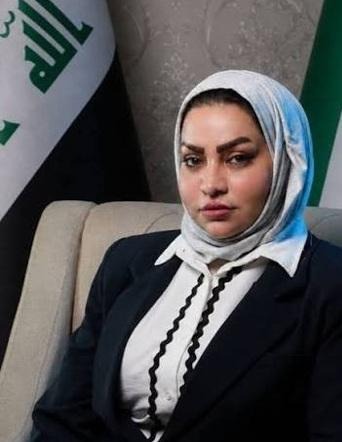
On 23 October 2026, engineer and former Iraqi parliamentary candidate was arrested in Basra Governorate by a force affiliated with the National Security Service. Her arrest was reportedly due to her social media posts and comments. On 12 November 2026, the Third Basra Investigation Court ordered her release, according to her lawyer, Ali Al-Eidani, who stated that “legal procedures were completed and defences were presented that proved the soundness of her legal position.”
GCHR reviewed her Facebook page and found that she had ceased posting since her arrest. Her page was known for its advocacy for prisoners of conscience and freedom of expression.
In a post dated 18 October 2026, she shared a poster calling for a silent vigil in Abdul Karim Al-Qasim Square in downtown Basra. The poster stated, “We are being silenced, and we have no right to speak or criticise, as guaranteed by the Iraqi Constitution.”
WSJ team leaves Baghdad after threats to kidnap its members
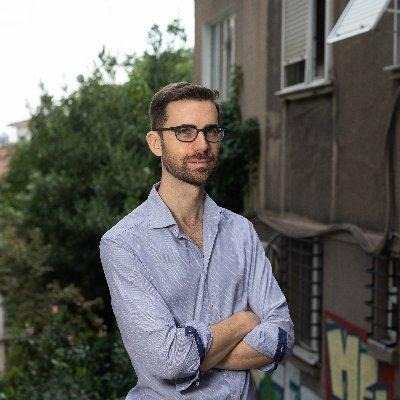
On 02 October 2026, Jared Malsin is a Middle East correspondent for the Wall Street Journal (WSJ) based in Istanbul, posted the following on his X account, “I had to cut my trip to Baghdad painfully short, leaving after just two days after Iraqi officials warned my team of a security threat against us,” and explained, “U.S. officials would later tell me the warning was due to a kidnapping threat from one of the militias.”
Together with a small team of WSJ, he arrived in Baghdad in September 2026 to write a story about the end of the official U.S. military presence in Iraq and how the American attack on Iran has destabilised the country. They found out that militias “have deeply entrenched themselves in the Iraqi state.”
Political activist Ammar Al-Ghazali sentenced to Prison
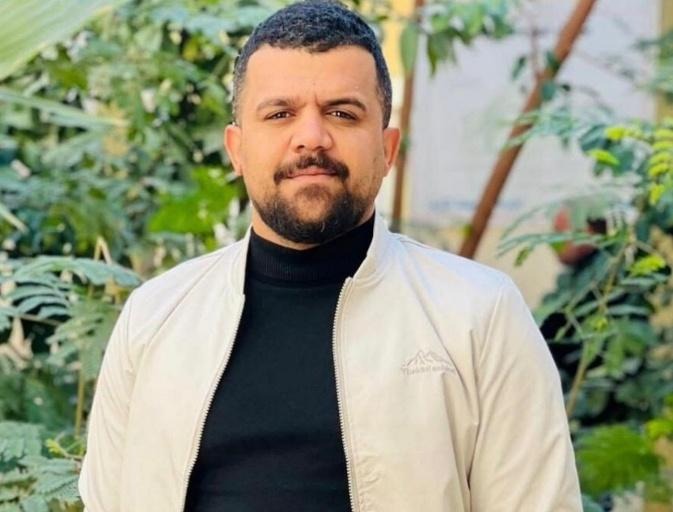
On 13 May 2026, the Hilla Misdemeanour Court sentenced political activist Ammar Al-Ghazali, a member of the political bureau of the National House Party and a resident of Hilla, the capital of Babylon Governorate, to three months in prison. The sentence stemmed from a defamation lawsuit filed against him by former Babylon Governor Hassan Mandil. On 25 May 2026, Al-Ghazali posted a video on his Facebook page thanking everyone who contributed to resolving the issue, closing the case, and securing his release.
Despite this, the party’s Secretary-General, Hussein Al-Gharabi, described the sentence in press statements as “unexpected and an attempt to silence dissent and intimidate political opponents, harming Iraqi democracy.”
Al-Ghazali continued his activism, including using his Facebook page to express his personal opinions on public issues, defend citizens’ rights, and combat corruption.
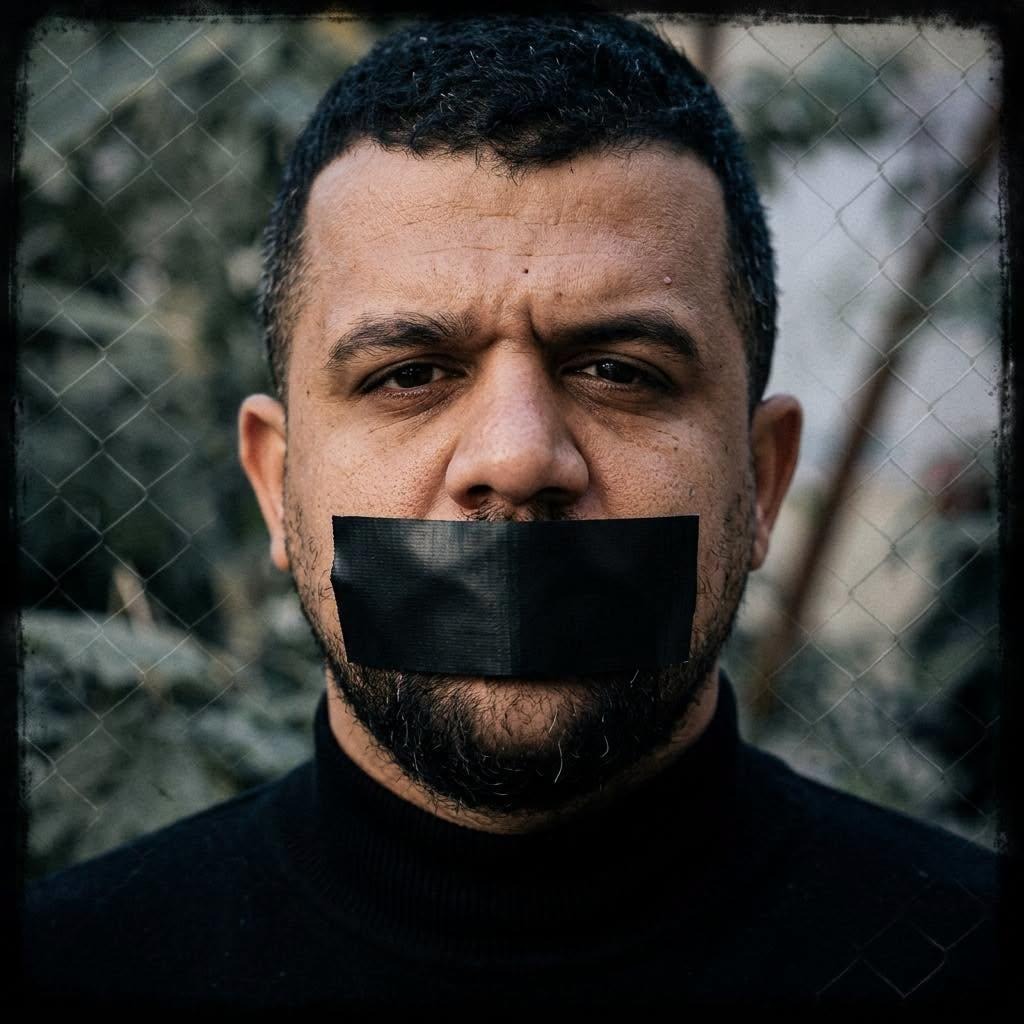
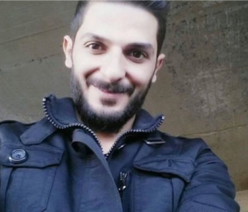
On 27 October 2026, he posted the above image, accompanied by a call to create similar images in protest against the silencing of dissent.
Protests suppressed which were organised by engineering, oil Science, and postgraduate degree holders
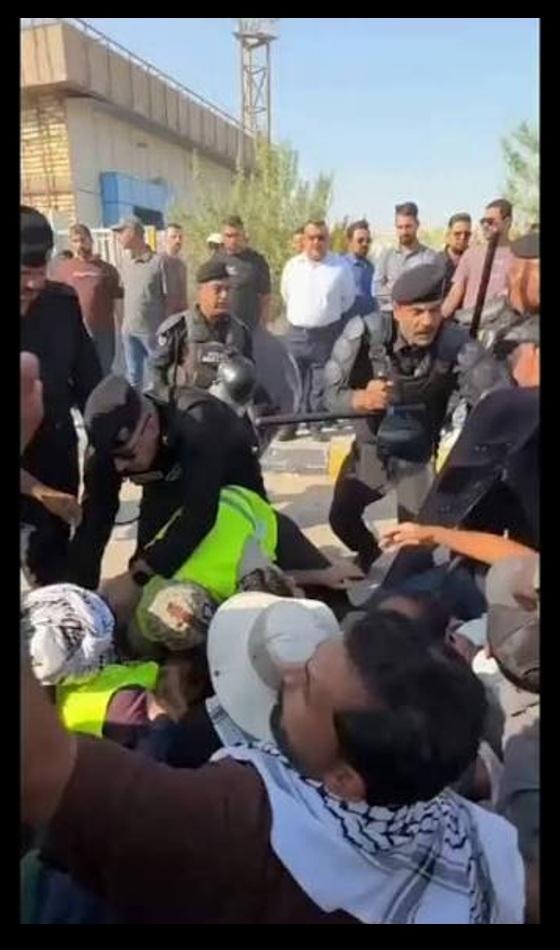
In 2026, graduates and holders of postgraduate degrees in Iraq organised a widespread wave of demonstrations and sit-ins. These protests were punctuated by frequent confrontations and clashes with security forces and riot police in Baghdad, Basra, and other governorates. The protesters were often subjected to repression and forcible dispersal after physical assaults, in addition to the use of tear gas.
The protesters’ demands centred on the provision of government jobs and contracts, and their inclusion in the 2027 draft budget law.
Baghdad clashes and the encirclement of demonstrations
Postgraduate degree holders, top-ranking graduates, long-term graduates, and graduates of oil institutes organised dozens of demonstrations in Baghdad. These demonstrations were concentrated in front of the Ministry of Finance, the Ministry of Oil, Damascus Square, and near Muhammad Al-Qasim Expressway. Security forces used tear gas, stun grenades, and batons to disperse protesters in September 2026, resulting in injuries among the demonstrators.
On 02 November 2026, graduates of petroleum institutes escalated their protests in front of the main gate of the Ministry of Oil headquarters in Baghdad, announcing a hunger and thirst strike. They demanded employment and the inclusion of their job positions in the 2027 federal budget. A heavy security presence was deployed around the ministry, and riot police surrounded the protest site.
Basra events and demonstrations in front of oil companies
Basra Governorate witnessed ongoing sit-ins and demonstrations by graduates of engineering departments, petroleum-related fields, and science colleges in front of oil company headquarters and oil fields, demanding government employment contracts within the Ministry of Oil. Riot police and law enforcement have intervened on several occasions to disperse gatherings and open gates, resulting in assaults and arrests among protesters, particularly during the peak of protests in late August and early September 2026 in front of the gates of the Basra Oil Company and the Iraqi Oil Tankers Company, with sit-ins continuing in front of the fields until this month, November 2026.
Dissidents arrested in Najaf, Basra and Babylon Governorates
The authorities, both at the highest and local levels, fear peaceful protests that include citizens’ demands for a free and dignified life, as well as constructive criticism from civil society activists and others regarding shortcomings in various state sectors. They also fear criticism of rampant corruption and advocacy for the civil and human rights of all. Instead of protecting these individuals as genuine partners in building a prosperous future for the country, the authorities target, arrest, and prosecute them on fabricated charges related to their peaceful activities.
Two civil society activists arrested in Najaf, as well as member of the Council
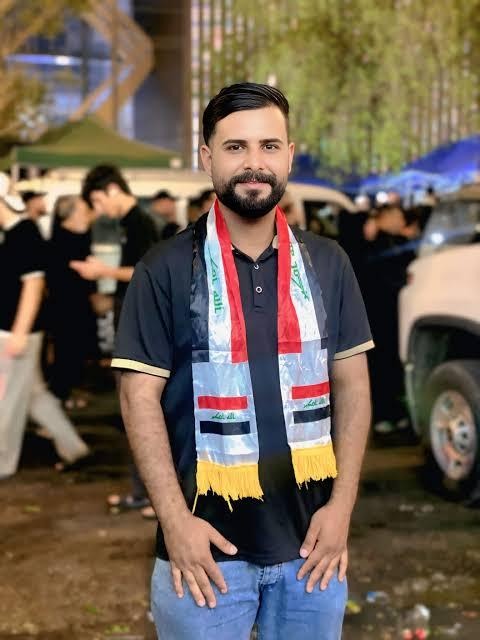
On 10 November 2026, Zain Al-Abidin Abbas (Ziyouni), a protester and activist from Najaf, voluntarily surrendered to the judiciary in Najaf Governorate, following an arrest warrant issued against him and a raid on his home by security forces.
Before surrendering, he posted the following on his Facebook page: “I am the protestor Zain Al-Abidin Abbas. God willing, today I announce my voluntary surrender.”
On 09 November 2026, he announced on the same page that security forces had raided his home, asking, “Why? What did I do?” In reality, he had done nothing but engage in legitimate and peaceful human rights activism.
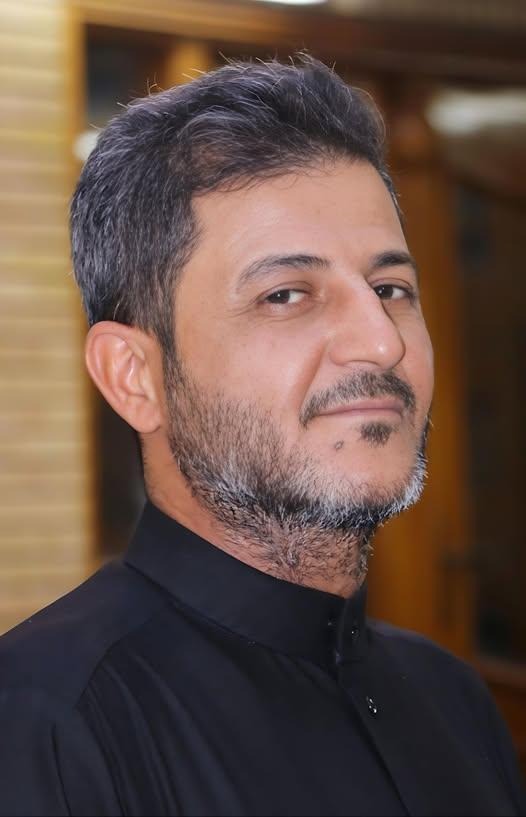
On the same day, Ziyouni also announced on his page the arrest of his colleague, civil society activist Ali Jabran, by security forces.
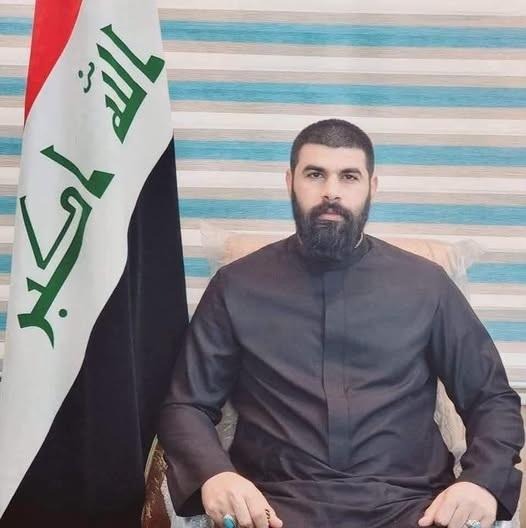
On 08 November 2026, Ziyouni confirmed that further steps were being planned if Najaf Governorate Council member Akram Sharba was not released, stating, “We will continue, we will not back down, and the next step will be bigger.”
On 04 November 2026, the Najaf Misdemeanour Court sentenced Najaf Governorate Council member Sharba to four months in prison following a defamation lawsuit filed against him by Najaf Governor Youssef Kanawi. The lawsuit stemmed from statements Sharba made regarding the sale of a large plot of land in Najaf, approximately 3,000 square metres, in the city centre, at a very low price to influential political figures.
On the day of the verdict, Sharba reaffirmed his previous statements on his Facebook page, writing, “3,000 square meters of land are being sold for 10,000 dinars, while its value is 30 billion dinars.”
The verdict sparked widespread reactions in Najaf, with protesters and supporters organising demonstrations in the province to demand freedom of expression and to show their support for Akram Sharba. Ziyouni and Jabran actively participated in these demonstrations.
Ziyouni is a prominent activist and protester from Najaf. He participated in the October popular movement, as well as several community initiatives and anti-corruption demonstrations, and has been critical of the current government. He uses his Facebook page, which is titled “Zain Al-Abidin Abbas, Ambassador of the Martyrs of the October Movement and Initiator of the Campaign to Distribute 25,000 Iraqi Flags,” to support the protests and share his personal views. On 06 November 2026, he posted a video of himself leading a demonstration and pointing to vast tracts of land that had been sold cheaply to influential figures, saying, “It is because of these lands that Sharba was imprisoned for 4 months.”
Jabran is also a prominent civil and social activist from Najaf. On 18 May 2026, he was arrested by the National Security Service following a complaint filed by the Najaf Health Department regarding his criticism of the poor services provided to citizens in health institutions. He was released the following day. He also participated in local protests in Najaf, including summer demonstrations demanding an increased electricity allocation for the governorate and improved distribution.
Jabran uses his Facebook page to express his personal opinions on public issues affecting citizens and to support protests. On 05 June 2026, he appeared in a video talking about leading a group of citizens, mostly young men, in cleaning the Kufa River and its banks.
Civil society activist arrested and another sentenced in Basra
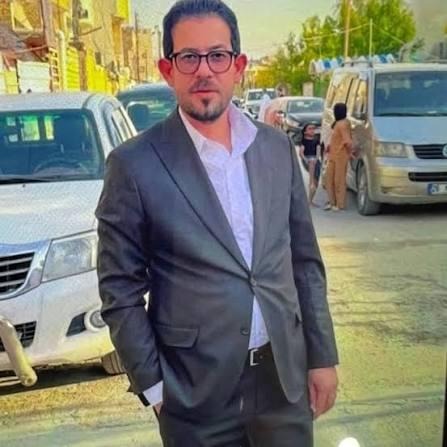
On 17 October 2026, civil society activist Alaa Mohammed Al-Tamimi was arrested in Basra Governorate following a defamation lawsuit filed against him by the Basra Health Department. The lawsuit stemmed from previous statements and videos he had published about the deteriorating health situation in Basra. He was released on 11 November 2026.
He received widespread support from his colleagues and fellow citizens of the governorate, as he was targeted solely for demanding improvements to the health sector in Basra. His mother also contributed to the campaign for his release, issuing a recorded appeal to local officials in the governorate to free her son, who had done nothing more than defend people’s rights through his published words.
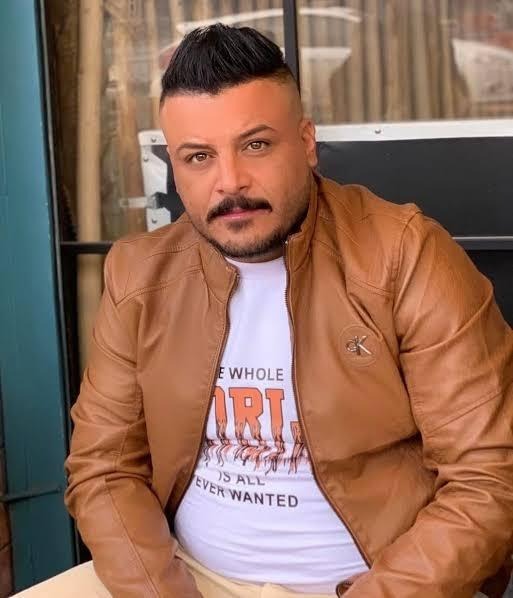
On 12 October 2026, the Basra Misdemeanour Court sentenced civil society activist Alaa Al-Bakhatri to six months in prison, after he had already spent more than two months in detention. His arrest came after his participation in peaceful protests in front of the Kuwaiti consulate in Basra, condemning the killing of an Iraqi fisherman and the wounding of others by Kuwaiti coast guard fire.
His brother, Uday Al-Bakhtari, stated in a televised interview that dozens of security forces in several vehicles raided their small home in the Al-Hayaniyah area, west of Basra, and intimidated the family, causing their mother’s health to deteriorate and requiring hospitalisation. He also confirmed that the forces verbally abused the family and did not present any warrant or identify the complainant.
Civil society activist in Babylon Governorate briefly arrested
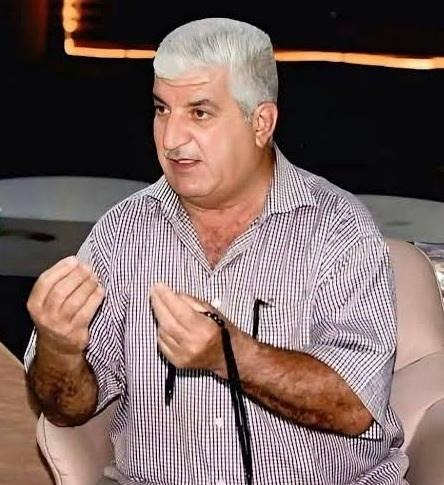
On 20 November 2026, civil society activist Safaa Mahdi Faris was arrested in the Iskandariya district, north of Babylon Governorate, for his active participation in and calls for demonstrations against the transfer and burial of radioactive and carcinogenic materials in northern Babylon. He was released on 22 November 2026, following a widespread solidarity campaign on social media and two protest vigils organized by residents and activists in northern Babylon demanding his immediate release and emphasising the need to prevent the burial of any hazardous materials that threaten public health.
On the day of his release, he posted a video from his home on his Facebook page, which he uses to express his personal opinions and organize peaceful protests. In the video, he asserted that the danger had been averted and that the radioactive materials would be safely buried in remote desert areas, posing no risk to local residents.
Recommendations
Once again GCHR reiterates its call on the Iraqi government to assume full responsibility for protecting all citizens, including human rights defenders, journalists, civil society, and vulnerable members of minority groups.
Furthermore, the relevant Iraqi authorities must clearly and unequivocally identify all perpetrators of kidnapping, torture, and killing of citizens, including human rights defenders, peaceful protesters, and other activists, and bring them to justice immediately.
The authorities must uphold their constitutional obligations to respect fundamental freedoms, including freedom of peaceful assembly, freedom of expression, and freedom of the press, and refrain from enacting laws that violate the rights of all citizens, including women and girls.

-
Latest News
-
Related Publications
Latest Urgent Action
 Bahrain
Human rights defender Naji Fateel re-arrested
Defenders Affected
-