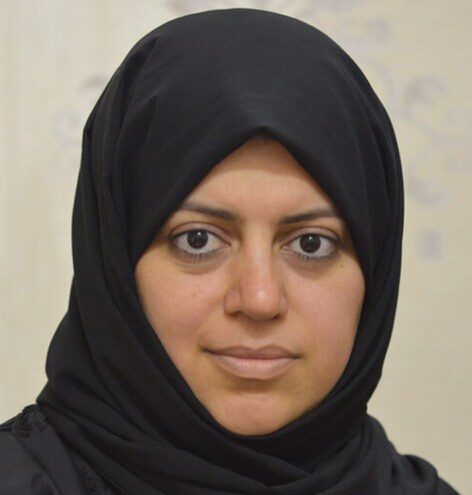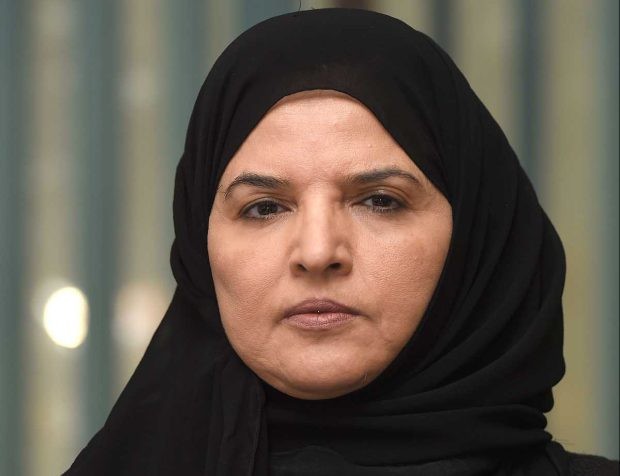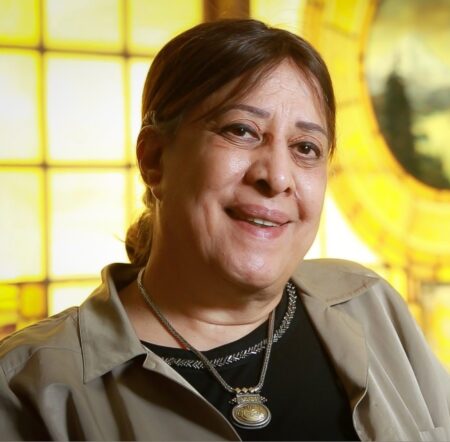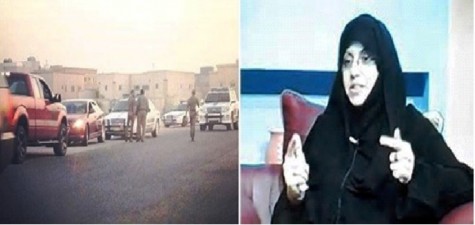
On July 16, 2014, at 5 pm, while human rights defender and activist for the women’s driving campaign, Alia Fared, was driving towards a nearby health center, she noticed that five cars belonging to the security forces were pursuing her car, and shortly afterwards they stopped her for a period of almost one hour on the side of the street. They treated her inappropriately despite her request for the completion of the formal procedures. After the arrival of her son she was transferred, accompanied by five cars, to the Al-Qatif Department of Traffic Police, where she was asked to pay a fine amounting to 300 SR for not possessing a license. In addition, her car was seized for a week and she was made to sign a pledge not to drive again, which she refused to sign in its original form, but consented after adding a clause allowing her to drive the car in case of emergency.
She had already been summoned once by the Department of General Intelligence in Al-Qatif, where she was fined and made to sign a similar pledge.
Alia Fared is a member of a large number of non-governmental organizations, including the Arabic Network for Human Rights Trainers. She also advocates women’s rights issues and aims to enable and activate their role in the process of change and development. She has intellectual and cultural posts in various media outlets.
The Gulf Centre for Human Rights (GCHR) believes that the targeting of activist Alia Fared forms part of a systematic policy of harassment by the Saudi authorities against activists of the women’s driving campaign in Saudi Arabia, of which many activists have already been detained and have had their cars seized. They have also been: fined for not holding a local license, detained for long hours in police stations, made to write pledges, forced to call male guardians, and summoned to security agencies for investigation on many occasions as happened with activists: Aisha Al-Manea, Wajeha Al-Howaider, Manal Al-Sharif, Shaima Jastaniah, Najla Hariri, Azza Al-Shumaisi, Tamador Al-Yami, Aziza Al-Yousef, Sahar Nassif, Samia Al-Moslimany, Nassima Al-Sadah, Iman Al-Nafenjan and other drivers who did not publish their testimonies.
The GCHR condemns the harassment of campaigners for women’s right to drive by the Saudi authorities. The GCHR calls on the Saudi government to allow women the basic right to drive a car.
The Gulf Centre for Human Rights urges the authorities in Saudi Arabia to:
1. Stop targeting campaigners for women’s right to drive and allow women to drive freely without any harassment;
2. Guarantee in all circumstances that all human rights defenders and journalists in Saudi Arabia are able to carry out their legitimate human rights activities without fear of reprisals and free from all restrictions including security and judicial harassment.
The GCHR respectfully reminds the authorities in Saudi Arabia that the United Nations Declaration on the Right and Responsibility of Individuals, Groups and Organs of Society to Promote and Protect Universally Recognized Human Rights and Fundamental Freedoms, adopted by consensus by the UN General Assembly on 9 December 1998, recognizes the legitimacy of the activities of human rights defenders, their right to freedom of association and to carry out their activities without fear of reprisals. We would particularly draw your attention to Article 6 (c) “Everyone has the right, individually and in association with others: (c) To study, discuss, form and hold opinions on the observance, both in law and in practice, of all human rights and fundamental freedoms and, through these and other appropriate means, to draw public attention to those matters” and to Article 12.2, which provides that “the State shall take all necessary measures to ensure the protection by the competent authorities of everyone, individually and in association with others, against any violence, threats, retaliation, de facto or de jure adverse discrimination, pressure or any other arbitrary action as a consequence of his or her legitimate exercise of the rights referred to in the present Declaration.”

-
Latest News
Defenders Affected