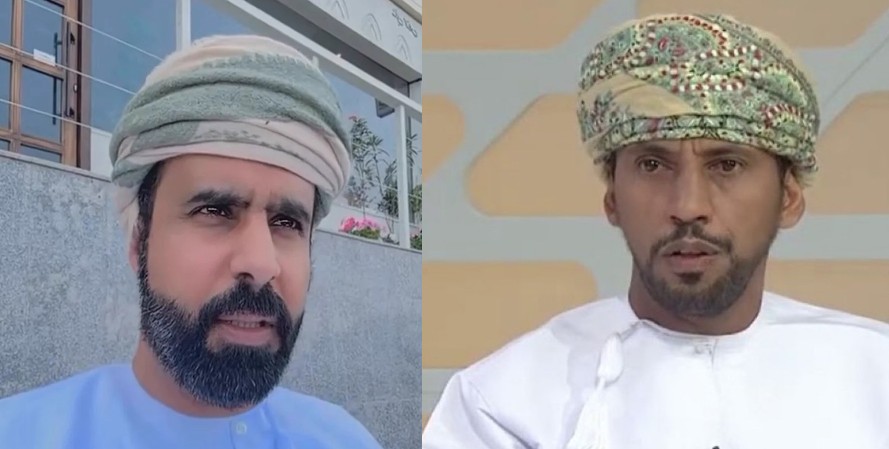
Informed local sources confirmed to the Gulf Centre for Human Rights (GCHR) that prominent human rights lawyer Majid bin Abdullah bin Saeed Al-Ruhaili and social activist Dr. Hamood bin Khamis Al-Nofali have been sentenced to prison by the Omani judiciary for their peaceful activities and expression of their personal opinions online.
On 22 November 2026, the Court of First Instance (Criminal Division) in Seeb, one of the districts of the Muscat Governorate, held a hearing to issue its verdict in the case against Al-Ruhaili, related to his online posts during a debate with Kuwaiti X users.
The court decided to convict him of three alleged misdemeanours: “using an information system and information technology to publish false and malicious news, data, and rumours, and to disseminate inflammatory propaganda that could harm the reputation, standing, and prestige of the state and affect its security and stability”; “using an information system and information technology to publish material that could harm the foreign interests of the Sultanate of Oman”; and “using an information system and information technology to publish material that could disrupt public order.”
The court sentenced him to four months’ imprisonment and a fine of 2,000 Omani rials for the first misdemeanour, six months’ imprisonment and a fine of 3,000 Omani rials for the second misdemeanour, and two months’ imprisonment and a fine of 1,000 Omani rials for the third misdemeanour.
On the same day, the same court held another hearing to issue its verdict in the case against Al-Nofali, which concerned his published opinions criticising the Saudi-led war in Yemen.
The court found him guilty of the same three alleged misdemeanours: “using an information system and information technology to publish false and malicious news, data, and rumours, and to disseminate inflammatory propaganda that could harm the reputation, standing, and prestige of the state and affect its security and stability”; “using an information system and information technology to publish material that could harm the foreign interests of the Sultanate of Oman”; and “using an information system and information technology to publish material that could disrupt public order.”
The court sentenced him to three months in prison and a fine of 2,000 Omani rials for the first misdemeanour, a fine of 1,000 Omani rials for the second misdemeanour, and one month in prison for the third misdemeanour.
The court also ordered that summaries of all the rulings to be published in two widely-circulated local newspapers at the defendants’ expense, in addition to issuing an arbitrary order to close their pages on the X website.
It is worth noting that, according to the Omani Penal Code No. 7 of 2018, in cases of multiple misdemeanours, they are merged, and only the most severe penalty is served.
For more information on the two cases, see here.
GCHR condemns the unjust sentences issued against activists Majid Al-Ruhaili and Dr. Hamood Al-Nofali, who committed no offense other than peacefully expressing their opinions as part of their legitimate right to freedom of expression. GCHR also condemns the arbitrary court decision to publicly defame them through publication in two local newspapers at their own expense, in addition to closing their accounts on the X platform. This can be considered an advanced stage in the government’s policy of silencing dissent, which the judiciary is implementing instead of protecting the civil and human rights of citizens.
Recommendations
GCHR urges the authorities in Oman to:
- Immediately overturn all sentences issued against human rights lawyer Majid bin Abdullah bin Saeed Al-Ruhaili and social activist Dr. Hamood bin Khamis Al-Nofali, and put an end to their targeting;
- Protect the public freedoms of citizens, particularly freedom of expression online and offline, and cease the harassment of human rights defenders in Oman; and
- Guarantee, in all circumstances, the ability of human rights defenders in Oman to carry out their legitimate human rights work without fear of reprisal and without undue restrictions, including judicial harassment.

-
Latest News
Defenders Affected