Authorities commit grave human rights abuses that have dragged the country back to the Dark Ages
22/06/2026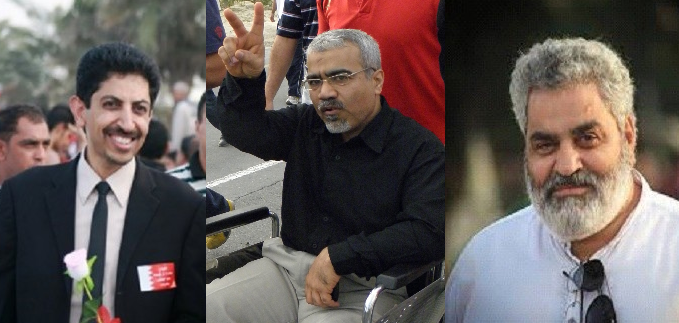
The authorities in Bahrain exploited the war that erupted in late February 2026 to launch a wide-ranging and ongoing series of human rights violations, dragging the country back to the Dark Ages characterised by a sharp decline on all fronts, including economic and demographic deterioration, intellectual stagnation, and unrest.
These grave violations include the continued imprisonment of prominent human rights defenders and political leaders, the arrest of hundreds of religious figures, peaceful protesters, online activists, and those who opposed government policies and direction, as well as the suppression of citizens’ public freedoms, most notably freedom of expression online and offline, and the prevention of citizens, who constitute the majority of the population, from practicing their religious rites during the Ashura season.
Prominent human rights defenders & symbolic leaders remain imprisoned
None of the prisoners who have been released during recent amnesties include prominent human rights defenders, such as Abdulhadi Al-Khawaja, the founding director of the Gulf Centre for Human Rights (GCHR), who suffers from serious illnesses, or Dr. Abduljalil Al-Singace, who has been on hunger strike since 08 July 2021, and also suffers from serious health problems.
The authorities insist on continuing their imprisonment solely for their peaceful and legitimate human rights activities. Not content with these two, they have recently added prominent human rights and environmental activist Mohammed Jawad Hameed to the list of those arbitrarily arrested and imprisoned for opinions he expressed on social media.
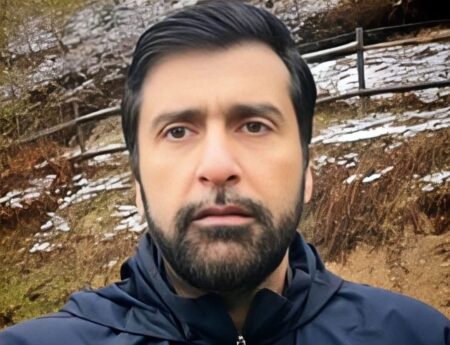
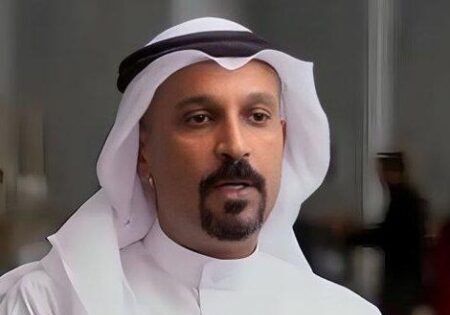
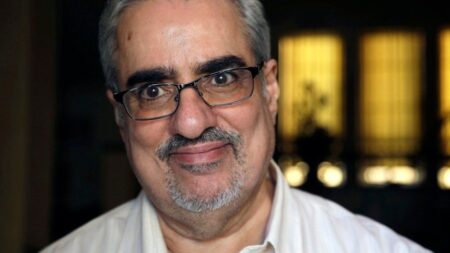
The main image shows the three defenders, respectively from left to right.
Abdulhadi Al-Khawaja
Abdulhadi Al-Khawaja, 65, co-founder of both GCHR and the Bahrain Centre for Human Rights (BCHR), has been unjustly imprisoned for 15 years. He was arrested on 09 April 2011, for his role in peaceful demonstrations during Bahrain’s pro-democracy uprising and is currently serving a life sentence in Bahrain. Al-Khawaja’s health has deteriorated significantly during his imprisonment, as he has been subjected to severe physical, sexual, and psychological torture.
His human rights work did not end with his imprisonment. He has undertaken several hunger strikes to protest his and his colleagues’ mistreatment and to demand their full rights. In doing so, he has practically demonstrated his saying, “Prison does not end the work for human rights.”
Given that he holds both Bahraini and Danish citizenship, GCHR calls on all international mechanisms, including the United Nations and governments with influence in Bahrain, to work towards his immediate release and ensure his travel to Denmark to receive the necessary medical treatment, or at least to serve out his sentence at home with his family in Bahrain.
Dr. Abduljalil Al-Singace
Dr. Abduljalil Al-Singace, aged 64, is serving a life sentence and has spent 15 years arbitrarily detained solely for exercising his rights to freedom of expression and peaceful assembly.
The hunger strike came in protest against the confiscation by the administration of “Jaw Prison” of the manuscript of his research book on Bahraini Arabic dialects, which took four years to prepare.
For the past years of his hunger strike, Dr. Al-Singace has been sustaining himself only on multivitamin liquid supplements, tea with milk and sugar, water, and salts.
We reiterate our demand to the King of Bahrain for the immediate release of Dr. Al-Singace, who is being unjustly detained, and to ensure he receives the urgently needed medical care. Furthermore, his manuscript must be returned to him, as academic freedom must always be respected.
Mohammed Jawad Hameed
Mohammed Jawad Hameed, a prominent human rights and environmental activist who is also a musician and singer, remains in prison two months after his arrest for posting on social media his shock and grief over the killing of citizen Mohammed Al-Mousawi as a result of torture in prison.
On 07 April 2026, the Cybercrime Directorate, which operates under the General Directorate of Anti-Corruption, Economic and Electronic Security, summoned Jawad to appear before it, and he was taken into detention. This Directorate operates under the wider umbrella of the General Directorate of Criminal Investigation and Forensic Science. At first it was not known why he was arrested, and he was held incommunicado, until he was transferred to Dry Dock Prison.
He was only allowed one phone call and there was concern that he was not receiving his medication for chronic illness.
His arrest was part of a systematic campaign of arrests carried out by the authorities in Bahrain, which included the detention of hundreds of citizens, including religious figures and internet activists.
On 15 April 2026, Jawad was brought before the Public Prosecution, where the prosecutor decided to extend his detention for an additional two weeks on charges of “hatred of the regime.” He criticised the death of Al-Mousawi, whose family learned of his death on 27 March 2026, when they received a call from the authorities. His body bore the marks of torture.
On 16 June 2026, the general prosecution renewed the detention of Jawad.
GCHR reiterates its call on the Bahraini government to immediately and unconditionally release all prisoners of conscience, including prominent environmental activist and artist Mohammed Jawad Hameed.
Prominent political activist targeted
On 17 February 2026, prominent political activist and former Secretary-General of the National Democratic Action Society (Wa’ad), Ibrahim Sharif, 69, a leading figure in the society, was released after spending 97 days in prison following his arbitrary arrest.
On 08 January 2026, the Bahraini judiciary sentenced him to six months in prison with immediate effect, in addition to a fine of 200 Bahraini dinars, on charges including “insulting Arab states and spreading false news,” due to statements he made peacefully expressing his opinions.
On 17 February 2026, the Court of Appeals upheld his conviction after a swift hearing, during which the Public Prosecution failed to respond to the arguments presented in the appeal memorandum. The court replaced the prison sentence with a pledge requiring him to appear weekly before the Alternative Penalties Centre.
He was arbitrarily arrested on 12 November 2025, upon his return to Bahrain International Airport. This is his tenth arrest since 2011.
Five detained leaders issue joint appeal
On 14 May 2026, driven by their deep concern for the country, five detained leaders in Jaw Central Prison, including Abdulhadi Al-Khawaja, issued a joint appeal calling on the Bahraini authorities to halt the crackdown, release all prisoners of conscience, and emphasise the importance of opening a serious national dialogue to address the crises.
The joint appeal also bore the signatures of prominent religious figures Sheikh Abduljalil Al-Miqdad and Sheikh Mohammed Habib Al-Miqdad, prominent opposition political activist Abdulwahab Hussain – all of whom have been imprisoned since 2011, and prominent political activist and Secretary-General of the (forcibly dissolved) Al-Wefaq National Islamic Society, Sheikh Ali Salman, who was imprisoned in 2014.
Prominent political activist imprisoned despite his advanced age and serious illness
Prominent political activist and Secretary-General of the Haq Movement for Freedom and Democracy, and co-founder and former Deputy of Al-Wefaq National Islamic Society, Hassan Mushaima, 78, remains imprisoned in Jaw Central Prison since 2011, serving a life sentence. He also suffers from multiple chronic medical conditions that seriously threaten his life, amidst a lack of adequate medical care, which the authorities deliberately withhold from him and his fellow prisoners of conscience.
The only reason he and the other prisoners of conscience are in prison is because they exercised their legitimate right to freedom of expression and peaceful assembly. They should never have been behind bars. The authorities should have celebrated their peaceful work, which aimed to build a bright future for all citizens without any discrimination or violation.
Writer targeted for expressing his personal opinions

On 03 May 2026, security forces arrested writer and labour activist Khalil Yaqoub Buhazaa after summoning him for questioning regarding his writings and social media posts.
On 05 May 2026, the Public Prosecution ordered his pretrial detention for seven days pending investigation, after charging him with several offenses, including incitement against the government and spreading false news.
On 04 June 2026, the Public Prosecution renewed his pretrial detention for 30 days before dropping the charges and releasing him on 15 June 2026.
Buhazza uses his X account to peacefully and respectfully express his personal opinions on public affairs concerning citizens in the country and various other political issues. Despite this, local sources confirmed to GCHR that the sole reason for his targeting by security forces was his exercise of his right to freedom of expression online.
Citizenship arbitrarily revoked from 69 citizens
On 27 April 2026, the Bahraini government revoked the citizenship of 69 citizens, including infants, rendering 46 of them stateless, more than half of whom were children. The number of affected children was approximately 33, including 10 infants, the youngest of whom was 19 days old. Despite their Iranian origins, they had been born and lived in Bahrain for generations.
On 28 April 2026, they were forcibly stripped of their official documents, including their citizenship, after being ordered to report to the Nationality, Passports and Residence Affairs Directorate, where they were forced to sign documents confirming the revocation of their citizenship and their impending deportation.
After authorities failed to deport them to Iran, they housed them in a hotel and deported some to Oman. A reliable source confirmed to GCHR that some of these families have reached Europe and applied for political asylum, claiming they were forcibly stripped of their citizenship and rendered stateless.
These unjust decisions came as a complete surprise to the affected families, without any prior warning or transparency. One of the citizens included in the list fainted upon reading his name and the name of his three-month-old daughter.
The authorities claimed that the revocation of citizenship from these individuals was due to their sympathy with “Iranian hostile acts” or “collaboration with foreign entities,” citing Article 10/3 of the Bahraini Nationality Law, which permits the revocation of citizenship from anyone who “causes harm to the interests of the Kingdom or acts in a manner contrary to the duty of loyalty to it.” This article is undoubtedly vague and allows for broad interpretation and the use of citizenship as a weapon to suppress free speech and all forms of peaceful opposition, whether online or offline.
On 02 May 2026, GCHR along with 12 partner human rights organisations, issued a joint appeal expressing its “grave concern regarding the Bahraini government’s continued violation of its international human rights obligations.” The appeal called upon “world leaders to urge the Bahraini government to reverse its decision of 27 April 2026, to arbitrarily revoke the citizenship of at least 69 Bahraini citizens and to explicitly commit to ending the policy of citizenship revocation. Arbitrary.”
The organisations also condemned “a royal decree issued in 2024 that excludes judicial review of citizenship revocation decisions and frames citizenship as a sovereign matter above judicial oversight. This contradicts a fundamental principle of international law requiring that government policies and practices be subject to independent judicial review, as well as the Bahraini constitution.”
No opinions can be expressed except the government’s viewpoint
Since the Bahraini authorities arbitrarily closed Al-Wasat newspaper (the only independent newspaper in the country at the time) on 04 June 2017, and indefinitely revoked its license on vague and fabricated charges of “publishing and broadcasting material that incites discord” and “insulting a state,” human rights defenders, online activists, and ordinary citizens have turned to social media to express their free and peaceful opinions on events in the country and abroad. The authorities have used all available repressive laws to imprison them simply for exercising their right to freedom of expression online.
A report published by GCHR on 26 June 2018, entitled “A Map of Cybercrime Laws and Digital Rights Violations in the Gulf Region and Neighbouring Countries,” confirms that Cybercrime Law No. 60 of 2014, along with other laws including the Press, Printing and Publishing Law of 2002, the Telecommunications Law, and the Counter-Terrorism Law, is used to prosecute freedom of expression in the country. Added to this is the Nationality Law of 1963, amended in 2014 as explained above, which allows the authorities to use it as a political tool to punish dissidents.
These laws are characterised by their repressive nature, enabling the authorities to use their vague, ambiguous, and undefined provisions to suppress the human rights movement and political opposition. This has resulted in the imprisonment of prominent human rights defenders, political leaders, and numerous other activists on fabricated charges and in sham trials, after the judiciary became the utmost politicised tool in the hands of the government, which it uses to eliminate its opponents and critics.
In the months following the recent war, the Bahraini government promoted only its own narrative, suppressing any dissenting opinions. This was reinforced by unprecedented campaigns of repression in Bahrain’s modern history, during which the majority of the population was intimidated and terrorised, and hundreds of innocent citizens were arrested for peacefully expressing their opinions on social media or participating in peaceful demonstrations and gatherings.
The Cybercrime Directorate, under the General Directorate for Combating Corruption, Economic and Cyber Security, has also arrested hundreds of internet activists for their social media posts. Authorities have leveled various fabricated charges against them, including misuse of social media, filming and publishing videos that disrupt security and public order, disloyalty to the country, and espionage. They now face sham trials, and some have received extremely harsh sentences.
On 24 May 2026, the High Criminal Court, after a sham trial that fell far short of international standards for a fair trial and due process, sentenced nine defendants to life imprisonment and two others to three years in prison each, after convicting them of the charge of alleged “espionage with foreign entities with the intent to commit terrorist and hostile acts against the country.”
On 15 June 2026, in a similarly unjust manner, Bahrain’s High Criminal Court sentenced 12 people to ten years in prison in separate cases. They were convicted on vague and undefined charges, including spreading false news and rumours on social media.
An international expert from GCHR, who was in Bahrain at the time, confirmed that when he objected to the severity of the sentences, a senior government official told him, “The government had to do this to fully control the security situation.”
Widespread arbitrary arrests of religious scholars on fabricated charges
On 09 May 2026, the Bahraini Ministry of Interior announced the arrest of 41 religious scholars following widespread raids on their homes. They were charged with fabricated offenses, including espionage and raising funds to finance terrorist operations carried out by foreign entities.
This group of religious figures includes well-known religious leaders, imams, and preachers, all known for their moderation, good character, charitable contributions, and legitimate fundraising activities aimed at supporting religious institutions and marginalised groups within society.
On 31 May 2026, the Public Prosecution issued a statement saying that it had “begun interrogating the 41 arrested defendants… and ordered their pretrial detention pending investigation. It also ordered the disclosure of their bank accounts and the freezing of their funds.”
Some unconfirmed reports indicated that they had been transferred to the Dry Dock Detention Centre, but other reports confirmed that their families had not been able to visit them and that their whereabouts were unknown, exposing them to the risk of torture and the extraction of alleged confessions by force. The authorities claim that they have lawyers to defend them, but this is untrue, as no one other than members of the security forces has met with them as of the time of writing.
Attacks on religious rites
This month coincides with one of the most important religious rites for a large segment of Bahrain’s population: Ashura. This year, the religious period has witnessed an unprecedented and massive crackdown. Security forces have deployed all their resources to attack mourning gatherings, imposing a tight siege and preventing mourners from attending.
Authorities have also prevented numerous preachers and reciters from participating in the mourning ceremonies. Many organisers and their assistants have been arrested, some released only after facing threats, intimidation, and mistreatment. Security forces have also used tear gas to attack these religious gatherings and vandalise mourning symbols such as banners and signs.
Despite this widespread harassment, citizens have participated strongly in the gatherings and confronted the security forces attempting to attack them. Authorities have also restricted traffic and prohibited the wearing of black clothing, the display of black shirts, and the use of banners and signs.
The authorities launched this campaign, along with other repressive campaigns mentioned in this report, following a widespread online surveillance campaign targeting individuals whose views do not align with the government’s political stance. The objective is singular: to criminalise and suppress dissent in any form, eliminating it in its infancy by gathering the necessary information through violations of the digital privacy rights of various online activists.
Recommendations
GCHR on the Bahraini government to:
- Respect the right to freedom of expression, both online and offline, and cease prosecuting social media users for peaceful writings expressing their personal opinions, including through the use of the Cybercrime Law, the Counter-Terrorism Law, and other laws;
- Respect the right to freely practice religious rites and cease using terrorism laws and other measures to restrict or delegitimise the practice of religious rites by citizens and journalists;
- Immediately and unconditionally release all human rights defenders, other activists, and prisoners of conscience who are imprisoned and prosecuted on fabricated charges solely for their peaceful opposition to government policies; and
- To ensure in all circumstances that all journalists, online activists and human rights defenders in Bahrain are able to carry out their legitimate activities without fear of reprisal and free from all restrictions, including judicial harassment.

-
Latest News
Defenders Affected