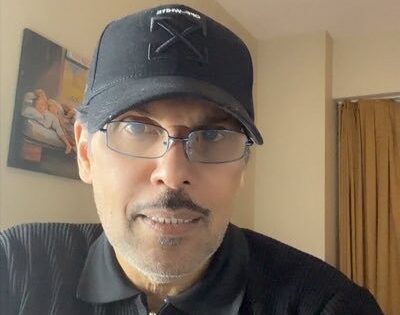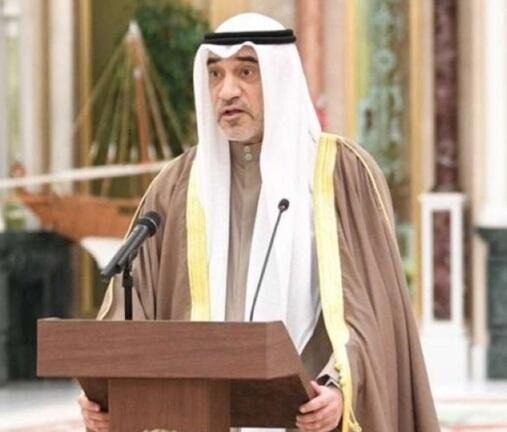
The authorities in Kuwait continue their systematic repressive policies, including stripping tens of thousands of citizens, mostly women and children, of their nationality, in addition to using citizenship as a political weapon against dissidents, critics, and peaceful activists in exile. These arbitrary measures are unquestionably spearheaded by the First Deputy Prime Minister and Minister of Interior, Fahad Al-Yousef Al-Sabah (pictured).
On 28 July 2026, Emiri Decree No. 121 of 2026 was issued, revoking the citizenship of six people, including five peaceful activists working in exile: Mansoor Al-Muhareb, Lulwa Al-Hussainan, Abdulaziz Al-Foudari, Mohammed Al-Matar and Abdullah Al-Saleh.
In addition, the list was topped by cleric Hussein Al-Ma’touq, against whom the State Security Court of the Criminal Court issued a five-year prison sentence in absentia on 07 May 2026, when he was outside the country, after convicting him of “inciting sectarian strife.”
Informed local sources confirmed that including Al-Ma’touq’s name on the list is a prelude to laying the groundwork for future state security charges against the five activists, after questioning their patriotism and damaging their reputations.
Blogger Mansoor Al-Muhareb
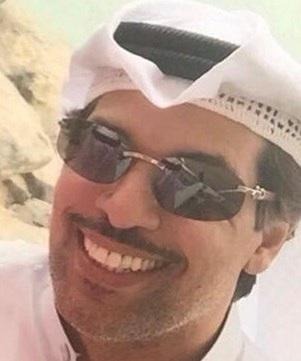
The Kuwaiti authorities have mobilised all their resources and tools to silence prominent blogger Mansoor Al-Muhareb, who, in his peaceful writings, defends citizens’ civil and human rights and is a staunch opponent of corruption.
At 1:00 PM on 28 July 2026, Al-Muhareb attempted to deliver a document outlining popular demands to the country’s political leadership through the Kuwaiti embassy in London, where he resides. His request was met with outright rejection, and no embassy staff member came out to meet him and accept his document. At 8:00 PM that same day, a decision was issued to revoke his citizenship.
On 10 June 2026, the Kuwaiti authorities, primarily the State Security Apparatus, illegally seized his Kuwaiti SIM card linked to his social media accounts, in flagrant violation of the privacy guarantees provided by his mobile network operator.
The day after his citizenship was revoked, Al-Mohareb wrote the following on his X account: “The authorities were inept, they didn’t provide any reason for revoking my citizenship. While this is a precedent – revoking citizenship acquired since the state’s founding – they also set another precedent by failing to provide any justification.”
Revoking citizenship by birth involves stripping citizens of their original nationality (acquired by virtue of their presence or residence at the time of the state’s establishment), in violation of human rights conventions, including Article 15 of the Universal Declaration of Human Rights, which states:
1. Everyone has the right to a nationality.
2. No one shall be arbitrarily deprived of his nationality nor denied the right to change his nationality.
Opposition and online activist Lulwa Al-Hussainan

Opposition figure and well-known online activist Lulwa Al-Hussainan and her family were repeatedly targeted, with Fahad Al-Yousef always being behind the targeting, forcing her to leave the country on 15 December 2024. She was sentenced twice: first to three years in prison on 16 March 2025 for “insulting the Emir,” a sentence overturned on 19 June 2025. On 08 January 2025, she received a second sentence from the Kuwaiti Criminal Court, this time for five years in prison on the same charge of “insulting the Emir.” Despite the fact that, according to the recordings reviewed by the Gulf Centre for Human Rights (GCHR), she addressed him with utmost respect and civility, this indicates that the cases were malicious and were considered a state security issue due to the Interior Minister’s attempt to undermine her.
Al-Hussainan uses her X account, which features the phrase, “My country, how harsh life is for the free and honest,” to express her personal opinions on public affairs, particularly her sharp criticism of the repressive tactics employed by the Minister of Interior and his leadership of the campaign to revoke the citizenship of thousands of citizens, mostly women and children. She can be described as a courageous and steadfast woman’s voice, demanding rights and confronting the authorities’ repression at a time when many voices have been forcibly silenced.
On 28 July 2026, at noon, Al-Hussainan submitted a letter of appeal to the Kuwaiti Embassy in London, addressed to the Emir of Kuwait, Mishal Al-Ahmad Al-Sabah, requesting justice and an end to the injustice inflicted upon her and some of her family members in Kuwait. Her request was received, but that evening, the response was that a decision was issued to strip her of her citizenship as well.
The next day, she posted the following on her Facebook account: “Criticising or even attacking the government is a legitimate constitutional and legal right. Since when does attacking the government lead to the revocation of citizenship? Since when… have we incited the overthrow of the regime?”
Her comment was a response to reports in some local newspapers that the reason for revoking their citizenships was that their peaceful expression of opinions online constituted activities that “undermine the prestige of the state, disrupt the economic, social, and political order, and incite the overthrow of the regime.”
Al-Hussainan called for “a peaceful sit-in in front of the Kuwaiti Embassy in London on 05 August 2026, to demand the dismissal and accountability of Fahad Al-Yousef for his blatant injustice and grave and serious violations against the Kuwaiti people.”
Three other activists had their citizenship revoked
The third activist is academic and online activist Mohammed Al-Matar, who wrote the following on his X account on 19 July 2026: “The revocation of my citizenship was not a surprise to me in this political era, the worst in Kuwait’s political history. It was expected, as I am no better than my brothers, sisters, and children whose citizenship was unjustly and aggressively revoked by an authority that disregarded God’s will regarding their rights and the consequences of the injustice inflicted upon them: the dispersal of their families, the confiscation of their properties, the cutting off of their livelihoods, their dismissal from their jobs, and wounds that will not heal with time, even if their rights are restored.”
The fourth activist targeted was Abdullah Al-Saleh, an academic and online activist with a PhD in economic development. On 24 July 2026, he wrote about being targeted by Kuwaiti authorities: “My Snapchat account has been blocked in Kuwait… Several followers informed me that my account has disappeared from Kuwait… My TikTok account is also blocked… To those in power… You can close a window, but you cannot stop the sun from rising… The sun of freedom will rise… Time will tell.”
The final activist targeted was blogger and online activist Abdulaziz Al-Foudari, who uses his X account to publish his personal, often satirical, opinions on public affairs in his country, Kuwait.
Recommendations
GCHR calls on the Kuwaiti authorities to adopt due process and transparency in reviewing arbitrary citizenship revocations in accordance with international laws and standards, and to reinstate citizenship for all citizens who obtained it because they knew no other homeland than Kuwait, as well as for other citizens who previously obtained it through legal channels.
GCHR also calls on the authorities to release all prisoners of conscience, cease targeting activists inside and outside the country, and guarantee freedom of expression and protection from any reprisals, in accordance with Kuwait’s constitution, laws, and international human rights obligations.
The authorities must reinstate the National Assembly and allow elected members to exercise their legislative and oversight rights regarding policies and practices that harm thousands of people.

-
Latest News
Defenders Affected