Overview
Kuwaiti authorities are setting a dangerous precedent of targeting political dissidents and activists by stripping them of their nationality. The Gulf Centre for Human Rights (GCHR) has documented how the revision of the Nationality Law, suspension of the National Assembly (Parliament), and revision of the Constitution have led to severe human rights implications.
GCHR has also documented the continuous targeting, legal harassment and imprisonment of several former members of the National Assembly – all in an attempt to remove any accountability for the government policies, and stifle any criticism of the unprecedented mass stripping of nationality for thousands of Kuwaitis and their families. We continue to receive requests for support from those affected and we have published, and will continue to publish, several reports on the cases of those affected and the dire situations of those rendered stateless.
The case of activists and political dissidents is unique. It invites scrutiny of how Kuwaiti authorities are actively silencing critical voices at a time where mass violations of human rights are being actively committed. GCHR has explained in previous reports how the stripping of nationalities is being conducted without due process, legal certainty, freedom of expression, and the protection against arbitrary deprivation of nationality.
The political changes started in 2024, when Emir Mishal Al-Ahmad Al-Sabah dissolved the National Assembly and suspended several constitutional provisions. Subsequent nationality reviews and revocations affected thousands of citizens, including individuals who acquired their nationality lawfully through naturalisation but also those who have been Kuwaiti for generations.
This report is focused on those who lost their nationality because of political participation and the impact this had on themselves and their families. The report does not provide a comprehensive list of all of the Kuwaitis affected because of their activism or political participation but documents several case studies as evidence. Understandably, many more are affected because of their public activism, but the environment of repression and potential for retaliation have kept many silent.
Cases of prominent political figures and activists affected
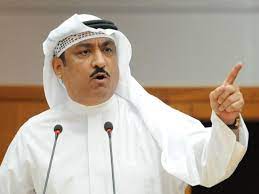
Political activists affected include prominent figures who have lost their nationality during the current mass campaign. According to our sources, Musallam Al-Barrak, a prominent political figure and a former Member of the National Assembly, was reportedly tried in absentia recently for speaking out against the state policies. He left Kuwait before his trial and went to Turkey, where he sought asylum. The state threatened to strip him of his nationality if he didn’t return to face the trial within one month. Al-Barrak was sentenced and imprisoned before for his activism, and he is a Kuwaiti by origin and not a naturalised citizen.
Citizenship was also withdrawn in 2025 from Tareq Al-Swaidan, an Islamic preacher, prominent media figure, who is also originally from Kuwait. The decree that decided to strip nationality from him and all his dependents did not cite any specific violation of the nationality law as a reason. In addition, GCHR documented the case of activist Fawaz Al-Kathiri, whose citizenship was revoked while he was seeking refuge in the United Kingdom in July 2025, and then a separate decision to revoke citizenship in 2026 was extended to his father, his children, and his family members.
Similarly, activist Salman Al-Khalidi, had his nationality stripped while he was seeking asylum in the UK. His case was alarming as it involved transnational repression. Al-Khalidi was abducted by the Kuwaiti authorities, and reportedly tortured, while he was visiting Iraq. He was then sentenced to 15 years in prison in 2026 and remains imprisoned.
GCHR documented cases involving a number of activists On 28 July 2026, Emiri Decree No. 121 of 2026 was issued, revoking the citizenship of six people, including five peaceful activists working in exile: Mansoor Al-Muhareb, Lulwa Al-Hussainan, Abdulaziz Al-Foudari, Mohammed Al-Matar and Abdullah Al-Saleh. This is a measure we believe was taken against the backdrop of their political activism and their defense of human rights.
The harm has extended to members of their families, as in the case of Lulwa Al-Hussainan, her brother Bader Al-Hussainan – a popular content creator – was sentenced to three years in prison for posting a satirical video about safety measures during wartime.
GCHR also received reports about the revocation of the nationality of the political activist, Mohammed Al-Mail, who resides in the UK, after a decade-long legal harassment and court sentences in absentia.
These cases should be distinguished from the broader issue of thousands of Kuwaitis who, having acquired citizenship, lost it following amendments to the Nationality Law that were often applied retroactively and arbitrarily. Political activists and human rights defenders are frequently and directly targeted for criticising the authorities, not for violating any provisions of the Nationality Law. This sets a dangerous precedent in Kuwait and neighbouring countries, where citizenship is being used as a weapon against critics to silence human rights defenders, given the severe consequences of losing one’s nationality.
Legal and Human Rights Concerns
The Kuwaiti government has presented nationality reviews as measures to address fraud, unlawful naturalisation, dual nationality, and national security concerns. However, we at GCHR, along with other organisations, raised concerns about the application of these grounds, particularly where decisions are not accompanied by clear individual explanations or do not offer genuine opportunities for appeal before a fair court.
Three consequences of this citizenship revocation are particularly significant:
- Freedom of expression: When nationality is withdrawn from government critics, especially without publicly-stated reasons, the practice may create a deterrent effect on political speech, peaceful dissent, and human rights advocacy. In recent years, GCHR has documented cases involving nationality-related measures coupled with prosecutions against government critics.
- Due process and judicial review: A key concern is whether affected individuals can access independent courts, challenge the factual basis of decisions, and obtain effective remedies. A 2026 report by GCHR describes substantial restrictions on judicial oversight under the revised nationality framework.
- Statelessness and family consequences: Revocation can affect women, children, and other dependents, potentially leaving them without effective nationality, secure identity documents, or normal access to travel and public services, especially in the areas of health and education.
A number of international legal instruments recognise the right to nationality and the protection against its arbitrary deprivation. Whether a decision to revoke an individual’s nationality violates international law depends on the legal basis of the decision, the circumstances of the case, its consequences, and the availability of effective safeguards. In the case of political activists – and activists in general – in Kuwait, the immediate effect of such decisions is to create an atmosphere of fear, silencing any critical voices and further shrinking the already-limited space for civil society.
The timing of the nationality campaign is important. In May 2024, Kuwait’s Emir dissolved the National Assembly and suspended constitutional provisions governing parliamentary activity for a period of up to four years. The subsequent expansion of executive authority over nationality decisions has occurred in a politicised environment with reduced parliamentary or judicial oversight.
The combination of weakened legislative scrutiny, broad executive powers, and nationality revocations affecting critics raises concerns about the relationship between citizenship and political loyalty. Where citizenship is vulnerable to decisions associated with political criticism, it may also weaken the security that enables individuals to participate in public life.
Recommendations
The Kuwaiti authorities should:
- Ensure that nationality decisions are not used to punish peaceful political opposition, criticism, or human rights work;
- Suspend nationality revocations where there is a credible risk of arbitrariness until independent safeguards are established;
- Publish the legal grounds for individual decisions, subject to legitimate privacy protections;
- Guarantee access to independent judicial review, including the right to challenge evidence and obtain effective remedies; and
- Restore nationality where deprivation was arbitrary or imposed without adequate due process, with particular protection for children and individuals who would otherwise become stateless. Likewise, in other cases, the humanitarian aspect must be taken into account, and additional opportunities must be given to citizens to contribute to building a bright future for all.
In addition, all international partners should demand that the Kuwaiti authorities halt these ongoing arbitrary campaigns to revoke the citizenship of citizens, and they should also monitor the implications of citizenship-related legislation and support independent human rights documentation efforts.

-
Latest News
Defenders Affected