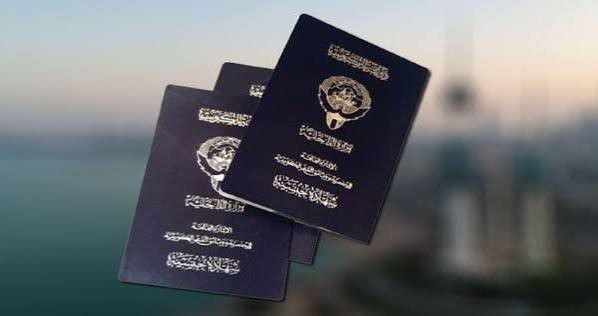
The Gulf Centre for Human Rights (GCHR) has been following with great concern the severe implications of the withdrawal and revocation of nationality in Kuwait since 2024. GCHR has received multiple requests to support and advocate for those affected.
Kuwait’s nationality system has undergone significant changes since 2024. The most recent major revision is Decree-Law No. 52 of 2026, published in the Kuwait Al-Youm Official Gazette on 10 May 2026. It amends the long-standing Emiri Decree No. 15 of 1959 on Kuwaiti nationality. The government presents the revision as an effort to modernize nationality rules, protect Kuwait’s national identity, and establish clearer controls over the granting, loss, withdrawal, and revocation of citizenship.
The amendments, however, raise substantial human rights concerns. The most important involve gender discrimination in transmission of nationality, the risk of statelessness, broad executive authority to withdraw citizenship, and limited judicial remedies. These concerns are particularly significant because Kuwait has already revoked the nationality of tens of thousands of people in recent years, disproportionately affecting women who had acquired citizenship through marriage to Kuwaiti men.
Major Changes in the Revised Law
1. Citizenship remains strongly based on paternal descent
The revised law maintains the principle that a person born to a Kuwaiti father is Kuwaiti by origin. It also defines Kuwaitis by origin through historical residence requirements dating back to 1920. This preserves the central jus sanguinis structure of Kuwait’s nationality system, in which nationality is principally transmitted through the father.
2. Kuwaiti women remain unable to transmit nationality on equal terms
One of the most important human rights problems is that a Kuwaiti woman married to a non-Kuwaiti man does not have the same general right as a Kuwaiti man to transmit Kuwaiti nationality to her children. The previous law allows for the transmission of a Kuwaiti mothers’ nationality, who were married to foreigners, to their children under certain conditions. These included that the mothers were divorced or widowed, the children resided in Kuwait and applied for citizenship when they reach legal age. GCHR received reports on entire generations rendered stateless after these revisions.
The 2026 amendments retain limited humanitarian exceptions. For example, the Minister of Interior may treat a minor child of a Kuwaiti mother as Kuwaiti until adulthood where the foreign father is deceased, imprisoned, or has irrevocably divorced the mother. There are also provisions concerning children whose fathers are unknown or whose paternity has not been legally established.
The result is that nationality transmission remains fundamentally unequal between Kuwaiti men and women. This directly conflicts with longstanding recommendations from UN treaty bodies. The UN Committee on the Elimination of Discrimination against Women (CEDAW), for example, has repeatedly called on Kuwait to amend its nationality legislation so Kuwaiti women can transmit nationality to their children on an equal basis with Kuwaiti men.
3. Foreign wives do not automatically acquire citizenship
The law continues to restrict citizenship acquisition through marriage. A foreign woman who marries a Kuwaiti man does not automatically become Kuwaiti. Similarly, when a foreigner becomes Kuwaiti through naturalisation, his foreign wife does not automatically acquire Kuwaiti nationality. His minor children may be considered Kuwaiti by naturalisation, but they may choose their original nationality after reaching adulthood.
This represents an important departure from older provisions under which marriage to a Kuwaiti man could provide a pathway to citizenship.
4. Stricter rules concerning dual nationality
The 2026 amendments introduce a particularly significant requirement for naturalised Kuwaitis. Under Article 11 bis, a person who acquires Kuwaiti nationality must renounce any other nationality within three months and provide evidence of that renunciation to the Ministry of Interior. Failure to do so can render the grant of Kuwaiti nationality void.
This reinforces Kuwait’s restrictive approach to dual nationality and potentially creates difficult consequences for individuals whose previous nationality cannot easily be renounced.
5. Kuwaitis by origin are subjected to nationality withdrawal
The new amendments allow for the revocation of nationality from Kuwaitis by origin. The law gave wider authority for the revocation of nationality for the executive power. Several human rights defenders and Kuwaitis by origin had their nationality revoked. Nationality became weaponised against political activists.
6. Naturalised citizens and their descendants have no political rights.
Article 7 of the revised Nationality Law maintains that naturalised citizens and their descendants are not allowed to have the right to vote, run for, or be appointed in any representative entity.
7. Expanded consequences of losing nationality
The revised framework maintains extensive governmental powers concerning the withdrawal or loss of citizenship, including consequences for family members whose nationality derives from the person whose citizenship is withdrawn. This is particularly important because nationality is not merely a formal legal status. Losing Kuwaiti citizenship can affect identity documents, travel, employment, education, health care, housing, and other public services.
There are no official numbers on those affected and no standard regulatory mechanisms to deal with all the consequences. Investigative reports estimate that more than 71,059 people were affected; representing about 4.6% of the population. The figures may reach 250,000- 300,000 people if we include the dependents and descendants of those affected, or 1 in 5 Kuwaitis. Affected individuals remain without legal clarity in terms of access to previous rights, and which group of those affected can be granted some basic services.
Human-Rights Implications
Gender equality
The most obvious human-rights concern is the continued distinction between Kuwaiti men and women in nationality transmission. The UN Committee on the Rights of the Child has criticised Kuwait for failing to amend its Nationality Act to allow Kuwaiti women to transmit nationality to their children irrespective of the father’s nationality. The Committee emphasised that children of Kuwaiti mothers and non-Kuwaiti fathers can consequently be denied rights enjoyed by children of Kuwaiti fathers.
The UN Committee on the Elimination of Racial Discrimination has likewise expressed concern about discrimination against Kuwaiti women married to foreigners, and recommended that Kuwait permit them to transmit nationality to their children and spouses on an equal basis with Kuwaiti men. Thus, although Kuwait argues that nationality is a sovereign matter, international human rights law does not treat nationality legislation as completely exempt from human rights standards.
Risk of statelessness
The second major concern is statelessness. A person deprived of Kuwaiti nationality may become effectively stateless if they do not possess another nationality. This concern is especially relevant to the Bedoon, Kuwait’s long-term stateless population. Bedoon, as a community, remain in legal limbo. Their path to citizenship claims remains unresolved and therefore face restrictions involving documentation, education, health care, housing, employment, and travel.
The UN has repeatedly encouraged Kuwait to address the situation of stateless persons and to establish transparent procedures for determining nationality claims. Kuwait has not acceded to either the 1954 Convention relating to the Status of Stateless Persons or the 1961 Convention on the Reduction of Statelessness.
Due process and judicial protection
A particularly serious concern is the ability of individuals to challenge nationality decisions. Kuwaiti courts have historically treated citizenship decisions as matters falling within the state’s sovereign authority. This creates a human rights problem because deprivation of nationality can have profound consequences for a person’s legal identity and enjoyment of other rights. In addition, GCHR has documented cases where authorities deprived citizens for practicing their political and civil rights. Without an effective independent appeal mechanism, individuals may have difficulty challenging an erroneous, arbitrary, or disproportionate decision.
Impact on women and families
The consequences can extend beyond the individual whose nationality is revoked. The recent citizenship-revocation campaign had disproportionately affected women who had acquired nationality through marriage to Kuwaiti men. Loss of nationality can consequently disrupt family life and access to essential services.
Statistics, provided by some reliable local sources, show that over 70,000 people were affected. The number reaches an estimate of 300,000 when the descendants and dependents are included; or about 1 in 5 Kuwaitis.
Assessment
The amendments that were passed in 2026 represent a comprehensive restructuring, not a fundamental liberalisation, of the nationality law in Kuwait. The government has attempted to clarify nationality rules and establish what it describes as stronger legal controls. Nevertheless, the revised framework continues to prioritise state control and national identity over equal nationality rights.
From a human rights perspective, four issues remain particularly problematic:
- Women do not have equal nationality-transmission rights with men.
- Children of Kuwaiti mothers and foreign fathers can remain without Kuwaiti nationality in circumstances in which children of Kuwaiti fathers would automatically receive it.
- Broad powers to withdraw or revoke citizenship create risks of arbitrary deprivation of nationality and statelessness.
- Limited judicial review weakens the right to an effective remedy.
The central issue is therefore not whether Kuwait has the sovereign authority to determine who qualifies for citizenship. International law recognises substantial state authority in nationality matters. The issue is whether that authority is exercised without discrimination, arbitrarily, or in a manner that produces statelessness and deprives individuals of fundamental rights.
The UN Committee on the Elimination of Racial Discrimination has recently urged the Kuwaiti authorities to stop the revocation without proper assessment and transparent legal procedure. UN human rights experts emphasised the disproportionate effect on women and children at risk of statelessness. In addition, experts recommended that Kuwait removes restrictions on civil documentations, employment, healthcare, housing, education, and social protection for those affected. In this respect, the revised law leaves Kuwait with significant unresolved obligations under international human rights standards.
Recommendations
GCHR urges the Kuwaiti authority to:
- Implements safeguards that protects those affected from statelessness and loss of rights under Kuwaiti international obligations;
- Establish equal nationality rights for all Kuwaiti women and men without discrimination based on how they were obtained their nationality;
- Provide transparent procedures for nationality determinations;
- Guarantee meaningful judicial or independent review of citizenship deprivation.