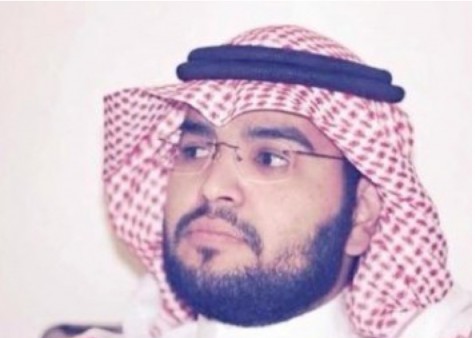
On 29 May 2016, human rights defender Abdulaziz Al-Shubaili was sentenced to eight years in prison for his peaceful and legitimate human rights work in Saudi Arabia.
In a hearing which took place on 29 May 2016, the Specialised Criminal Court (SCC) in Riyadh sentenced Al-Shubaili to eight years in prison followed by another eight years of a travel ban to start after he serves his sentence. Also the court decided not to allow him to write any more. He was accused of many charges including allegedly publishing a statement calling for demonstrations; accusing judges of dishonesty and human rights violations; and preparing, storing and sending data affecting public order. As well he was sentenced for participating in an unauthorised association, the Civil and Political Rights Association in Saudi Arabia (ACPRA), and his contribution to the drafting of its statements, as well as failing to comply with the judicial decision to dissolve ACPRA.
Al-Shubaili was summoned to Al-Qassim’s prosecution and interrogation department on 18 November 2013 and interrogated in four sessions, the last one held on 17 December 2013. He was asked by the police to bring someone to bail him out on 14 January 2014. The case was then referred to Judge Mohammed Al-Zahrani at the SCC, which held its first hearing on 27 October 2014. On 20 April 2016, the judge postponed the hearing in which the verdict was to be announced due to an additional submission by the Attorney General in the Criminal Court. Reports confirmed that this submission was aimed at doubling the sentence against him.
Al-Shubaili is a principal member of the ACPRA who participated in the defence team on behalf of many of his fellow members of ACPRA. Also he has used social media networks to call for reform and defend people’s rights in Saudi Arabia.
The Gulf Centre for Human Rights (GCHR) condemns in the strongest terms the eight-year prison sentence against Abdulaziz Al-Shubaili. GCHR believes that the ruling, which was issued after a mock trial that did not follow international standards and due process, is part of an ongoing trend adopted by the authorities, which includes the prosecution, arrest, torture, and judicial harassment of human rights defenders in the Kingdom.
The GHCR calls on the authorities in Saudi Arabia to:
- Immediately and unconditionally revoke the sentence against Abdulaziz Al-Shubaili and drop all charges against him; and
- Immediately release all human rights defenders and prisoners of conscience in Saudi Arabia whose detention is a result of their peaceful and legitimate work in the promotion and protection of human rights.
The GCHR respectfully reminds you that the United Nations Declaration on the Right and Responsibility of Individuals, Groups and Organs of Society to Promote and Protect Universally Recognized Human Rights and Fundamental Freedoms, adopted by consensus by the UN General Assembly on 9 December 1998, recognises the legitimacy of the activities of human rights defenders, their right to freedom of association and to carry out their activities without fear of reprisals. We would particularly draw your attention to Article 6 (b and c): “Everyone has the right, individually and in association with others: (b) As provided for in human rights and other applicable international instruments, freely to publish, impart or disseminate to others views, information and knowledge on all human rights and fundamental freedoms; (c) To study, discuss, form and hold opinions on the observance, both in law and in practice, of all human rights and fundamental freedoms and, through these and other appropriate means, to draw public attention to those matters” and to Article 12 (2): “The State shall take all necissary measures to ensure the protection by the competent authorities of everyone, individually and in association with others, against any violence, threats, retaliation, de facto or de jure adverse discrimination, pressure or any other arbitrary action as a consequence of his or her legitimate exercise of the rights referred to in the present Declaration.”

-
Latest News
Defenders Affected