The new Syrian government faces serious and significant challenges and real tests in the field of human rights, amidst local and international demands urging the authorities to refrain from reproducing the series of grave violations that prevailed under the ousted dictatorship. Various international mechanisms, including those of the United Nations, have also stressed the necessity of implementing fundamental reforms, including amending all repressive laws, guaranteeing the independence and impartiality of the judiciary, and protecting the civil and human rights of all citizens without discrimination or exception. Implementing these urgent demands will undoubtedly lead to the establishment of a state based on institutions and genuine citizenship in Syria.
Key Challenges and Required Human Rights Steps
On 08 December 2024, a coalition of several armed opposition factions, led by Hay’at Tahrir Al-Sham (HTS), overthrew the government of former Syrian President Bashar Al-Assad, ending nearly 61 years of oppressive Ba’athist rule, which began with the party’s coup on 08 March 1963.
On 29 March 2025, interim Syrian President Ahmed Al-Sharaa announced the formation of a new transitional government from the People’s Palace in Damascus. The government, comprised of 23 ministers, including only one woman, was tasked with leading the country during a five-year transition period. The key ministries were headed by figures close to Al-Sharaa and affiliated with HTS.
The transitional government faces fundamental human rights challenges that require swift and decisive action to gain the trust of all citizens and pave the way for Syria to become a modern state that respects public freedoms, promotes social justice, and ensures equal opportunities.
Legislative reform
Legislative reform can be considered a crucial first step in the effort to rebuild the state and strengthen its stability on all political, economic, social, and administrative levels. This includes working to ensure the independence of the judiciary and preventing political and security interference in its decisions, and enacting laws that protect the rights of all citizens and enshrine public freedoms, including freedom of expression online and offline, freedom of peaceful assembly, and the right to freely elect representatives of the people.
Accountability and transitional justice
The local and international human rights movement, including prominent civil society organisations in Syria, have worked to document the grave human rights violations committed by the previous government and has attempted to bring the perpetrators to justice through national or international courts. This has been achieved despite the significant difficulties arising from the complexities of the political situation and the continued impunity. The new government has made repeated promises to bring past and present perpetrators to a fair trial, but has accomplished little in this area.
The government is required to seriously begin the transitional justice process, including truth-seeking and establishing the facts, achieving criminal justice, providing reparations and redress for victims’ families, and reforming state institutions. Taking these steps will enhance public trust and prevent future violence.
Women’s participation in political life
The participation of Syrian women in political life, at the level of important decision-making, and in key positions remains significantly low. This deficiency must be effectively addressed to enable women to fulfill their responsibilities in building a brighter future for all.
Cooperation with international mechanisms
The authorities must cooperate with international mechanisms, including those of the United Nations, to share expertise and contribute to the successful management of the transitional phase.
Free elections and protection of public freedoms
The right of citizens to freely and directly elect their representatives in various bodies and institutions must be guaranteed, in addition to diligent efforts to protect public freedoms at all times and in all places for all citizens.
Grave Human Rights Violations
The Gulf Centre for Human Rights (GCHR) has documented several grave human rights violations that have recently occurred in Syria. These include arbitrary arrests, torture leading to death, the killing of children, and trials that lacked fairness, as detailed below.
Two citizens die due to torture
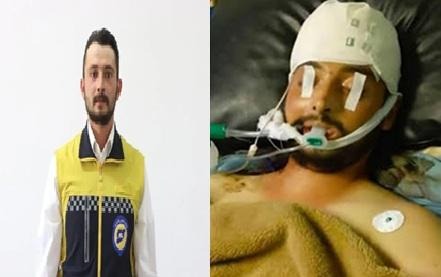
On 16 August 2026, young citizen and Civil Defense member Mohammad Hossamaldin Ghamira died at the University Hospital in Latakia, succumbing to complications from a brain hemorrhage and gastrointestinal issues resulting from three days of severe beatings at the Al-Haffa police station in the same city. His family had attempted to visit him during his detention, but each time they were told he was “under investigation” and they were not permitted to see him. His wife also informed the officers that her husband suffered from hemophilia and that his health was fragile, but they insisted he was fine. In short, the victim entered the station in good health after his arrest on 11 August 2026, and left in critical condition, which ultimately led to his death.
The report of the medical committee formed by the Ministry of Interior stated, “There were no visible signs of violence or abuse during the examination by the forensic doctor.” The report also concluded that hemophilia was the cause of death. This contradicts the fact that he was severely beaten, a fact he himself told his wife, who confirmed in a recording, speaking of her tragic loss, that he had been tortured. Undoubtedly, the Ministry of Interior cannot be expected to investigate a case of torture resulting in death perpetrated by its own police officers. The relevant authorities, including the Public Prosecutor’s Office, should have launched a comprehensive and impartial investigation into the circumstances of the case and brought the perpetrators to justice.
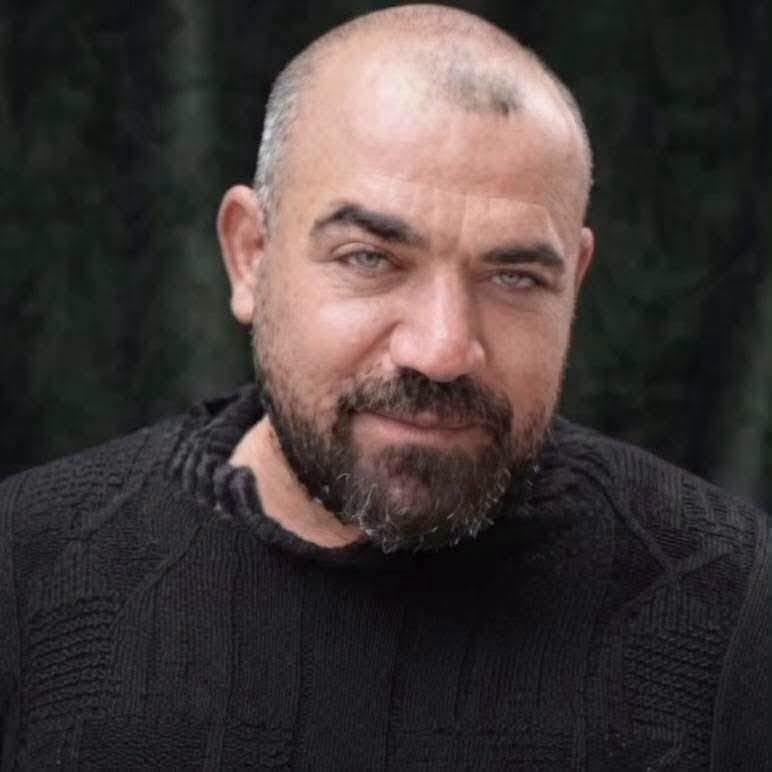
On 22 August 2026, the death of Louay Mohammed Zarouf, from the village of Ras Al-Ain in the Jableh countryside of Latakia Governorate, was announced. He died in Al-Nabk prison. He had been arrested by security forces near his home in the Damascus suburbs in late May of the previous year, and his family had lost contact with him throughout his detention. Informed sources confirmed the presence of clear signs of torture and bruises on his body.
Prominent human rights defender and Executive Director of the Syrian Justice and Accountability Center (SJAC), Mohammed Al-Abdullah, wrote on his Facebook page about this case: “Louay Mohammed Zarouf was detained for crimes he committed while serving in the regime’s army. Why wasn’t he tried? … Pretrial detention followed by a body under torture.”
Prominent human rights lawyer Michal Shammas also commented on the same case on his Facebook page: “The criminal is brought to justice and held accountable according to the law. He is not killed inside prisons or died under torture. This is the state, this is the law, and this is the difference between justice and revenge.”
GCHR condemns in the strongest terms all cases of torture and severe beatings leading to death in the dozens of cases recently documented by various parties, including human rights organisations. It calls on the Syrian government to form an independent commission of inquiry, including representatives from civil society, to conduct a thorough and meticulous investigation into all these cases and bring the perpetrators to justice. The authorities must take concrete and serious steps to end torture in police stations. The primary duty of the security forces is to protect citizens, not torture them.
Citizen dies after being shot
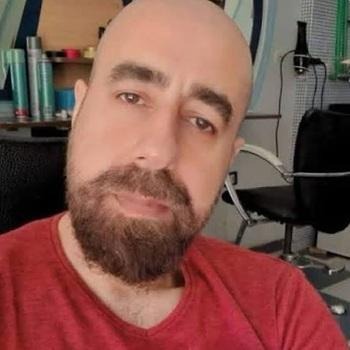
On the evening of 15 August 2026, unidentified gunmen shot and killed Nader Boulos Tannous after he closed his shop in the Karam Al-Loz neighborhood of Homs. Tannous hailed from the village of Al-Kima in Wadi Al-Nasara (Christian Valley) in the Homs countryside. He had been living in Sweden and recently returned to Syria, where he opened a women’s hair salon.
The killing of Tannous, which comes at a time when other parts of Syria are witnessing sporadic security incidents, raises serious security concerns regarding the protection of citizens from targeted killings and the urgent need to address the proliferation of weapons used to target unarmed civilians, particularly members of minority groups who have lived in harmony and coexistence in Syria for centuries.
GCHR calls on the Syrian government to exert every effort to achieve peaceful coexistence, promote civil peace throughout the country, and reject division, sectarianism, and incitement to violence against all citizens without exception.
Citizens arbitrarily arrested for peacefully expressing their opinions
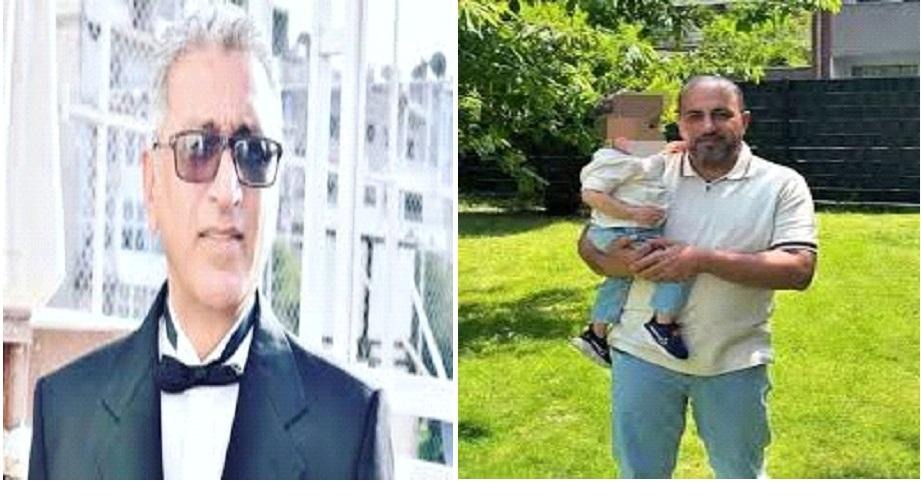
On 05 August 2026, engineer and political activist Antoine (Tony) Daniel (pictured left) was arbitrarily arrested in Latakia without a warrant in front of the Engineers Syndicate building. He was released the following day after a widespread social media campaign in solidarity with him. His arrest stemmed from his criticism of what he described as financial and administrative corruption within the Engineers Syndicate during an appearance on the “Salon Al-Jumhuriya” program hosted by journalist Ahmad Fakhoury. Many local observers described the arrest as “akin to abduction.” His arrest was linked to a complaint concerning Cybercrime Law No. 20 of 2022, which GCHR has previously criticised as a law that threatens freedom of expression online and all digital rights.
On 31 July 2026, Dr. Hussein Ali Al-Humaid was arrested at the Syrian-Lebanese border upon his arrival from Germany, where he also holds citizenship. He was charged with “undermining the prestige of the state” under the Cybercrime Law for social media posts criticising the general situation in the country.
They were both released on 06 August 2026, following a widespread solidarity campaign on social media. Informed local sources confirmed that an unspecified number of people, including journalists, bloggers, and online activists from various Syrian regions, particularly Damascus and Latakia, have been summoned and detained for expressing their critical opinions on public affairs online.
These arrests come despite a directive issued by the Ministry of Justice to all judicial authorities to fully comply with Circular No. 26, issued by the Ministry of Justice on 29 June 2026, concerning the regulation and organization of procedures for dealing with cybercrimes in a way that guarantees citizens’ rights and freedoms, and prohibits resorting to pretrial detention except in cases permitted by law.
GCHR calls on the Syrian authorities to release all citizens detained for exercising their right to freedom of expression online or offline. The cybercrime law must be fundamentally revised to ensure the protection of freedom of expression online and respect for the digital rights of all citizens.
Widespread Violence Against Children
On 02 August 2026, the body of three-year-old Ola Khamis Saleh Al-Khamis was found strangled in an orchard behind her family’s home in the town of Al-Bu Amr in the eastern Deir ez-Zor countryside. The forensic report confirmed that her death resulted from deliberate criminal strangulation. Security forces announced the arrest of the perpetrator a few hours after he committed the crime.
On 26 July 2026, the body of twelve-year-old Nour Muhannad Al-Dous was found three days after she was killed in the town of Namer in the northern Daraa countryside of Syria. She had been severely beaten to death. The forensic report confirmed that the cause of death was internal bleeding. Investigations revealed the involvement of the girl’s uncle in the crime, and the involvement of her father and another uncle in covering it up and burying the body in an agricultural area. The girl’s uncle was arrested on charges of attempted murder, while her father and another uncle were arrested for covering up the crime.
This case raised serious questions about the role of the judiciary after the girl’s mother stated in a press interview that Nour had moved in with her father after a court order transferred custody to him, and that a judge had failed to take the necessary action after seeing signs of physical abuse on her body.
Two-and-a-half-year-old Farah Ammar Al-Hamoud was found murdered on 20 July 2026, inside a hay barn in the town of Ghabaqib in the northern Daraa countryside, four days after she disappeared. According to the forensic report, she died from suffocation.
In another shocking incident, eight-month-old Saad Mohammed Omar Kahil was kidnapped from his home in the Urum Al-Kubra area of the Aleppo countryside on the morning of 10 August 2026. His family reported that an unknown kidnapper broke into the house and took the child.
Protecting Syrian children is an urgent task
All these documented cases demonstrate that the dangers facing Syrian children are real and require urgent action from the authorities to enact the necessary laws to protect them from domestic and societal violence and prevent their exploitation. It is also crucial to expedite judicial procedures to hold accountable those perpetrators who currently commit such crimes with such impunity. Furthermore, providing psychological support and care to child victims and their families is of paramount importance.
Several former government officials on trial
On 18 August 2026, the Fourth Criminal Court, in its sixth hearing held at the Palace of Justice in Damascus, sentenced Wassim Al-Assad to death after convicting him of the premeditated murder of more than one person and of committing acts of torture amounting to crimes against humanity and war crimes. The court also ordered the confiscation of his movable and immovable assets.
The same court had issued death sentences on 11 August 2026, against Bashar Al-Assad, his brother Maher, and seven former security officials, including the former head of the Political Security branch in Daraa Governorate, Atef Najib, who were convicted of crimes including premeditated murder, torture, arbitrary detention, and crimes against humanity during the suppression of the protests that erupted in 2011. Atef Najib was tried in person, while the sentences against the rest of the defendants were issued in absentia.
Following the death sentence against Atef Najib, the Syrian Justice and Accountability Center (SJAC) stated: “The conviction of Atef Najib is a historic step in Syria’s transitional phase, but it also reveals serious shortcomings in the Syrian justice system and likely undermined his right to a fair trial.” The SJAC added, “Atef Najib’s case was characterised by hasty proceedings and witness testimonies that failed to link him to the crimes he was accused of.” It further stated, “Atef Najib’s lawyer, who may face risks to his safety and professional reputation, lacked the capacity and willingness to engage seriously in the case or present an adequate defense.”
Recommendations
GCHR urges the Syrian authorities to repeal all laws that have harmed citizens’ rights and severely restricted fundamental freedoms, and to replace them with laws that protect their civil and human rights. The Syrian government must fundamentally reform the judicial system and strive to build a state based on institutions and genuine citizenship. Marginalised groups, including women and children, must be protected at all times.