Young blogger Bader Al-Hussainan sentenced to three years in prison for satirical content
13/08/2026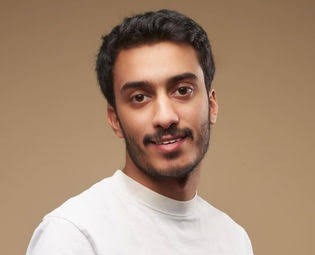
The Gulf Centre for Human Rights (GCHR) has been documenting a concerning rise in repression across the MENA countries amid the ongoing crisis including massive human rights violations and war.
Kuwait has undergone a radical transformation, shifting from a path of building a progressive state – compared to its neighbours – to adopting harsh repressive measures. This escalation has occurred since Sheikh Meshal Al-Ahmad, the current Emir, assumed power. Among the cases documented by GCHR is that of Bader Nasser Al-Hussainan, a young and well-known comedy content creator on social media. He was arrested on 07 March 2026 for a video he posted online and sentenced to three years in prison.
The Ministry of Interior (MOI) declared later that Al-Hussainan, along with a Kuwaiti and a Colombian person, were arrested for posting and participating in a Snapchat video. The video was considered by the authorities as a mockery of the current situation [bombing] of Kuwait. The clip showed Al-Hussainan and two other people wearing military helmets in a comic act. In the act, the three exchanged some funny tips on staying safe. No mockery of the authorities or the state was evident from the clip. In addition, local sources informed GCHR that the video was posted prior to any governmental directives being issued for people to stop posting on the war.
The arrests sparked widespread condemnation, prompting the Ministry of Interior to issue a statement explaining that the conduct of the three individuals – including Al-Hussainan – warranted charges including spreading false information, harming national interests, and misusing a telephone. News of the arrests circulated along with a photograph of the three men with their hands cuffed behind their backs. This practice of publicly humiliating targeted individuals is a common and increasingly used tactic by the authorities to retaliate against them.
A source close to Al-Hussainan, shared the court’s decisions in the case with GCHR. The three individuals, Bader Al-Hussainan, Salem Al-Salem and Fahad Hamza, were tried at the State Security Court for Counterterrorism. This court allows only for two levels of litigation. The charges were posting public content that that could have harmed the country’s military preparedness, raised fear among the public, and affected public resilience at times of war. On 23 April 2026, the first court acquitted the three individuals and placed them under a probationary period with a fine. However, at the second level of litigation, or the appeal, the State Security Court decided on 18 June 2026 to sentence them to three years in prison and to revoke the first decision. It was also reported that Al-Hussainan was forcibly disappeared for three months before the sentence was issued.
Lulwa Al-Hussainan, the sister of Bader Al-Hussainan, believes that the targeting of her brother is related to her own case and her human rights activities. She is a renowned online advocate against the stripping of nationalities of naturalised citizens in Kuwait, particularly from foreign wives married to Kuwaitis. She has published her encounter with the Minister of Interior, Fahad Al-Yousef. The latter summoned her on December 2024 to his office and scolded her for her critical online posts on X platform, which impinge on the authority of the Emir. During that session, Lulwa Al-Hussainan was subjected to beatings, solitary confinement in a freezing cell, and the severe deterioration of her health that led to her release. She subsequently fled from Kuwait to seek asylum in the UK.
Lulwa Al-Hussainan continues to face charges brought against her by the State Security apparatus and is still demanding a review of the mass citizenship revocations. Lulwa Al-Hussainan also believes that her brother’s arrest appears to be a form of collective punishment intended to intimidate her and force her into silence. Lulwa Al-Hussainan herself, along with several other Kuwaiti activists and dissidents residing abroad, were also recently stripped of their citizenship. This move seems to be an act of reprisal for their critical stances and demonstrates the use of citizenship as a weapon against all critics, including bloggers, journalists, and political activists.
There are other cases of individuals being targeted for their opinions or online expressions, such as the case of Al-Hussainan, and these are numerous and difficult to document in their entirety. GCHR has been documenting the increasing number of such cases since the beginning of the war, perpetrated by most of the participating states in an attempt to control the public narrative and restrict public access to information.
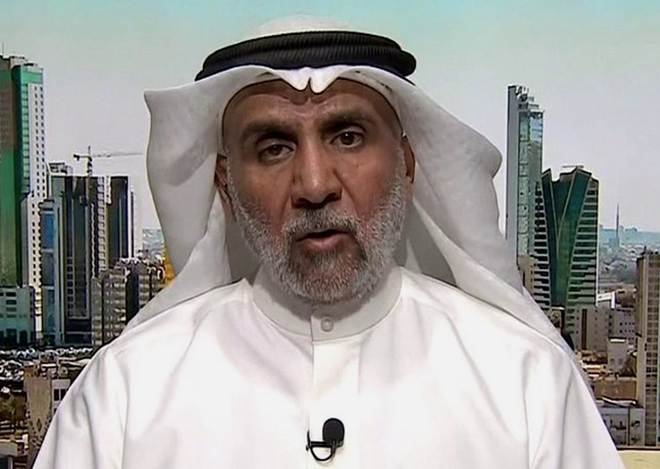
A clear example of this is the case of lawyer and journalist Mohammed Saleh Al-Sabti, who was arrested on 21 July 2026, after expressing his opinion on the ongoing war during a TV interview. Al-Sabti called for de-escalation and respect for international law governing armed conflict by all parties involved. He has been detained for over three weeks and faces up to five years in prison, because the authorities are treating his peaceful expression of opinion as a crime against state security.
The misuse of the law to target and silence dissidents, activists, and online content creators is deeply troubling. These practices have reached unprecedented levels in both number and scope, effectively transforming Kuwait into a police state. The authorities’ ongoing repression leaves thousands of citizens without any recourse to challenge their cases or appeal the abuse of power in their country before a fair judiciary.
Recommendations
GCHR calls on the Kuwaiti authorities to:
- Observe the rule of law, guarantee justice and release all people sentenced or imprisoned for peacefully expressing their opinions;
- Stop targeting activists and dissidents, or their family members, and immediately drop all charges against them; and
- Stop weaponising the nationality law and using other legal or punitive measures against people for practicing their civil and political rights, particularly at times of war.

-
Latest News
Defenders Affected