Civil society activists and journalists face human rights violations including killing
24/08/2021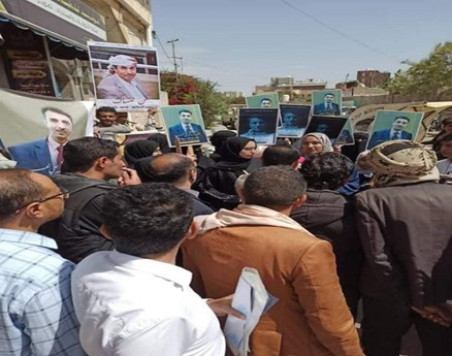
Civil society activists and journalists in Yemen continue to face human rights violations, including being murdered or sentenced to death by the Houthis, the de facto government in the capital Sana’a, and President Abd Rabbo Mansour Hadi and his followers. While welcoming the news that the killer of an academic has been arrested, and that eight activists sentenced to death have been freed, the Gulf Centre for Human Rights (GCHR) calls on the authorities to respect freedom of expression and assembly.
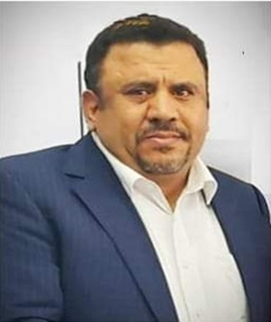
On 05 August 2021, the security media of the Houthi Ministry of Interior published a video of the man accused of killing architect Dr. Mohammed Ali Naim, an academic at Sana’a University and an Internet activist. In the video, a person named Fuad Hussein Salih admitted that he carried out the assassination late on the night of 04 August 2021, and said that the reason was due to “some frictions between him and Dr. Naim that are very old through Facebook and other things.”
On 22 August 2021, the West Capital Municipality Court of First Instance held its first hearing in Salih’s trial, where he denied all of his previous statements. Citizens gathered in front of the court during its session and raised pictures of Naim and demanded the judiciary to take the necessary legal measures to prosecute the accused in addition to those who instigated or supported him. The hearing has been adjourned to 29 August 2021.

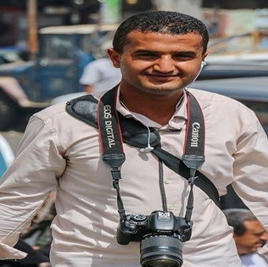
On 17 August 2021, freelance photojournalist Taha Saleh wrote on his Facebook page, “I didn’t kill anyone, I didn’t rob anyone, to send a group of masked soldiers over at midnight to surround the house.” On the same day, his colleague, photojournalist Naeef El-Wafi, who works with Al-Jazeera, wrote on his Facebook page, “Posted in a hurry, a fellow journalist called me back and said that Military Intelligence was looking for me and my number.” These posts came after units of the Military Intelligence Directorate raided the house at which they were staying in the city of Taiz, from which Al-Wafi managed to escape and take shelter in a safe place. Saleh was outside the house at the time of the storming.
The two photojournalists were targeted because they covered the heinous massacre that happened to the Al-Harq family in the Amad area of the Bir Basha neighborhood of Taiz. Members of the family were killed or kidnapped after armed clashes that took place on 10 August 2021.
Al-Wafi confirmed that military elements affiliated with the army that follows President Abd Rabbu Mansour Hadi carried out this massacre, writing on his Facebook page on 13 August 2021, “Don’t kill me with an army suit and weapon, our army. And when will you be strong, our army?”
In addition, Saleh called for justice and redress for the families of the victims. On 16 August 2021, he wrote on his Facebook page, “The accusations are the unwillingness to do justice to the families of the victims, by arresting and prosecuting the killers. That is what is happening in Taiz.”

On 16 August 2021, the Specialised Criminal Appeals Court in Sana’a held another session to consider the case of Dr. Nasr Mohammed Al-Salami and his group, which consisted of 36 academics, educators and students, 30 of whom were sentenced to death. Once again, the court confirmed the implementation of its decisions issued in its session held on 22 March 2021, which included allowing prisoners to receive books after the approval of the security authorities, asking the detainees’ employers to pay their salaries, and addressing the university to place the studies of detained university students on hold instead of expelling them, and treating those requiring medical assistance. However, these decisions have not yet been implemented by the concerned authorities.
Once again, one of the detainees in this group, Dr. Yousif Saleh Ali Al-Bawab, demanded that the person who beat and tortured him be investigated, but the court did not respond to his request. The court decided to postpone the hearing until 11 October 2021, in order to give the defense team an opportunity to prepare files to appeal the sentences handed down to their clients.
In a piece of good news, eight of those sentenced to death were released in a prisoner exchange. Once again, GCHR welcomes the news of the release of eight of the accused, but proclaims that none of them should have been sentenced to death in the first place, and calls for the immediate and unconditional release of the 22 detainees who remain in detention.

On 09 August 2021, journalist Fahd Yahya Al-Arhabi posted on his Facebook page the following: “Good morning…. I come back to you, dear ones, after 600 hours of imprisonment, 25 days I spent in the detention of the Central Security Camp, Amran Governorate Branch, and I spent it including on the days and nights of Eid al-Adha.” He wrote about the details of the incident that led to his arrest, saying, “About a month ago, a wedding of one of my friends was stormed in a wedding hall in the city of Amran. They raided the wedding in a provocative manner. They arrested the groom and the musicians on the pretext of forbidding singing and took the musical instruments!!!” He added, “This behavior aroused widespread resentment as an attack on the privacy of society. I published on this page a number of publications and videos that I filmed at the moment the hall was stormed and the groom and the musicians were arrested.” They were released soon after.
He explained, “Later, I was arrested due to the publication. I only published what I documented and they did not deny it, and my detention continued for 25 days without legal justification.” GCHR had documented his arrest on 12 July 2021, which was carried out by an armed group affiliated with the Houthi group.

At midnight on 04 August 2021, journalist Younis Abdulsalam left his place of residence, located on the Ring Street in the centre of Sana’a, carrying his laptop. His colleagues confirmed that as he suffers from depression, he often goes out even at night in order to relieve his suffering, but this time he did not return. His colleagues contacted him via his mobile phone, and another person replied, confirming that he was detained by the Security and Intelligence Service.
On 16 August 2021, human rights lawyer Abdulmajeed Sabra wrote on his Facebook page, “Even if you suffer from depression and a poor psychological state due to the conditions that people have brought to the existing authority, your freedom is not safe, especially when you are a journalist.”

Security forces in Sana’a arrested academic Dr. Osama Hammoud Al-Shabami in mid-July 2021, without bringing any specific charges against him and placing restrictions on his family’s visits to him. Reliable local sources confirmed that Dr. Al-Shabami, an engineer and businessman, is a well-liked personality who has no political inclinations. Many engineers have graduated from the Faculty of Engineering at Sana’a University, where he teaches.
Recommendations
GCHR calls on various United Nations mechanisms, including the Group of Eminent Experts on Yemen, to continue to pressure the de facto government in Sana’a, the Houthis, and the government of President Abd Rabbuh Mansour Hadi to release all those convicted and imprisoned in violation of their right to freedom of expression, and to stop detaining journalists, human rights defenders, academics and online activists.
Pending the release of prisoners, GCHR also calls for the full implementation of the UN Standard Minimum Rules for the Treatment of Prisoners (the Nelson Mandela Rules).

-
Latest News
Defenders Affected