Introduction
This is the seventeenth report of the Gulf Centre for Human Rights (GCHR) which covers the reality of human rights violations in Iraq. The report highlights the assassinations, bombings, prosecution of activists, restrictions on the media, attacks against prominent demonstrators and other peaceful citizens, and the continuous targeting of civil society workers and protesters actively participating in the current popular demonstrations. It also reports on the latest news of the protests and advocacy campaigns to end impunity. While perpetrators were arrested in several cases, many other cases of civil society activists being shot or attacked in their homes remain unsolved.
Arrest of a number of perpetrators

On 27 July 2021, the official Security Media Cell in the Ministry of Interior announced the arrest of the killer of the young citizen Ali Karim, son of prominent human rights defender Fatima Al-Bahadli, who was killed in Basra Governorate after leaving his home on 23 July 2021.

On 24 July 2021, the Maysan Governorate Police Directorate announced the arrest of two perpetrators in the murder of the folk poet Jaseb Hattab Al-Heliji, the father of human rights lawyer Ali Jaseb Al-Heliji, months after the arrest of the first person accused of killing him.
On 12 March 2021, GCHR documented the assassination of Jaseb Al-Heliji. He put all efforts and raised his voice in protests and various places in order to find his son Ali Al-Heliji, who was kidnapped on 07 October 2019 in the city of Al-Amarah, capital of Maysan Governorate.
Jaseb Al-Heliji had recorded a video of himself before his assassination, in which he stated that his life was in danger and he might be killed, and asked to meet the Prime Minister to speak privately with him. In this recording, he mentioned the name of the armed militia that kidnapped his son.

On 16 July 2021, the Iraqi government announced arresting the killer of journalist and well-known security expert Dr. Hisham Al-Hashemi, who was assassinated on 06 July 2020, in front of his house in Baghdad. Iraqi Prime Minister Mustafa Al-Kadhimi commented on the arrest, saying: “We promised to arrest the killers of Hisham Al-Hashemi and we fulfilled the promise.”
Al-Hashemi’s killer, Ahmed Hamdawi Owaid, was among a group of four people who carried out the crime. He admitted in a recording broadcast on state television that he fired four to five bullets at Al-Hashemi from his government pistol.

On 16 July 2021, the police in Basra Governorate, south of Iraq, arrested a person accused of the crime of murdering lawyer Haider Wadi Al-Mousawi on 10 July 2021, who confessed to committing the crime in association with fugitive defendants who are his father and brother.
GCHR calls on the Iraqi government to carry out an independent, comprehensive and rapid investigation of those accused of all these murders, to reveal all the facts related to the crimes, and in particular to reveal the parties responsible for incitement, planning and implementation. Authorities should provide all means of protection for human rights defenders to enable them to carry out their peaceful and legitimate work in the field of human rights.
Targeting civil society activists with explosive devices and live bullets
Civil society activists are no longer safe even in their homes, where they are sometimes targeted with explosive or sound bombs, and at other times with bursts of bullets. In the past year, the rate of attacks on activists, many of whom have been displaced from their homes, has increased. The Iraqi authorities have so far not been able to arrest any of the bombers on the homes of activists.

On 08 August 2021, in the early hours of the morning, a prominent civil society activist and one of the protest leaders in Wasit Governorate, Qassim Bahloul Al-Tamimi, survived an assassination attempt by unidentified gunmen who opened fire on him in the Centre of Kut city and fled. He was hit by two bullets in his body, and taken to the hospital for treatment, leaving him in stable condition.
The day before the assassination, on 07 August 2021, he wrote that his Facebook page had been severely attacked by the supporters of politicians. Al-Tamimi uses his page to show solidarity with his fellow peaceful protesters, to follow up on issues of public concern to citizens and provide news of the protests in the governorate.
Those close to him said, “He was subjected to threats in previous times from armed groups because of his activity in the protests, and they demanded that he leave the governorate, but he refused to do so.”
After that incident, dozens of citizens demonstrated in the centre of Kut, near Tammuz Square, in solidarity with Al-Tamimi and protested the assassination attempt, when they blocked three main streets after burning a number of car tires.

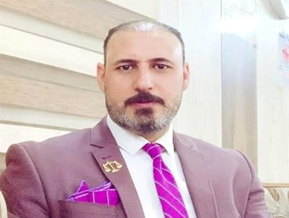
On 26 July 2021, unknown persons detonated an explosive device in front of the house of civil society activist Ibrahim Kased (photo 1), located in the Al-Shuhada neighbourhood in Nasiriyah city, the capital of Dhi Qar Governorate, in the south of the country, causing only material damage. Activists close to Kased told GCHR that “he was targeted because of his continued protest and mobilisation to come out against corruption and corrupt officials.”
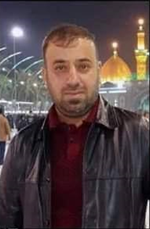
On 20 July 2021, an explosive device exploded in front of the house of prominent civil society activist Salam Al-Asmi (photo 2), causing only material damage to his house and car.
On 18 July 2021, he wrote on his Facebook page using the hashtag (#End Impunity), “Everyone will participate in the campaign.” He uses his page to remember the victims who fell in defense of the goals of the popular movement that began in October 2019, in addition to his coverage of the protests and his demand for accountability for the killers of demonstrators, including his brother.
On 20 December 2019, GCHR documented the assassination of civil society activist Ali Al-Asmi, 26 years old, by masked gunmen in a pickup car at Al-Shaibani intersection in the centre of Nasiriyah.They removed him from his car and killed him. Local reports stated that he had been assassinated, as the militants assumed he was his older brother, Salam Al-Asmi.
On 17 July 2021, late at night, civil society activist Abuelias Al-Saadoun (photo 3) survived an assassination attempt on the highway in the centre of Nasiriyah, when a group of people carrying knives attacked him and tried to kill him. According to information received by GCHR, “Al-Saadoun sustained stab wounds in different parts of his body, and he was taken to the hospital to receive the necessary first aid, and his health condition is stable” (photo 4).
Al-Saadoun uses his Facebook page to support the popular movement and show solidarity with fellow activists, as well as to fight corruption. He also appeared in a recording that talks about the details of the fire that broke out in Al-Hussain Hospital for the isolation and treatment of patients with Covid-19 in Nasiriyah, which occurred on 12 July 2021, where he criticised officials in the health sector.
Fatal shooting of a young athlete

On 27 July 2021, a member of the Diyala police shot dead athlete Mustafa Sattar Jabbar, nicknamed Spanish, while he was riding a motorcycle after he failed to stop at a checkpoint in Baqubah, the capital of Diyala Governorate. Jabbar, a student in the last year of secondary school, who is a member of the Diyala Sports Club, and an athletic runner who used his motorcycle in games that show his control, lives in Buhraz sub-district of Diyala Governorate. He had previously won third place in a national competition in Iraq in the sport of running, and represented his country and the preservation of this sport. After the incident, the Diyala Governorate Police Director announced the arrest of the policeman in addition to the patrol officer, and the formation of an investigation committee into the incident.
The authorities have not yet announced the details of the trial of the policeman responsible for the shooting, or at least the measures taken against him. Local sources confirmed that the young man did not have an identification card with him and hesitated to stop at the checkpoint.
Torture and ill-treatment in Iraqi prisons
Iraqi prisons were the site of two recent cases of torture, which sent shock waves across the country, causing great concern to citizens after one prisoner died from torture.

On 15 August 2021, civil society activist Ibrahim Al-Waeli was released, after an insulting photo was published in the past few days on social media, leaked by the security forces, showing him handcuffed and lying on the ground barefoot after his arrest at dawn on 11 August 2021. Citizens denounced the publication of this photo showing that he was ill-treated. Demonstrations also took place in the city of Nasiriyah, declaring their solidarity with him and calling for his release.

On 27 July 2021, in a case of mistaken identity, citizen Hisham Mohammed Al-Khazali died as a result of the torture he was subjected to in prison during the 24 hours that followed his arrest. He was arrested after passing a security checkpoint at the northern entrance to Basra Governorate, due to the similarity of his name to the name of a person wanted for justice.
He was tortured in the Directorate of Combating Crime in Basra Governorate, and reliable information confirmed that he had been subjected to various types of torture by beating, hanging and suffocation, and the signs of torture were clear on his body.
In a statement issued by its president, the Iraqi Bar Association condemned the killing of Al-Khazali and demanded the security services adopt a method that stops the use of torture during investigations. In his statement, the president of the Iraqi Bar Association, Dia Al-Saadi, said, “The Iraqi constitution of 2005 criminalised all kinds of psychological and physical torture and inhuman treatment, and this constitutional imposition should be adhered to by all security agencies that conduct investigation procedures, regardless of the charges directed to those arrested and those who are being held in detention centres.”
Arrests of civil society activists
The recent arrests of civil society activists and journalists have caused concern to the general public, due to their fears that these arrests are part of the systematic campaigns carried out by Mustafa Al-Kadhimi’s government to restrict freedom of expression.

On 05 August 2021, prominent civil society activist, Falah Al-Ziyadi, was arrested in Suq Al-Shuyoukh district in Dhi Qar Governorate after being assaulted by an unknown party. The city of Nasiriyah witnessed, upon his arrest, a demonstration demanding his release. Following his arrest, a demonstration took place in the city of Nasiriyah in which protesters demanded his release. The demonstrators blocked the main road leading to Al-Haboubi Square, threatening to continue the demonstrations until his release. Demonstrations and protests calling for his release continued. Reliable sources confirmed that a hearing for his trial will be held on 17 August 2021, in connection with his active participation in peaceful protests.
GCHR has documented his targeting twice in the past. On 22 June 2021, unknown armed men targeted his house in Suq Al-Shuyoukh district with a sound bomb and fled, which led to material damage to the facade of the house without any casualties. As well, on 02 December 2020, his house was targeted with an explosive device, causing only material damage.

On 30 July 2021, the security forces in Khanaqin district, Diyala Governorate, Eastern Iraq, arrested a number of protesters who had organised demonstrations during the past two months, without revealing the reasons for the arrest or the number of detainees. No details were available about the detainees, as the authorities prevented them from communicating with the media and human rights organisations, according to local activists who spoke to GCHR. Subsequent reliable local reports confirmed that they were all released the following week.

On 26 July 2021, members of the Intelligence Directorate in Al-Qadisiyah Governorate, which is affiliated with the Ministry of Interior, arbitrarily and without any court order, arrested civil society activist Hussam Al-Abedi for printing and publishing a poster calling on the Minister of Interior to reveal the killers of peaceful demonstrators. The owner of a printing press, civil society activist Khaled Al-Fatlawi, was also arrested for printing the poster.
They took them from their place of residence in the district of Al-Shamiya, to the city of Al-Diwaniyah, the capital of the governorate, where the directorate is located. Both were released the next day on bail of five million Iraqi dinars (about USD$3,500).
The protests erupted in front of the Intelligence Directorate gate after their arrest, as protesters burned tires, demanding their release.
On 29 July 2021, he appeared in a live broadcast on his Facebook page, in which he explained the process of their arrest, when they were placed in dark, narrow cells, and thanking all those who sympathised with them from different regions.
The two men were arrested in accordance with Article 240 of the Iraqi Penal Code (violating orders), which states that “a penalty of imprisonment for a period not exceeding six months or a fine of not more than one hundred thousand dinars shall be imposed on anyone who violates the orders issued by an employee or a person assigned to a public service, from the municipal councils, or an official or semi-official body within their legal authorities, or anyone who does not comply with the orders of any of the aforementioned bodies issued within those authorities, without prejudice to any more severe penalty stipulated by law.” They were arrested although they were preparing for a peaceful protest in the governorate.

On 31 May 2021, the Second Sanctioning Body of the Federal Court of Cassation held a session during which it issued a decision to release human rights lawyer Hassan Maharj Al-Toufan as it found that “the posts he published on his Facebook page (regarding the issue of lands distributed to the judges in the presidency of the Federal Court of Appeal of Baghdad after they changed the type of the land use from agricultural land to residential land) are in their content not an insult to the judicial institution in the province mentioned, but rather represent his own opinion.” GCHR has also viewed a copy of the Court of Cassation’s decision published on Facebook.
Baghdad’s Al-Karkh Criminal Court had sentenced him on 25 April 2021 to one year in prison, after his conviction for insulting the judiciary using social media, in accordance with Article 226 of Iraqi Penal Code No. 111 of 1969, which relates to insulting the state and the courts. The same court also decided to repeal the suspension of a previous one-year prison sentence imposed on Al-Toufan on 27 May 2019, and to implement the two sentences, respectively.
Targeting the media and journalists

On 27 July 2021, a security force stormed the headquarters of Al-Baghdadia TV channel in the capital, Baghdad, and arrested two journalists. It also suspended the channel’s broadcasting. Omar Al-Anbaki, managing editor of Al-Baghdadia TV, said that “a force wearing official military uniform stormed the channel’s headquarters without any explanation and blocked the channel broadcast.”
Al-Baghdadia channel stated on its website the following: “A military force stormed the building of Al-Baghdadia channel, confiscated its equipment and arrested two of its officials, the news director Taha Khalil and the presenter of ‘Studio Nine’ program Ali Al–Dhabhawi. The intruding force claimed that it is not from the intelligence, but it is a force from the fight against crime and money laundering.” It has been closed and banned from broadcasting its programmes.
On 28 July 2021, the channel announced that the security forces had released its staff after a detention that lasted more than 24 hours.
Informed sources confirmed that more than 250 riot police surrounded the channel when they stormed it, detained the work team in one of the channel’s rooms and interrogated them regarding their press assignments, without giving a reason for their actions.
Communications and Media Commission places restrictions on freedom of expression
On 28 July 2021, the Communications and Media Commission issued a letter to all media outlets, which included 11 general conditions to be followed to select guest speakers for all programmess. In the opinion of GCHR, the Commission has imposed restrictions on freedom of expression in this letter, as most of these conditions contained are vague and general and can be easily used to target media outlets and contributors to its programmes. Article 38 of the Iraqi constitution guarantees the state’s protection of freedom of expression. The independent judiciary must be the final judge in disputes related to audio-visual media activities.
The Commission, which is part of the state, cannot operate in violation of the state’s constitution and contradict its objectives in protecting the civil and human rights of citizens.
Rights to live and terrorist attacks

Article 3 of the Universal Declaration of Human Rights states, “Everyone has the right to life, liberty and security of person.” But the Iraqi government, despite having a large number of security agencies, and large numbers of workers in the army and police, failed to protect the right of the Iraqi citizen to a free and secure life.
Terrorist operations targeting innocent Iraqis have again struck defenseless civilians. On 17 July 2021, a bombing in a market in Al-Sadr City in Baghdad killed 35 civilians and wounded 60 others. Subsequently, the Commander-in-Chief of the Armed Forces, Prime Minister Mustafa Al-Kadhimi, ordered that the commander of the ground force in Al-Sadr City be detained after the bombing, and he decided to “open an investigation by the Baghdad Operations Command to find out the circumstances of the incident.”
On 30 July 2021, Da’esh launched an attack on a condolence gathering in Yathrib district in Salah Al-Din Governorate, killing 13 people and wounding 45 others. The attack was launched by a group of snipers, and then clashes took place.
Demonstration news
Despite the talk about the end of the protests in Iraq, they have not stopped, but rather lost their momentum. However, cities are still witnessing continuous protests due to poor services, corruption and the failure to hold the killers of demonstrators accountable.
End Impunity Campaign in Iraq
On 18 July 2021, Baghdad, along with another 14 capitals and cities were the sites of simultaneous peaceful protests and rallies calling for an end to impunity in Iraq, after the government failed to implement its repeated promises to reveal the identity of the killers of peaceful demonstrators and the perpetrators of slain journalists and prominent civil society activists.
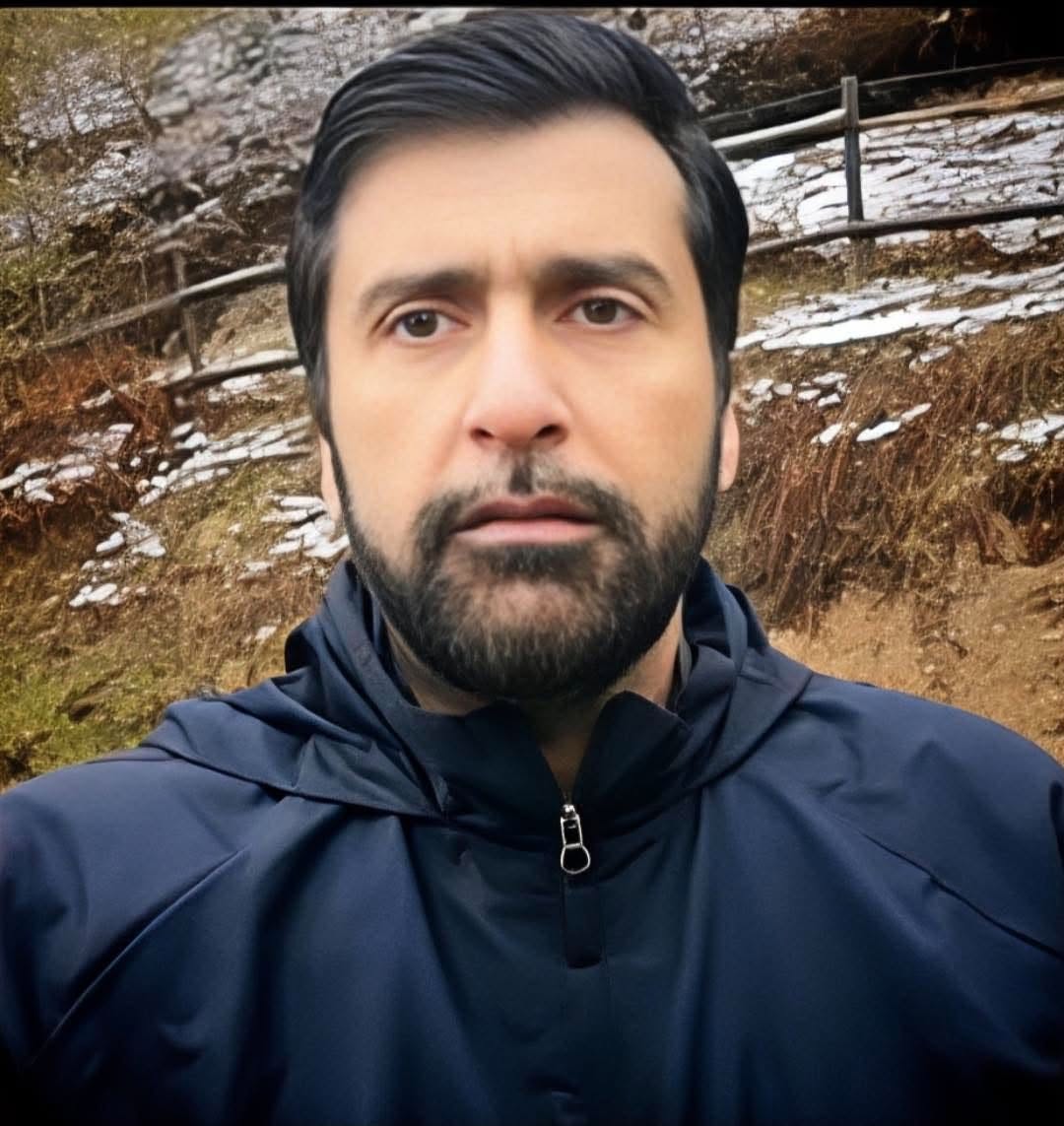
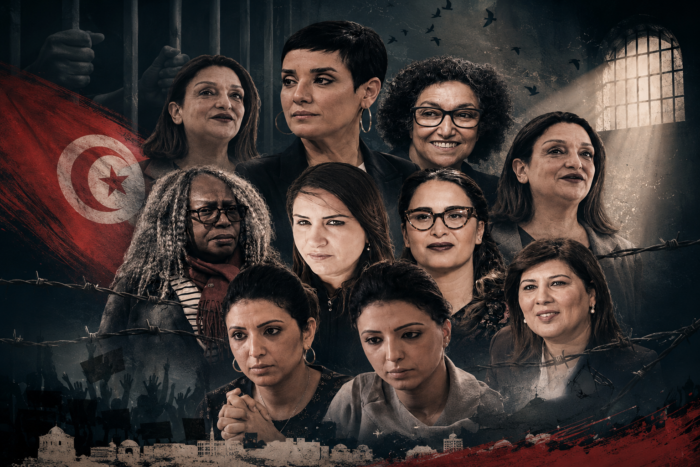
These activities were organised by members of the “End Impunity” campaign (main photo), which published on 22 July 2021, on its Facebook page, the following, “After the success of the July 18 rallies in support of the campaign to end impunity in cities and world capitals, foremost Baghdad, and to complement the progressive and organised pattern shown by the campaign… The campaign has been registered as an international organisation and an independent legal entity, taking upon itself to engage in legal paths.”

The campaign team had issued on 17 July 2021 an appeal titled “The Baghdad March”, in which it stated, “Ending impunity as a prelude to enabling state institutions to impose the rule of law and hold thieves, criminals and negligent parties to account without exception.” The Baghdad March, in which hundreds of citizens participated – most of whom were students, was organised by the Baghdad Student Union, which started from Paradise Square and headed to Tahrir Square. The participants raised Iraqi flags and carried pictures of the victims who fell during the October demonstrations that began on the first of October 2019. The security forces surrounded the demonstrators and closed a number of roads, as well as the Al-Jumhuriya bridge leading to the Green Zone, where the government headquarters is located.
On 25 July 2021, angry demonstrators in Dhi Qar Governorate stormed a power station south of the city of Nasiriyah, the capital of the governorate. Eyewitnesses said, “The demonstrators stormed the district’s power station, due to the poor supply of electricity in the district.” They added that they “used burning tires during the storming of the electrical station.”
On 26 July 2021, a riot police force arrested four people belonging to the Al-Sahlan clan, who set fire to the gate of the Dhi Qar Oil Company and closed it to demand appointments.
UN issues two reports on Iraq

On 03 August 2021, the UN Assistance Mission for Iraq (UNAMI) and the Office of the High Commissioner for Human Rights (OHCHR), issued a report entitled, “Human Rights in the Administration of Justice in Iraq: legal conditions and procedural safeguards to prevent torture and ill-treatment”. It concluded that, “Allegations of torture and ill-treatment of detainees are frequent in Iraqi places of detention throughout all governorates, concerning both terrorism and other criminal cases. More than half of the 235 detainees interviewed by UNAMI/OHCHR for this report provided credible and reliable accounts of acts of torture or other forms of ill-treatment. Iraqi judges, lawyers and medical practitioners also confirmed the prevalence of these practices in private discussions.” The report emphasised that, “the patterns and trends are clear.”
On 30 May 2021, the UN Assistance Mission for Iraq (UNAMI) issued its 6th report on demonstrations entitled, “Update on Demonstrations in Iraq: Accountability for Human Rights Violations and Abuses by Unidentified Armed Elements” which concluded that “The information detailed in this report indicates a lack of accountability with respect to the crimes perpetrated against protesters and critics by various armed elements commonly referred to as ‘militia’, most of whom carried out attacks anonymously and have yet to be identified publicly.”
Recommendations:
GCHR urges the Iraqi government to:
- Implement its commitments to preserve public freedoms, especially freedom of expression, freedom of the press and freedom of peaceful assembly;
- Keep the danger of uncontrolled arms away from human rights activists, including journalists, as well as peaceful protesters;
- End cases of impunity for perpetrators of human rights violations, especially murder, kidnapping and torture of innocent citizens, including various activists; and
- Help the families of the victims who have fallen since the start of the popular movement in October 2019, in order to reach the truth about the murderers of their loved ones and to redress the great harm they faced.

-
Latest News
-
Related Publications
Latest Urgent Action
 Bahrain
Human rights defender Naji Fateel re-arrested
Defenders Affected
-